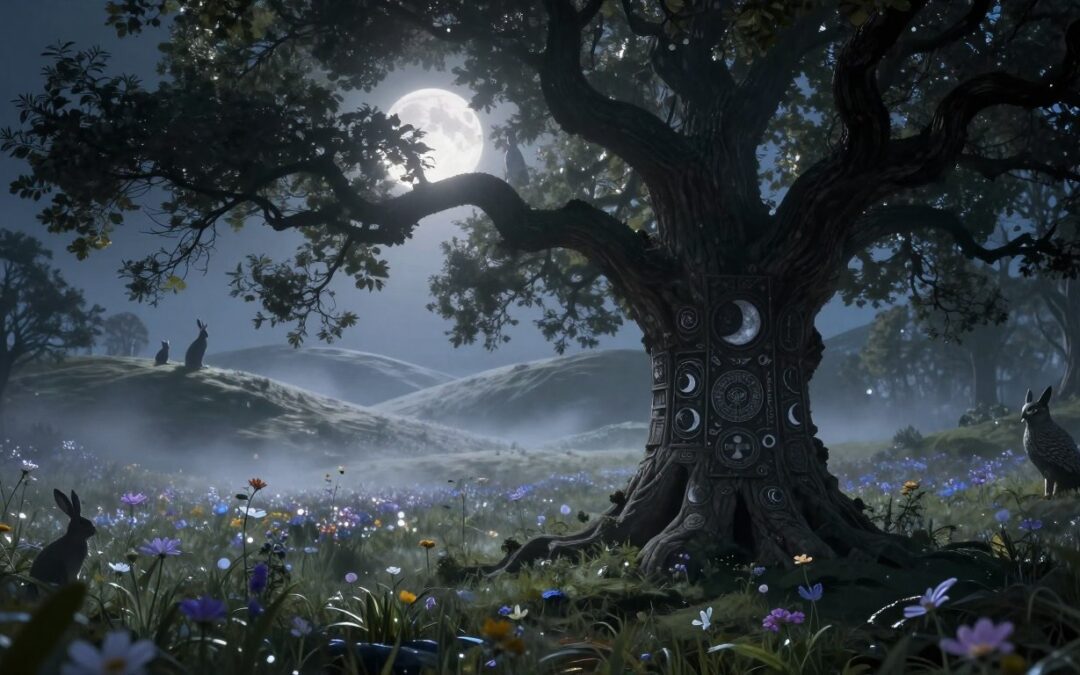
Have you ever looked up at night and wondered about the moon? Our ancestors saw gods in that glowing orb. It’s a shared sight, no matter where we are.
In cities, a full moon in a puddle can make us pause. We feel a deep connection to all humans who have lived. They told stories about the moon that we can feel today.
Every culture has stories about the moon. These tales show how the night sky shaped our world. Let’s dive into these stories and see how they’ve influenced us.
Key Takeaways
- Lunar cycles serve as a universal symbol connecting all human cultures.
- Ancient stories provide deep insight into how early civilizations viewed night skies.
- Modern urban dwellers can feel awe when seeing full orbs.
- Folklore often uses celestial patterns to represent themes like birth and rebirth.
- Each culture interprets lunar phases through unique traditions and local values.
What is the Moon’s Symbolism in Different Cultures?
The moon’s symbolism varies widely across cultures. It has many roles in our myths and stories. This shows the complex nature of human culture.
Exploring the moon’s cultural meanings reveals a rich tapestry. These interpretations have grown over time. The moon has inspired many symbolic meanings in human culture.
The Moon in Ancient Egyptian Mythology
In ancient Egypt, the moon was linked to Thoth, a god of wisdom and magic. The Egyptians saw the moon’s cycles as a battle between good and evil. The full moon was a victory for good.
The moon’s phases symbolized the cycle of time. This reflected the Egyptians’ views on the afterlife and nature’s renewal. For more on this, see historical context in new moon readings.
The Role of the Moon in Greek Myths
In Greek myths, the moon was tied to Selene and Artemis. Selene was the moon goddess, often shown with Endymion. Artemis was the goddess of the hunt and the moon, representing femininity and nature’s power.
The Greeks saw the moon as a symbol of femininity and fertility. It was also a mystery of the night.
Lunar Significance in Asian Cultures
In Asian cultures, the moon symbolizes unity and harmony. The Mid-Autumn Festival, celebrated in China, Japan, and Korea, highlights the moon’s importance. It’s a time for family reunions and celebrating the harvest.
The moon also represents yin and yang, showing balance and interdependence. This balance is key to the universe’s harmony and human life. By looking at the moon’s symbolism across cultures, we understand common themes and unique views that have developed over time.
How the Moon Represents Femininity
The moon is often seen as feminine across many cultures. It’s known for its mysterious and mystical qualities, much like the divine feminine. This view comes from observing the moon’s cycles and their connection to female cycles.
The Moon as a Goddess in Various Traditions
In many cultures, the moon is seen as a goddess. It stands for fertility, nurturing, and the cycle of life. For example, in ancient Greek stories, Selene was the moon goddess, shown as a woman with a crescent moon on her forehead.
In Hindu tales, Chandra is the moon goddess, showing its gentle yet strong sides. Goddesses like Isis in Egypt and Chang’e in China also show the moon’s feminine side. The article on the moon as a feminine symbol highlights this connection.
The moon’s role as a goddess is key in many cultures. It shows the moon’s importance in spiritual and cultural life. The qualities of receptivity and nurturing, linked to the moon, are seen as divine.
The Connection Between the Moon and Female Cycles
The word “moon” comes from “mensis,” meaning month, also tied to menstruation. This shows a link between the moon’s cycles and female cycles. Ancient cultures often tied their calendars and rituals to the moon.
For example, they planned farming and ceremonies with the moon’s phases. The article on moon readings for women talks about how the moon’s cycles relate to feminine power and growth.
The moon’s cycle, about 28 days, matches the length of a menstrual cycle. This similarity has led to myths and practices linking the moon to female fertility and health.
Reflecting on the moon’s role in femininity, we see its impact beyond myths. The moon’s cycles inspire wonder and connect us to nature. They strengthen the bond between the lunar rhythm and the feminine experience.
Lunar Phases and Their Mythological Meanings
The moon’s cycles have been a universal language, understood and revered by ancient civilizations. Each civilization gave their own mythological meanings to its phases. The lunar cycle, with its distinct phases, has been a rich source of mythological and symbolic significance across various cultures.
One of the most enduring aspects of lunar mythology is the association of the moon’s phases with different aspects of human experience and natural phenomena. Let’s explore some of these mythological meanings associated with the new moon, full moon, and the waxing and waning phases.
New Moon: Beginnings and New Beginnings
The new moon marks the beginning of a new lunar cycle. It is often associated with new beginnings, renewal, and new beginnings. In many cultures, the new moon is considered a time for setting intentions, making wishes, and initiating new projects. It’s a period symbolizing hope and the promise of growth.
To understand the significance of the new moon in modern times, we can check the current moon phase today astrology, which provides insights into the lunar cycle’s influence on our lives.
Full Moon: Completion and Revelation
The full moon, occurring when the moon is on the opposite side of the Earth from the sun, is a moment of culmination and revelation. It has been associated with a range of mythological and symbolic meanings, including illumination, completion, and heightened emotions.
Historically, the full moon has been linked to various myths and legends, often representing a peak or climax in the lunar cycle. For example, the full moon has been associated with heightened magical powers, intense emotions, and significant life events in many cultures.
Waxing and Waning: The Cycle of Life
The waxing and waning phases of the moon represent the cycle of growth and decay. They symbolize the dynamic and ever-changing nature of life. The waxing moon is associated with growth, expansion, and increase, while the waning moon is linked to release, letting go, and transformation.
Together, the various lunar phases offer a rich tapestry of mythological meanings. They reflect humanity’s deep fascination with the moon and its cycles. By understanding and respecting these lunar phases, we can deepen our connection with the natural world and tap into the symbolic and spiritual significance that the moon has held for cultures around the world.
The Mythology of Lunar Deities
Across the globe, ancient cultures have revered the moon through a diverse array of deities and mythological narratives. These lunar deities not only reflect the moon’s significance in the cultural and religious practices of ancient societies but also highlight the moon’s influence on human imagination and storytelling.
The reverence for lunar deities is evident in various mythologies, where the moon is often personified as a god or goddess with distinct characteristics and roles. For instance, in Greek mythology, the moon is associated with several goddesses, each embodying different aspects of lunar mythology.
Selene and Artemis in Greek Mythology
In Greek mythology, Selene is the goddess who personifies the moon. Her name itself means “moon” in Greek, and she is often depicted as a woman in love with the mortal Endymion, highlighting the moon’s eternal and unrequited love. On the other hand, Artemis, though more commonly associated with the hunt and wilderness, is also linked with the moon, showing the complex and multifaceted nature of lunar deities in Greek mythology. As we explore the mythology surrounding these figures, we find that they are deeply intertwined with the cultural and religious fabric of ancient Greece.
For more insights into lunar deities across different cultures, you can explore the concept of lunar deities on Wikipedia, which provides a detailed overview of how various cultures have worshipped and mythologized the moon.
Tsukuyomi in Japanese Mythology
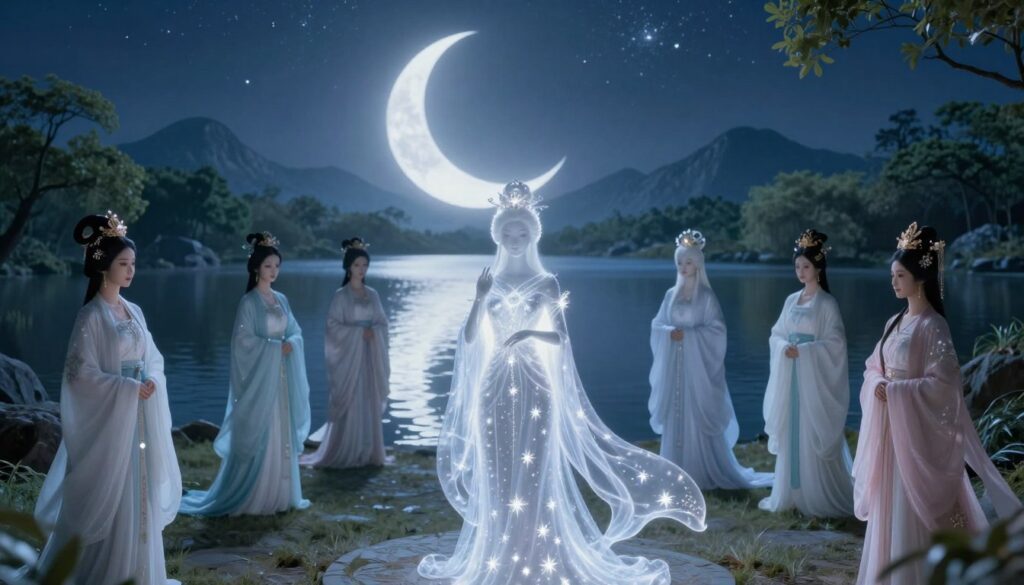
In Japanese mythology, Tsukuyomi, the moon god, is another fascinating example of a lunar deity. Born from the primordial deity Izanagi, Tsukuyomi is associated with the night and the tides, reflecting the moon’s influence on the natural world. The mythology surrounding Tsukuyomi offers insights into Shinto beliefs and the significance of the moon in Japanese culture. Interestingly, the myth of the hare in Japanese folklore adds another layer to the rich tapestry of lunar mythology.
The study of lunar deities like Selene, Artemis, and Tsukuyomi not only enriches our understanding of ancient mythologies but also highlights the universal human fascination with the moon. Through these deities, we see how different cultures have sought to explain and connect with the lunar cycle, reflecting a shared human experience that transcends geographical and temporal boundaries.
Moon Myths and Their Impact on Agriculture
Lunar cycles have greatly influenced farming traditions. Many farming practices today are shaped by moon myths. The moon’s phases act as a natural calendar for farmers, guiding when to plant and harvest.
Planting by the Moon: Traditional Practices
Many farmers believe the moon’s phases affect plant growth. For example, planting during the new moon is seen as a chance for new growth. The full moon is best for harvesting some crops.
In many cultures, lunar significance in folklore is key in planning farm activities. In some African cultures, the new moon is the best time to plant underground crops like potatoes and carrots.
“The moon is a guide for our agricultural practices; it tells us when to plant and when to harvest.”
Folklore Surrounding Harvest Moons
The full moon near the autumnal equinox is called the Harvest Moon. This moon is celebrated in many cultures as a time of thanks for the harvest.
Let’s explore some traditional farming practices and their folklore:
| Lunar Phase | Agricultural Activity | Cultural Significance |
|---|---|---|
| New Moon | Planting | New beginnings, chance for growth |
| Full Moon | Harvesting | Completion, revelation |
| Waxing Moon | Nurturing crops | Growth, abundance |
For more on moon myths and their cultural impact, check out our page on moon myth, folklore, and wisdom.
The Role of the Moon in Creation Myths
The moon is key in many creation myths from around the world. These myths show the moon’s importance and how ancient societies saw the universe. They also reveal how these societies understood their place in it.
Creation myths offer a peek into ancient cultures’ beliefs and practices. The moon, with its changing phases, symbolizes change, renewal, and the universe’s mysteries. It’s a big part of these stories.
The Moon’s Birth in Various Cultures
In many myths, the moon comes from supernatural beings or events. For example, the Tlingit people of North America say Raven stole a box with the Sun, moon, and stars. This brought light to the world. It shows the moon’s celestial significance in Tlingit stories.
In other cultures, the moon is linked to gods or goddesses. These stories tell us about the moon’s role in lunar folklore traditions. They’ve shaped cultural practices and beliefs for generations.
The Moon’s Influence on Earth’s Creation
Many myths say the moon helped shape Earth. It’s believed to have affected the tides, Earth’s stability, and even life’s emergence.
These myths show an ancient understanding of the moon’s effect on Earth. They reflect the deep bond between our planet and its moon. By looking at these stories, we learn about lunar folklore traditions. They show our long-lasting interest in the moon.
In summary, the moon is central in many creation myths. It represents human experiences and our understanding of the universe. Through these myths, we see the celestial significance of the moon. It has a lasting impact on human culture and imagination.
Dark Side of the Moon in Mythology
The moon’s dark side has always fascinated people, leading to many myths and legends. We often see the Man in the Moon, but others see different shapes. The dark side, full of mystery, has captured our imagination.
Myths of the Moon’s Hidden Aspects
Many cultures have myths about the moon’s hidden side. Some think it’s home to supernatural beings or a place of spiritual importance. In some stories, the dark side is seen as the opposite of the bright side, representing the unknown or hidden parts of us.
Exploring moon myths shows how cultures view the moon’s symbolism. For more on moon mythology, check out this article that dives into the moon’s mystical legends.
The Concept of the “Dark Moon”
The “Dark Moon” is a key part of lunar myths. It’s the time when the moon is not seen in the sky, often linked to renewal or introspection. Cultures see the Dark Moon differently, from a time of mourning to a start of new things.
| Culture | Interpretation of Dark Moon |
|---|---|
| Ancient Greek | Associated with the underworld and the goddess Hecate |
| Native American | A time for spiritual reflection and renewal |
| Hindu | Considered a period for spiritual practices and introspection |
The many views of the moon’s dark side and the Dark Moon show the moon’s complex role in myths. These stories not only show our ancestors’ curiosity about the moon but also its deep impact on culture and our imagination.
The Moon’s Influence on Timekeeping
The moon’s phases have helped us track time for ages. It gave ancient people a natural way to keep a calendar. This was easy to follow and everyone could see it.
Many ancient calendars were based on the moon. Months started on the new moon. Important events were linked to lunar phases.
Ancient Calendars Based on Lunar Cycles
Lunar cycles were key in ancient calendars. The Islamic calendar starts with the new moon sighting. The Hebrew calendar mixes lunar and solar cycles for festivals and holidays.
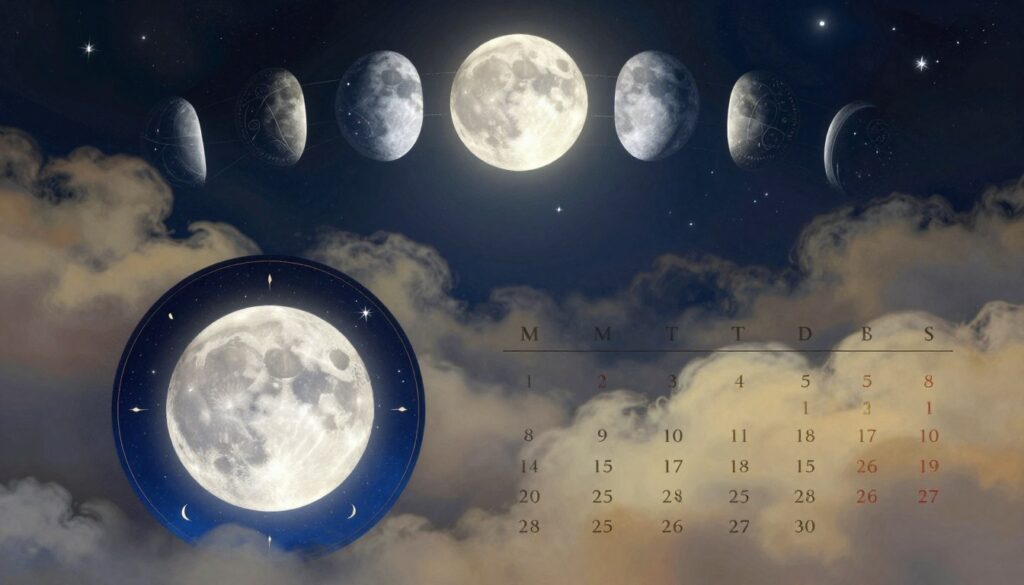
The ancient Greeks used a lunisolar calendar too. Months followed the moon, with extra months added to match the solar year. This kept festivals and farming in sync with seasons.
The Moon’s Role in Festivals and Rituals
The moon’s cycles affect our timekeeping and festivals. Many festivals are tied to the lunar calendar. This shows the moon’s lasting importance.
The full moon is seen as a time of spiritual energy. It’s when important rituals and ceremonies happen. In Asia, the full moon is for celebrations and family time, like the Mid-Autumn Festival.
In summary, the moon’s role in timekeeping shows its deep impact on culture and society. By honoring the lunar cycle, we connect with our ancestors’ ways. This legacy shapes our world today.
Storytelling and the Moon: Myths Passed Down Through Generations
The moon has always fascinated us, leading to many myths and legends. It has been a constant in our lives, shaping our stories and cultural heritage. The moon’s role in storytelling connects different cultures, showing its universal appeal.
The moon’s cycle is a powerful symbol in folktales, representing life, death, and rebirth. In many cultures, the moon is tied to lunar folklore traditions. For instance, the ancient Greeks told of Selene and Endymion, a love story that shines like the moon.
Folktales Inspired by the Moon
Folktales about the moon often talk about change and new beginnings. In Asia, the moon is linked to Chang’e, the moon goddess. Her story is celebrated during the Mid-Autumn Festival, showing the moon’s importance in harvest and abundance.
Here are some famous moon-related folktales from around the world:
| Culture | Moon Folktale | Main Theme |
|---|---|---|
| Greek | Selene and Endymion | Love and Eternal Youth |
| Chinese | The Legend of Chang’e | Immortality and Sacrifice |
| Japanese | Tsukuyomi, the Moon God | Creation and Mythology |
The Moon in Poetry and Literature
The moon has inspired many beautiful works of art. It has been a theme in poetry and literature for centuries. The moon in literature often reflects our hopes, fears, and dreams.
In ancient stories, moon deities are key, showing the moon’s mystique. These tales highlight the moon’s cultural importance and its appeal as a symbol of change.
The Moon as a Navigator and Timekeeper
The moon’s soft light has guided sailors and travelers for ages. It acts as a celestial compass. Its cycles and gravitational pull have been used by cultures worldwide.
The moon has always been there, helping us find our way. It affects the tides and how we see time.
Sea Navigation Myths
Many myths exist about the moon’s role in sea navigation. Its cycles help sailors plan their voyages. The lunar calendar predicts tides, which are key for safe travel by sea.
For example, ancient Polynesians used the moon, stars, and winds to cross vast seas.
The moon’s pull on the ocean’s tides is real, not just a myth. It affects half our body weight, which is water. This shows its big impact on our planet.
Indigenous Navigation Traditions
Indigenous cultures worldwide have unique ways of navigating, often using the moon. In Pacific Island cultures, navigators use the moon’s position to guide their journeys.
These methods are not just for reaching places. They also show the balance between the sky and nature.
The moon’s role in indigenous navigation shows its celestial significance beyond just guiding. It connects us to nature and the universe, shaping cultural beliefs about the moon and practices.
Looking at the moon’s role in navigation, we learn about the moon’s cultural importance. The moon remains essential in understanding our world and our place in it.
Folklore Surrounding Lunar Eclipses
Lunar eclipses have been seen in many ways over history. They show how people connect with the sky and their culture. These views often show what people believed, feared, and thought.
Lunar eclipses have always been fascinating. They were seen as omens or messages from gods. The moon’s sudden darkening was scary, leading to many myths.
What Eclipses Represent in Different Cultures
In many cultures, lunar eclipses mean big changes. Some old societies thought they showed a change in leadership or a disaster coming. The mythological meaning of eclipses is very different, showing how people have tried to understand them.
In some Asian cultures, a dragon or a heavenly dog eats the moon during an eclipse.
| Culture | Eclipse Interpretation |
|---|---|
| Ancient China | Believed a dragon was devouring the moon |
| Indian Mythology | Associated with the demon Rahu |
| Greek Culture | Considered it a sign from the gods |
Myths about the Effects of Eclipses on Humanity
Many myths talk about how lunar eclipses affect people. Some say they change human behavior or affect crops. Others believe the moon’s pull can change the earth and its people.
Even though science has proven many myths wrong, lunar eclipses are fascinating. Learning about these myths helps us understand our past and culture.
The Moon’s Legacy in Modern Culture
As we look up at the night sky, the moon fills us with wonder and peace. It’s more than just a beautiful sight. It shapes many parts of our modern culture.
Contemporary Artistic Expressions
Artists and musicians find endless inspiration in the moon. David Bowie’s “Space Oddity” and Chesley Bonestell’s paintings show its impact. The moon’s influence on art and music shows our deep cultural connection to it.
Relevance of Lunar Folklore
Lunar folklore traditions are as captivating today as ever. They give us a glimpse into our shared human experiences and our bond with nature. Looking at the moon can bring us calm, reminding us of the moon’s role in our lives. In our busy world, the moon’s magic is a steady comfort.
[…] journal can be incredibly helpful. Tracking energy levels throughout the different phases of the moon allows us to recognize…
[…] Reading is a new platform that offers personalized insights based on the lunar cycle1. It’s different from generic horoscopes,…
[…] As we set intentions aligned with the New Moon energy, we open ourselves to the power of manifestation. By…
[…] intentions during the new moon is a powerful practice that allows me to declare my goals and aspirations. It…
[…] These readings provide a convenient and accessible way to connect with the energies of the new moon and gain…