
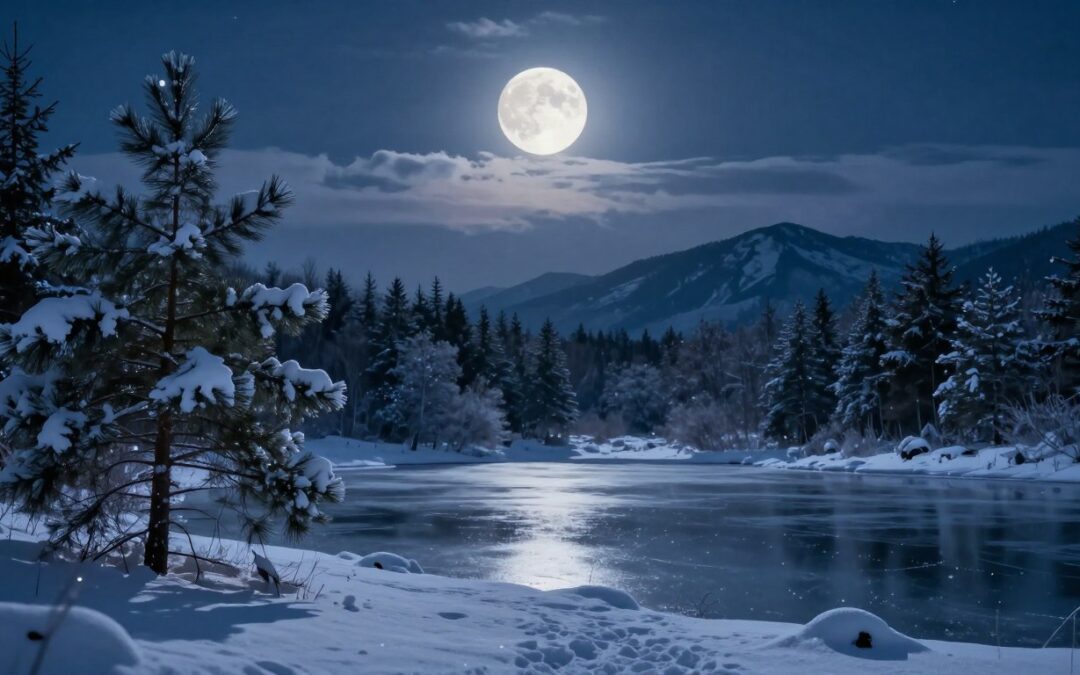
Ever felt like the last full moon of the year is extra special? As winter’s chill sets in, a December full moon appears in the sky. It’s a time for looking inward and finding inner strength.
The spiritual significance of this moon is about peace, prosperity, and being strong. It reminds us to keep working towards our big dreams. It’s a great time to think about our goals while staying warm indoors.
This moon falls at the end of our lunar calendar. It’s a time to celebrate our wins and plan for the future. Learning about lunar influence helps us connect with nature’s rhythms.
Key Takeaways
- Marks final lunation in annual cycle.
- Emphasizes peace, prosperity, and strength.
- Occurs during deep winter chill.
- Symbolizes time for re-dedication to personal values.
- Encourages spiritual renewal and setting new goals.
- Aligns with Winter Solstice for deeper reflection.
The Significance of the Cold Moon in December
December brings the Cold Moon, filled with history and culture. It’s more than just a night sky show. It connects us to our past and shapes our future.
The Cold Moon, also known as the Long Nights Moon or the Moon Before Yule, comes from Indigenous American tribes. It marks the long, cold nights and deep winter of December. It’s a time for communities to share warmth through traditions and stories.
Historical Context of Cold Moon
The Cold Moon has always been important, signaling intense cold and darkness. Cultures have linked it to folklore and myths, often tied to the winter solstice. Its brightness helped people navigate and symbolized resilience against winter.
For more on lunar events and personal goals, check out our article on New Moon reading online. It explores how lunar cycles help in personal growth and reflection.
Cultural Interpretations
Cultures see the Cold Moon differently. Some see it as a sign of the winter solstice, when days get longer, bringing hope and renewal. Others view it as a time for quiet reflection and preparation for the new year.
| Culture | Interpretation of Cold Moon |
|---|---|
| Indigenous American Tribes | Associated with long, cold nights and deep winter chill |
| European Cultures | Seen as a signal for the coming of the winter solstice |
| Modern Societies | A time for introspection and preparation for the new year |
The Cold Moon’s meaning is deep, showing both winter’s harshness and the hope of longer days. Watching this event reminds us of our cultural heritage and our connection to nature.
How the Cold Moon Gets Its Name
Exploring the Cold Moon’s origins reveals a rich mix of culture and astronomical events. The name comes from ancient traditions, mainly tied to the lunar calendar.
The Cold Moon falls in December, a key winter moment. Nights are long, and it’s the coldest time. It’s a beacon in the dark, signaling the winter solstice’s approach.
The Origins of “Cold Moon”
The name “Cold Moon” comes from the Mohawk people. They named it for the harsh winter and long, cold nights. Their use of the lunar calendar shows their deep connection to the season.
Many Native American tribes named December’s full moon after the weather. This reflects their shared experience of the season.
For more on December’s full moon in various cultures and its astronomical importance, check EarthSky.
Other Names for December’s Full Moon
December’s full moon is known by many names, showing the diversity of human experience. Some call it the “Snow Moon” or “Frost Moon,” referencing the weather. Others call it the “Long Nights Moon,” highlighting the longest nights of the year.
These names are part of the folklore and traditions of their communities. They were used to plan important events and activities. For more on the Cold Moon’s astrological significance today, visit New Moon Reading Online.
The variety of names for December’s full moon shows our complex relationship with nature. By studying these names, we learn about the cultures and histories behind them.
The Cold Moon in Native American Traditions
In Native American folklore, the Cold Moon is a key part. It’s a time of endurance and resilience in the cold winter. The full moon in December is very important.
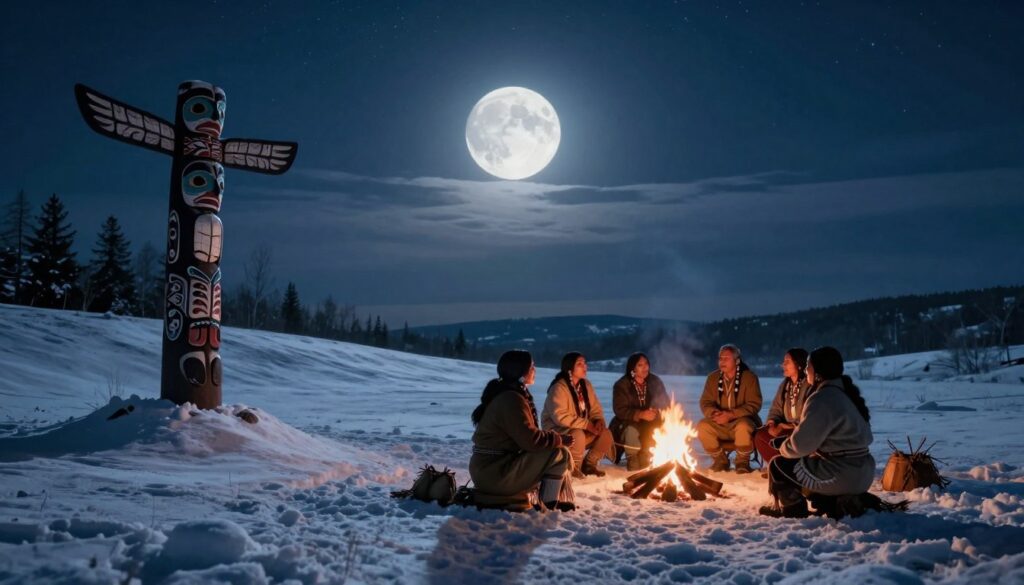
Native American tribes have their own names for the full moon. These names change with the seasons and natural events. The Cold Moon is the coldest part of winter. It’s a time for communities to come together, share stories, and strengthen bonds.
Native American Naming Conventions
Different tribes have their own names for the Cold Moon. These names reflect their culture and where they live. For example, some call it the “Long Night Moon,” the longest night of the year.
These names are rooted in nature and the lunar cycle. An article on Native American folklore surrounding the Cold Moon explains this.
The variety in names shows the spiritual significance of the lunar phases. Each full moon, like the Cold Moon, has its own rituals, ceremonies, and stories. These have been passed down for generations.
Symbolism in Various Tribes
The symbolism of the Cold Moon varies among tribes. But common themes are resilience, community, and fighting the cold. For many, it’s a time for reflection and spiritual rejuvenation.
It’s a time to reconnect with nature and their heritage. The Cold Moon also marks the start of the year’s agricultural cycles and hunting seasons. The full moon is a natural calendar for these activities.
The Cold Moon’s importance in Native American folklore shows their deep connection with nature. As we see the Cold Moon, we learn the value of preserving cultural heritage and respecting nature’s cycles.
The Cold Moon and Winter Solstice
December’s Cold Moon often falls on the Winter Solstice. This is a time of deep cultural and astronomical events. It shows the year’s importance in many cultures worldwide.
The Winter Solstice happens on December 21 or 22 in the Northern Hemisphere. It’s the shortest day and the sun’s journey back to the equator starts. It’s a time for renewal and reflection, as days get longer.
Connection to Winter Celebrations
The Cold Moon and Winter Solstice shape many winter celebrations. These traditions come from ancient cultures, where the sun’s return was key for survival. For example, the Cold Moon’s impact on zodiac signs is fascinating today, showing the lasting influence of lunar observations in astrology.
Different cultures celebrate this time in unique ways. The ancient Romans had Saturnalia, a festival of feasting and gifts. Many indigenous cultures also have rituals for the Winter Solstice, focusing on renewal and good fortune for the new year.
Astronomy of the Winter Solstice
The Winter Solstice is a big deal in astronomy. It’s when the Earth tilts away from the Sun, making it the shortest day and longest night. It’s not just a moment but a celestial event celebrated by many cultures.
The alignment of Earth, Sun, and Moon during the Cold Moon and Winter Solstice is special. It’s a great time for stargazing and astronomical observations. The long nights let us see the stars, planets, and other celestial bodies in the sky.
Astrological Implications of the Cold Moon
The Cold Moon has many effects on our lives and zodiac signs. Its impact changes based on the zodiac sign it’s in. In 2025, it’s in Gemini, which brings us community, communication, and clear thinking.
With the Cold Moon in Gemini, communication and intellectual curiosity become key. This time encourages us to be more open and to embrace new ideas.
Effects on Zodiac Signs
Each zodiac sign reacts differently to the Cold Moon’s energy. For example, Gemini and Aquarius might feel more innovative. Cancer and Pisces might focus on personal growth and emotional depth.
To grasp the Cold Moon’s effect on your sign, look at its position in the chart. For more on the Cold Moon’s astrology in 2025, check out more resources.
Cold Moon in Astrology
Full moons, like the Cold Moon, hold deep spiritual significance. They shine a light on our inner world. The Cold Moon in December is a time for reflection and release.
The Cold Moon in Gemini highlights the importance of lunar phases. These celestial events help us understand astrological influences better. They guide us to appreciate the complexities of our lives.
The Cold Moon’s Influence on Nature
The Cold Moon’s arrival in December brings big changes to nature. It’s important to see how it affects the natural world.
Impact on Wildlife Behavior
The full moon in December changes how wildlife acts. Some animals get busier, while others adjust to the cold. For example, some birds change their migration plans because of the moon.
The Cold Moon is a key time for animals to get ready for winter. Some, like deer, are more active because of the light. This helps them find food better. But others might stay hidden to avoid predators or bad weather.
Let’s look at how the Cold Moon affects a few animals:
| Species | Behavioral Change | Reason |
|---|---|---|
| Deer | Increased activity during full moon | Improved foraging due to increased light |
| Migratory Birds | Alter migration patterns | Response to lunar cycle |
| Hibernating Animals | Adjust hibernation schedules | Adaptation to environmental changes |
Seasonal Changes During December
December is a time of big changes, with the Cold Moon being a highlight. The full moon near the winter solstice shows how the season moves forward. It reminds us of the Earth’s cycles and how the sky and land are connected.
To learn more about full moons and their effects, check out our article on November Full Moon Astrology. It dives deep into lunar cycles and their astrological meanings.
Observing the Cold Moon
The Cold Moon is a must-see for those who love lunar phases. It’s a delightful experience, with the right knowledge on when and how to view it.
Best Time for Viewing
The best time to see the Cold Moon is just after it rises. It looks bigger near the horizon. This is because it’s close to Earth and seems bigger compared to objects on the horizon.
To make the most of your view, keep these tips in mind:
- Find a spot with minimal light pollution for a clearer view.
- Check the weather forecast for clear skies.
- Dress warmly, as December nights can be quite chilly.
Tips for Stargazing in December
December is perfect for stargazing with its cold and clear skies. Here are some tips to improve your stargazing:
- Use binoculars or a telescope for a closer look at the moon’s surface.
- Download a moon phase app to track lunar phases all month.
- Join a local astronomy club or group to learn from experts.
| Condition | Ideal State | Impact on Viewing |
|---|---|---|
| Weather | Clear Skies | Enhances visibility of the moon and stars |
| Light Pollution | Minimal | Reduces glare, making more stars visible |
| Temperature | Cold | Typically results in clearer skies |
By following these tips and knowing the best viewing conditions, you can fully enjoy the Cold Moon. We encourage you to go out and see this amazing astronomical event.
Full Moon Rituals and Traditions
The Cold Moon is a big event in the lunar calendar. It’s linked to many rituals and traditions worldwide. These practices help us understand the spiritual significance of this full moon.
Different cultures celebrate the Cold Moon in their own special ways. Some reflect on the past year and plan for the future. You can find more about making your own rituals on our website: Moon Reading Online for Ritual Creation.
Celebrations Around the Cold Moon
The Cold Moon is celebrated in many ways globally. Here are a few examples:
- In some Native American cultures, the Cold Moon is a time for storytelling and sharing historical events.
- In other parts of the world, it’s a period for family gatherings and feasting.
- Some communities also use this time for spiritual retreats and meditation.
Spiritual Practices Associated with Full Moons
The full moon, including the Cold Moon, is a time of heightened spiritual energy. Many people meditate, visualize, and do other spiritual activities during this time.
- Meditation under the full moon to connect with its energy.
- Visualization exercises to manifest goals and desires.
- Releasing rituals to let go of negative energies or past regrets.
By adding these practices to our lives, we can grow closer to the lunar cycle. It helps us on our spiritual journeys.
Fun Facts About the Cold Moon
The Cold Moon is a key astronomical event in December. It happens during the winter, when it’s usually the coldest. This full moon is a highlight in the night sky.
Unusual Phenomena
The Cold Moon can be a Supermoon. It looks bigger and brighter than a regular full moon. This happens when the moon is closest to Earth, at its perigee.
Lunar folklore gives the Cold Moon special meanings. Different cultures see it as a sign for winter preparations. For example, some Native American tribes mark the start of winter with it.
Common Misconceptions
Many people believe the full moon, including the Cold Moon, can change human behavior. They think it leads to more chaos or madness. But, science has found no proof for this.
Another myth is that full moons cause more emergency room visits or crime. Some studies suggest a link, but the evidence is weak. Experts say other factors are more likely to blame.
To learn more about the lunar phases and their meanings, check out lunar astrology. It offers a deeper look into the Cold Moon’s importance.
Conclusion: Embracing the Cold Moon Experience
Reflecting on the Cold Moon reminds us of the lunar calendar’s power. It shapes our lives with celestial events. The Cold Moon’s spiritual meaning encourages us to slow down and connect with nature.
Nature’s Cycles and Personal Growth
Embracing the Cold Moon’s energy helps us understand nature’s cycles. It’s a time for introspection and personal growth. It reminds us to find inner peace in today’s busy world.
To learn more about the Cold Moon, visit Crystal Vaults. It’s a great place to explore practices and traditions tied to this event.
[…] journal can be incredibly helpful. Tracking energy levels throughout the different phases of the moon allows us to recognize…
[…] Reading is a new platform that offers personalized insights based on the lunar cycle1. It’s different from generic horoscopes,…
[…] As we set intentions aligned with the New Moon energy, we open ourselves to the power of manifestation. By…
[…] intentions during the new moon is a powerful practice that allows me to declare my goals and aspirations. It…
[…] These readings provide a convenient and accessible way to connect with the energies of the new moon and gain…