
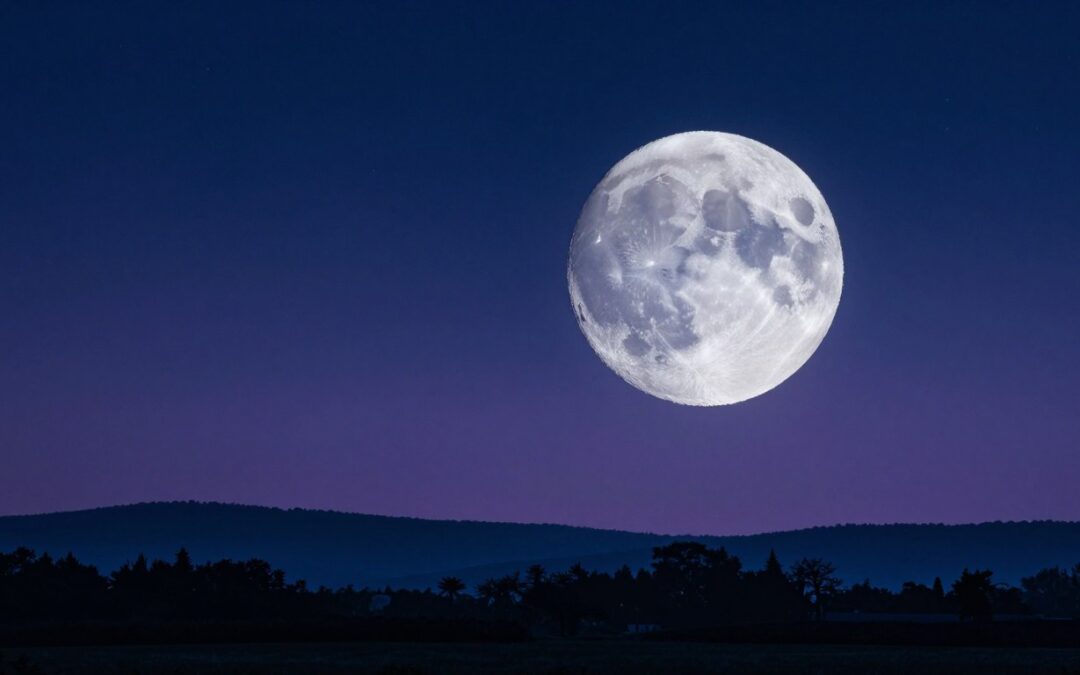
Have you ever looked up at the night sky and seen a smaller glowing orb? We often look for big, bright sights. But sometimes, the universe gives us something more subtle and far away. Does the size of Earth’s moon really change, or is it just our eyes playing tricks at night?
This happens when the moon is at its farthest point from Earth. Scientists call this “apogee.” It’s the opposite of a Supermoon, giving us a special view of the sky.
The moon looks about 14% smaller when it’s at this distance. Seeing it full or new at this time is called a Minimoon. We love watching these “Apogee Orbs” because they show the moon’s beautiful, elliptical path.
Understanding this helps us see the dance between our world and the moon. These moments show us the universe’s constant change while keeping its light steady. Looking at these small changes helps us learn more about the night sky.
Key Takeaways
- Occurs when the full or new lunar orb reaches apogee.
- Apogee represents the farthest orbital point from our planet.
- Visible size appears roughly 14% smaller than average.
- Often called Minimoons or Apogee Orbs by observers.
- Occurs due to the non-circular shape of the lunar path.
Understanding the Concept of a Micro Moon
Exploring the Micro Moon means looking into its definition, how it differs from a Supermoon, and its history. Let’s begin by understanding what a Micro Moon is.
Definition of a Micro Moon
A Micro Moon happens when a Full Moon or New Moon is at its farthest from Earth, called apogee. At this time, the Moon looks smaller because it’s farther away. The term “Micro Moon” highlights this difference from the well-known Supermoon.
Astronomers say supermoons and micromoons aren’t official terms. Yet, they’ve become common in recent years. A detailed explanation on Micro Moons shows how these terms help us appreciate lunar cycles.
How It Differs from a Supermoon
The main difference between a Micro Moon and a Supermoon is the Moon’s distance from Earth. A Supermoon happens when the Moon is closest (perigee), making it look bigger and brighter. On the other hand, a Micro Moon is at its farthest (apogee), appearing smaller.
| Characteristics | Micro Moon | Supermoon |
|---|---|---|
| Moon’s Distance | Farthest (Apogee) | Closest (Perigee) |
| Appearance | Smaller | Larger and Brighter |
| Occurrence | Less frequent Full/New Moon at apogee | More notable Full/New Moon at perigee |
Historical Context and Usage
The term “Micro Moon” has become popular as a contrast to Supermoon. It’s not an official term but is useful in popular culture for describing the Moon at its farthest point.
“The Micro Moon, much like its counterpart the Supermoon, offers a unique perspective on the lunar cycle, highlighting the Moon’s dynamic orbit around Earth.”
The Science Behind Lunar Distances
Grasping the science of lunar distances is essential to understand Micro Moons. The Moon orbits Earth in an elliptical path. This means its distance from our planet changes throughout the month. This change is key to why Micro Moons look smaller than usual.
The Moon’s orbit has two key points: perigee, the closest to Earth, and apogee, the farthest. A Micro Moon happens when a Full or New Moon occurs at or near apogee. This makes the Moon appear smaller in the sky.
What is the Apogee?
The apogee is when the Moon is at its farthest from Earth. At this point, the Moon is about 405,500 kilometers away. When a Full or New Moon happens at apogee, it’s called a Micro Moon. The apogee is important because it’s when the Moon’s apparent size is smallest.
The Moon’s Orbit Explained
The Moon’s orbit around Earth is not a perfect circle; it’s an ellipse. This shape means the distance between Earth and the Moon changes as the Moon orbits. The closest point is called perigee, and the farthest is apogee. This change affects how we see the Moon’s size in the sky, making it appear larger at perigee and smaller at apogee.
Understanding the Moon’s orbit helps us appreciate Micro Moons and their unique features. By knowing the science behind lunar distances, we can enjoy and observe these events better.
Why Should We Care About Micro Moons?
Supermoons get all the attention, but micro moons are just as interesting. They happen when the moon is farthest from Earth, showing us the moon’s orbit. This gives us a chance to learn about the moon’s shape and how it affects our planet.
Micro moons have been part of stories and myths for a long time. They’re linked to how people feel and even to natural disasters. But, there’s no proof that they cause these things. Yet, they’re fascinating to study, showing how cultures see the moon.
For more on micro moons and their meaning, check out this article.
Cultural Significance
Micro moons may not be as big as supermoons, but they’re important too. Different cultures see them in different ways. They’re often a time for looking inside and thinking deeply, unlike supermoons which are more about action.
Learning about these views can make us appreciate the moon more. It shows how the moon affects us in many ways.
Impact on Tides and Nature
Micro moons also affect the tides. The moon’s pull on the oceans is weaker because it’s farther away. This leads to apogean spring tides, which are about 5 cm (2 inches) less than usual spring tides.
| Tidal Type | Characteristics | Variation |
|---|---|---|
| Apogean Spring Tides | Occur during micro moons | 5 cm (2 inches) smaller variation |
| Regular Spring Tides | Occur during new moon or full moon | Standard tidal variation |
If you’re into moon astrology, there’s a lot to learn. Check out this guide for more on moon astrology. It helps you understand how people see lunar events.
When Does a Micro Moon Occur?
The timing of a Micro Moon is tied to the Moon’s orbit around Earth. Its distance changes, leading to a Micro Moon at its farthest point, called apogee.
The Moon’s orbit is not a perfect circle. This means its distance from Earth changes every month. A Micro Moon happens when the Moon is full and at apogee, making it look smaller.
Full supermoons happen three to four times a year. Micro Moons, on the other hand, occur two or three times a year. This makes Micro Moons special events.
Frequency of Micro Moons
Micro Moons are less common than Supermoons but happen a couple of times a year. The exact frequency changes due to the Moon’s orbit and full moon timing.
“The Moon’s orbit is the key to understanding the frequency of Micro Moons.” The Moon’s distance from Earth affects Micro Moon frequency. Astronomers closely track these events to predict the next Micro Moon.
Upcoming Micro Moon Events
To find out when the next Micro Moon will happen, check astronomical calendars or apps. These tools provide accurate predictions based on the Moon’s orbit.
By looking at lunar calendars, we can find the dates of upcoming Micro Moons. It’s also worth noting that Micro Moons are often considered a great opportunity for astronomers and photographers to capture unique lunar images.
Understanding the Moon’s orbit helps us anticipate and enjoy these rare events. Whether you’re an astronomer or just love the sky, Micro Moons offer a fascinating look at the Moon’s dynamic relationship with Earth.
How to Spot a Micro Moon
Seeing a Micro Moon is a special experience. It shows us the Moon’s orbit is not a perfect circle. A Micro Full Moon is 12.5%–14.1% smaller than a Super Full Moon. It’s also 5.9%–6.9% smaller than a regular Full Moon. This makes it interesting for both scientists and hobbyists.
To enjoy this event, knowing what a Micro Moon looks like is key. It’s not just about its size. It’s also about seeing how far the Moon is from Earth.
Tips for Moon Watching
Timing is everything when watching a Micro Moon. The best time is when it’s full and farthest from Earth. To see more, use a telescope or binoculars to get a closer look.
- Check the Moon’s phase and distance from Earth to confirm it’s a Micro Moon.
- Use appropriate viewing tools like telescopes or binoculars.
- Observe the Moon’s surface features, such as craters and mountains.
Choosing the Best Viewing Location
The micro moon size may be small, but it’s beautiful with the right view. Find a spot with little light pollution and no blocks. Learning about the Moon’s orbit adds to the experience.
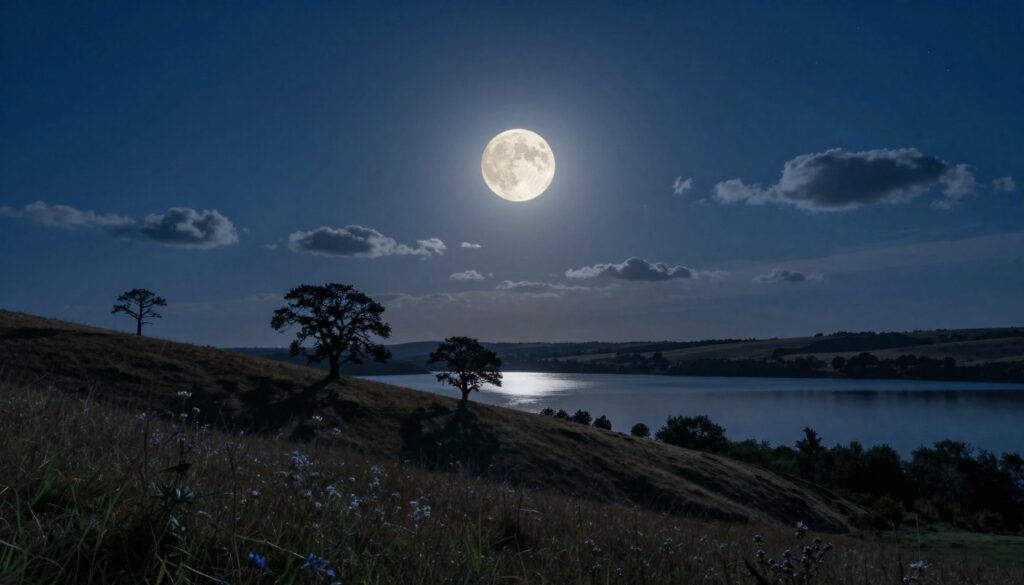
Choose a dark spot with a clear sky to see the Micro Moon fully. It’s not just about seeing the Moon. It’s about understanding its role in our lunar cycle.
Photography Tips for Capturing a Micro Moon
Photographing a Micro Moon is a rewarding experience. It lets you capture the moon’s subtle beauty. To succeed, you need the right equipment and techniques.
Best Equipment for Moon Photography
You’ll need a camera with good zoom for a Micro Moon shot. A DSLR or mirrorless camera with a telephoto lens is best. Look for a lens with at least 200mm focal length, but 300mm or more is better.
A tripod is key for stabilizing your camera, even with slow shutter speeds. For more detailed shots, consider a telescope with a camera adapter for higher magnification.
When picking your gear, think about the moon’s micro moon size. The Micro Moon is smaller than a Supermoon. So, use your zoom to make it stand out in your photo.
Techniques for Stunning Shots
Getting a great Micro Moon photo takes more than the right gear. It also needs technical skill and planning. Timing is critical. Try to shoot when the moon is high and the sky is clear.
Use a remote shutter release or timer to avoid camera shake. For more tips on lunar photography, check out this guide on photographing the moon with a foreground.
Play with camera settings to improve your photos. Start with a low ISO (100 or 200) to reduce noise. Adjust your shutter speed based on the moon’s brightness. A faster shutter speed can capture the moon’s micro moon appearance clearly.
Don’t hesitate to bracket your shots for different exposures. This way, you can merge them later for a single image with the best detail.
Misconceptions About Micro Moons
Exploring micro moons reveals a big gap between what’s real and what’s not. This lunar event is fascinating but filled with myths and misconceptions. It’s time to look closer at these.
Old stories say Full Moons and Micromoons affect our minds and cause natural disasters. But, no scientific proof backs these claims. It’s key to know the truth about micro moons.
Separating Myth from Reality
Many think micro moons change how we act. Some say they make us more erratic or even lead to more crime. But, studies show no real link. For example, a study on lunar cycles and human behavior found no strong connection as shown by research.
Another myth is that micro moons affect tides more than other lunar events. While the moon’s pull does change tides, the difference between a micro moon and a supermoon is small. The change in tidal forces is complex and depends on the moon’s orbit and Earth’s shape.
Facts vs. Fiction
To get micro moons right, we need science and observation. A micro moon is a new or full moon near its farthest point from Earth. It’s about the moon’s orbit, not magic or harm.
By looking at the facts and clearing up myths, we can see micro moons’ true value. It’s important to understand them without the old misconceptions.
The Role of Micro Moons in Astronomy
Astronomers find micro moons fascinating. They help us understand the Earth-Moon distance and lunar patterns. Studying micro moons is key to knowing the Moon’s orbit around Earth.
Contribution to Scientific Research
Micro moons are important for science, mainly for learning about the Earth-Moon distance. NASA says a micromoon happens when the Moon is farthest from Earth. This makes the Moon’s pull on Earth weaker, changing tides.
By studying micro moons, scientists learn more about our Earth-Moon system. For example, data from these events helps improve Moon orbit models. This is important for predicting lunar eclipses and studying the Earth-Moon system’s long-term changes.
How Astronomers Track Lunar Patterns
Astronomers track lunar patterns with history and technology. They predict micro moons by analyzing the Moon’s orbit and its changes. This involves complex calculations, considering the Moon’s shape and Earth and Sun’s gravity.
To learn more about micro moon events and their importance, visit https://astrotourismwa.com.au/micromoon/. There, you can find detailed info and updates on upcoming micro moons. Astronomers use special software to model the Moon’s orbit and forecast future micro moon events. This helps them prepare for observations and data collection.
Conclusion: Embracing the Micro Moon
Reflecting on the micro moon, we see it as a special chance to bond with the lunar cycle. A micro moon happens when a New or Full moon meets the apogee. This makes it a captivating sight.
Learning about what a micro moon is and its meaning can make us value its gentle power. Unlike supermoons, micromoons offer a softer, more reflective energy. They’re perfect for quiet practices like liminal magick, cleansing, and devotion to lunar deities. These practices are found in dedicated lunar practices.
Appreciating the Subtlety
By welcoming micromoons, we grow closer to nature and the lunar cycles. These events teach us to slow down and notice the small changes around us.
Observing Future Moons
Looking ahead, we can keep discovering and valuing the special traits of micromoons. This will deepen our understanding and bond with the lunar world.
[…] journal can be incredibly helpful. Tracking energy levels throughout the different phases of the moon allows us to recognize…
[…] Reading is a new platform that offers personalized insights based on the lunar cycle1. It’s different from generic horoscopes,…
[…] As we set intentions aligned with the New Moon energy, we open ourselves to the power of manifestation. By…
[…] intentions during the new moon is a powerful practice that allows me to declare my goals and aspirations. It…
[…] These readings provide a convenient and accessible way to connect with the energies of the new moon and gain…