Have you ever felt your mood change when the moon does? Many of us feel a strange connection during certain times of the month. We often wonder how a lunar cycle and emotions might connect in our daily lives.
The answer might be in the water in our bodies. Just like the moon affects the tides, it also affects us. Our bodies are made up of about 70% water, so this pull likely changes our balance.
By understanding lunar transitions, we can better handle mood changes. Tracking these shifts helps us see patterns in our energy. It makes it easier to control how we react to the world.
Learning about lunar influence helps us prepare for high-energy times. This connection gives us a new view on our mental health. By syncing our habits with these natural cycles, we live more in balance.
Key Takeaways
- The gravitational pull impacts the water balance inside our bodies.
- Lunar cycles correlate with predictable shifts in mood and energy.
- A Full Moon often intensifies feelings and personal sensitivity.
- New starts provide calm motivation and fresh energy for goals.
- Tracking rhythms helps us manage impulsive reactions more effectively.
- Our 70% water composition makes us sensitive to celestial tides.
Understanding the Moon Phases and Their Cycle
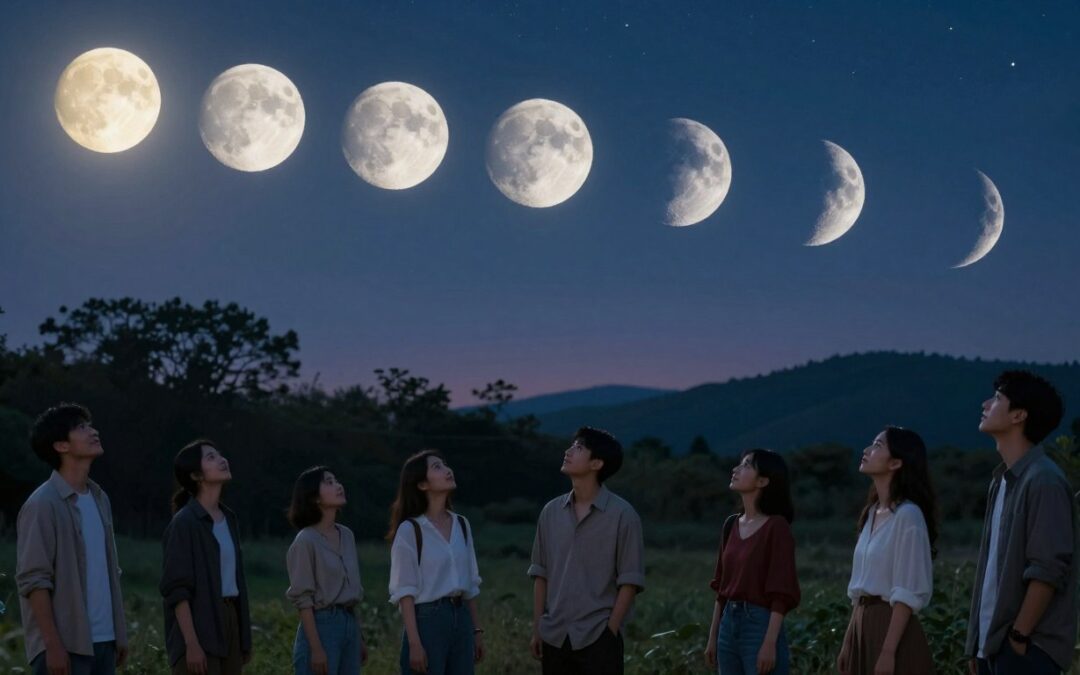
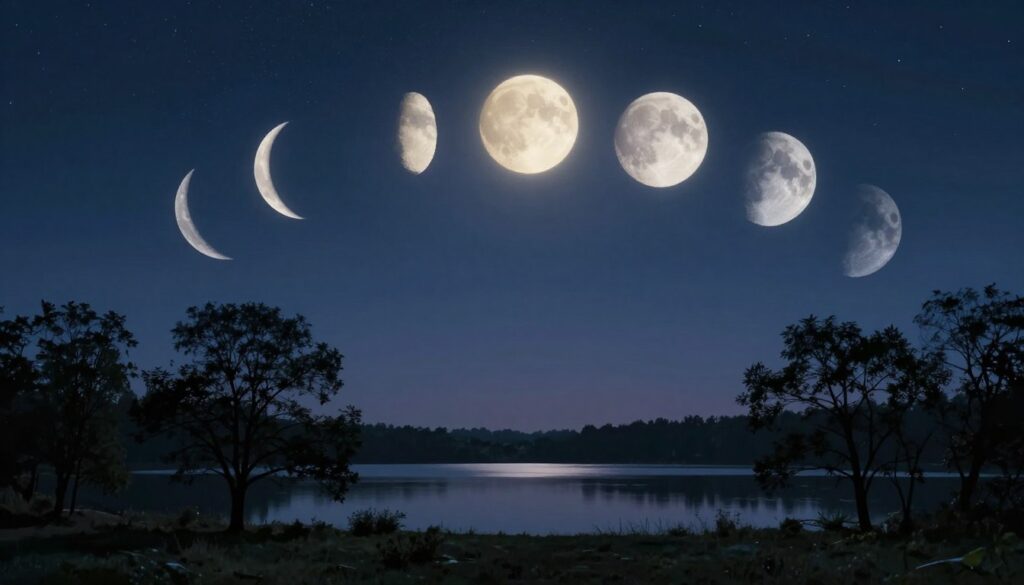
It’s important to know about the moon’s phases and their cycle. They affect our emotions deeply. The lunar cycle lasts about 29.5 days and has eight phases. Each phase impacts our feelings and actions in its own way.
New Moon: A Time for New Beginnings
The New Moon starts the lunar cycle, bringing fresh starts and new beginnings. It’s when the moon is hidden from us, between the Earth and sun. This is the best time to set goals and plan for the future. It’s when we reflect on our dreams and use the New Moon’s power to start positive changes.
Waxing Crescent: Building Momentum
As the moon grows, we see a growing light. This is the Waxing Crescent phase. It’s the start of making our dreams come true. It’s a time to take action, face challenges, and move forward towards our goals.
Full Moon: Heightened Emotions and Energy
The Full Moon happens when the moon is opposite the sun. It’s a time of strong emotions and energy. This phase is about feeling complete and fulfilled. Many feel more emotional or restless, as the full moon’s power makes our feelings stronger.
Historical Perspectives on Moon Phases and Emotions
The connection between moon phases and human emotions is deep and varied. It comes from ancient beliefs, folklore, and science. Across cultures, the moon has played a big role in how people see the world and their place in it.
Ancient Cultures and Moon Lore
In ancient times, people saw the moon as special. They linked it to gods and goddesses that controlled the tides and emotions. For example, in ancient Greece, the moon was tied to Selene, the goddess of the moon. She was believed to control the tides and emotions. The moon’s cycles were seen as a reflection of the natural order, leading to rituals and practices tied to these cycles.
Folklore: Myths and Beliefs
Folklore about the moon is full of myths and beliefs about its impact on us. Many thought the full moon could make people act strangely, a belief seen in stories and movies. Even today, some communities see the full moon as a time of unusual happenings.
As noted by a historical text,
“The moon is a harsh mistress, governing the tides and the tempests of the human heart.”
Scientific Studies: Past and Present
Scientific studies offer a different view than folklore. Research into moon phase today astrology and its effects on us has given mixed results. Some studies link the full moon to more mental health issues, while others find no connection. Yet, the moon’s effect on Earth’s tides is clear, sparking thoughts about its possible impact on our emotions.
In summary, the history of moon phases and emotions is complex. It involves cultural beliefs, folklore, and science. As we keep studying the moon’s effect on our emotions, we build on a long history of understanding.
The Psychological Effects of the Moon’s Phases
The moon’s phases have a big impact on our emotions. Each phase brings out different feelings in us. Studies show that lunar phases and behavior are connected across cultures and time.
Emotional Peaks During Full Moons
The Full Moon makes us feel more anxious or restless. This might be because of the moon’s pull on the tides. It could also affect our emotions.
During the Full Moon, our emotions can get very high. This can lead to more activity and sometimes heightened irritability.
Research links the Full Moon to more hospital visits for mental health. It also shows a rise in emergency calls. The Full Moon clearly affects our behavior and feelings.
Calming Influence of the New Moon
The New Moon, on the other hand, calms us down. It’s a time for new beginnings and setting goals. The New Moon is about renewal and looking forward.
Many find the New Moon great for meditation and introspection. It helps calm our minds and soothe our feelings.
Understanding the moon’s phases can help us manage our emotions. Knowing how the lunar cycle affects us can prepare us for emotional highs and lows.
The Connection Between Sleep Patterns and Moon Phases
Studies show a fascinating link between the lunar cycle and sleep. The moon’s phases have long been of interest. Recent research is uncovering their impact on sleep patterns.
The moon’s cycles deeply affect our rest and well-being. The Full Moon, in particular, impacts sleep quality for many.
Sleep Disruption Around Full Moons
The Full Moon can disrupt sleep, leading to poorer quality. This is due to the moon’s gravitational pull. It affects Earth’s tides and possibly our water content, as our bodies are mostly water.
Some key findings include:
- Increased sleep latency during Full Moons
- Reduced sleep duration
- Decreased deep sleep quality
| Moon Phase | Average Sleep Duration (hours) | Sleep Quality Rating |
|---|---|---|
| New Moon | 7.5 | 8/10 |
| Full Moon | 6.8 | 6/10 |
| Waxing Crescent | 7.2 | 7/10 |
Improving Sleep Quality with New Moon Intentions
The New Moon offers a chance to improve sleep by setting intentions and relaxing. Focusing on what we want to achieve or release helps create a positive mindset for better rest.
Strategies for better sleep during the New Moon include:
- Setting clear sleep goals
- Practicing mindfulness and meditation
- Creating a sleep-conducive environment
Understanding the moon’s influence on sleep helps us improve rest and well-being. By using strategies to counteract negative effects, we can achieve better sleep.
Moon Phases and Social Behavior
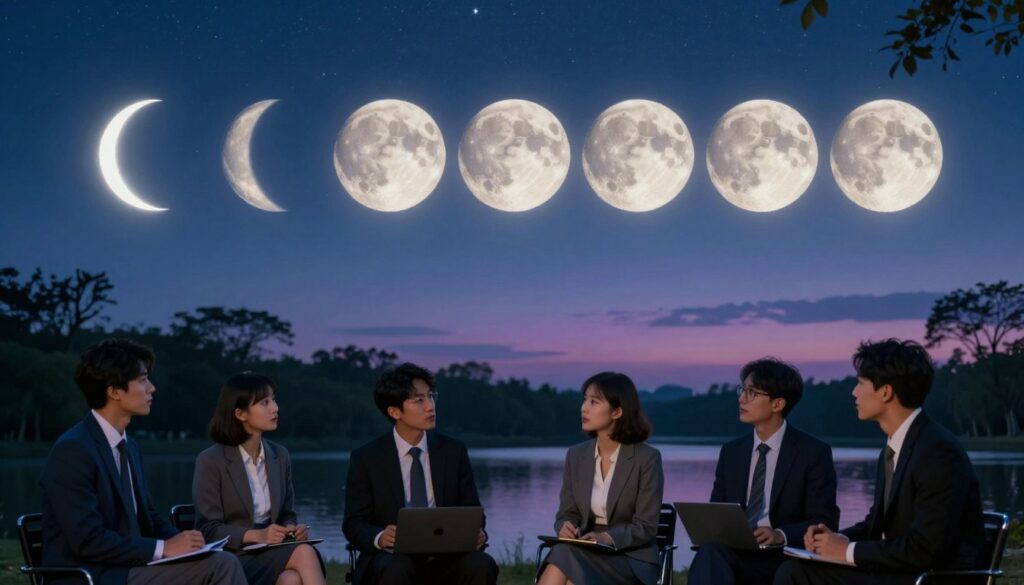
The lunar cycle affects our social behavior in many ways. As the moon goes through its phases, our desire for social interaction changes.
Increased Social Activity During Waxing Phases
When the moon is waxing, people become more social. They want to meet new people and strengthen friendships. It’s a good time to plan social events and join gatherings.
Some key traits during waxing phases include:
- More desire to go to social events
- Greater confidence in talking to others
- Being more outgoing and open
Withdrawal and Reflection at Waning Phases
When the moon is waning, people crave alone time. They prefer quieter activities and focus on themselves. This is a great time for self-reflection and self-care.
Key traits during waning phases include:
- Less interest in big social events
- Prefer quieter, simpler activities
- Focus on personal growth and thinking
Knowing how the moon affects us can help us live better. We can enjoy the waxing phases for socializing and use the waning phases for personal growth. This way, we can improve our overall well-being.
How to Harness Moon Phases for Emotional Well-Being
The moon’s phases offer a natural rhythm that we can sync with for emotional balance. By understanding and working with the lunar cycle, we can improve our emotional well-being. This helps us develop a better relationship with our inner selves.
Embracing Rituals and Practices for Emotional Balance
To tap into the moon’s energy, we can use various rituals and practices for each phase. During the New Moon, setting intentions through meditation or writing goals can be empowering. As the moon grows, we can start new projects or take bold steps towards our goals.
The Full Moon is great for release and celebration. We can do rituals like burning away negative thoughts or hosting a gathering to celebrate our achievements. During the waning moon, we can reflect and let go, using journaling or a digital detox to release what holds us back.
Journaling and Reflection for Personal Growth
Journaling and reflection are key for emotional growth. During the lunar cycle, these practices help us understand ourselves and our emotions better. For example, journaling with New Moon prompts clarifies our intentions and desires. Reflecting on our experiences and emotions during the Full Moon gives us insights into our patterns and growth areas.
| Moon Phase | Rituals and Practices |
|---|---|
| New Moon | Setting intentions, meditation, goal setting |
| Waxing Crescent | Building momentum, starting new projects |
| Full Moon | Release, celebration, letting go of negativity |
| Waning Gibbous | Reflection, journaling, release of what’s holding you back |
By adding these practices to our lives, we can boost our emotional well-being. We also deepen our connection with nature and its rhythms. Exploring the moon’s influence on our emotions leads to a more balanced, resilient, and fulfilling life.
The Role of Astrology in Moon Phase Emotions
Astrology helps us understand how the Moon’s phases affect our feelings. The Moon’s cycles have long fascinated people. Astrology gives us a way to see how they impact our emotions.
Looking at the Moon’s phases through astrology, we can see how our emotions change. This happens during different lunar cycles.
Astrological Insights: Moon Signs and Emotions
Our Moon sign, based on the Moon’s position at our birth, shapes our emotional responses. For example, people with a water sign Moon (Cancer, Scorpio, or Pisces) might feel more emotional during the Full Moon. This is because they are naturally more emotional.
As astrologers say, “The Moon’s phase can bring up deep emotions. Knowing our Moon sign helps us deal with these feelings.” To learn more about how astrology affects mental health, visit this resource.
Zodiac Influence During Different Phases
The zodiac sign of the Moon during its phases also affects our feelings. For instance, when the Moon is in a fire sign (Aries, Leo, or Sagittarius) during the Waxing Crescent phase, it energizes our emotions. It motivates us to take action.
On the other hand, when the Moon is in an earth sign (Taurus, Virgo, or Capricorn) during the Waning Gibbous phase, it grounds our emotions. It encourages us to reflect. Checking the current moon phase and its astrological significance can give us valuable insights into our emotional state, as seen on this site.
Exploring the link between astrology and moon phase emotions shows us how knowing our astrological profile helps. It helps us deal with the emotional ups and downs of the lunar cycle.
Being aware of our Moon sign and the zodiac influences during different phases helps us prepare. It helps us manage our emotional responses better.
Astrology’s role in understanding moon phase emotions is complex. It not only helps us understand our emotional patterns. It also guides us on how to use the lunar cycles for emotional well-being.
Myths vs. Facts: Debunking Moon Phase Misconceptions
Exploring the link between moon phases and emotions, it’s key to know what’s real. The moon has captivated humans for ages, leading to many myths about its emotional impact.
Common Misunderstandings about the Full Moon
Many believe the full moon makes people act out of control, known as the “lunar effect.” But, studies show no link to more chaos. For example, a study on Communicating Psychological Science clears up these myths.
Another myth is the full moon causing mental health issues. But, research doesn’t always back this up. It’s important to rely on facts, not just what people think.
Scientific Evidence Supporting Emotional Changes
Despite myths, some research supports the moon’s emotional impact. For instance, the full moon can mess with sleep, affecting mood. This shows how the moon might influence our feelings.
Studies also show the new moon can help with setting goals and personal growth. This can strengthen relationships, as New Moon Reading Online points out.
| Moon Phase | Common Beliefs | Scientific Findings |
|---|---|---|
| Full Moon | Increased chaos and emotional disturbances | Limited evidence; some impact on sleep |
| New Moon | New beginnings and renewal | Potential for improved emotional well-being through intention-setting |
“The moon’s cycles have been a source of fascination and a mirror to our inner lives, reflecting our deepest fears, desires, and the ebbs and flows of our emotional landscapes.”
By looking at both myths and facts, we understand the moon’s emotional influence better. While not all moon-related claims are true, some research shows its subtle effects on our feelings.
Personal Experiences: Stories of Moon Phase Influences
Exploring the link between moon phases and emotions, personal stories shine a light. Many share how the lunar cycle affects their feelings and mental health. These experiences shape their daily lives.
Emotional Shifts
Stories abound about the full moon’s impact on emotions, bringing highs and lows. The new moon, on the other hand, brings calm. This lunar influence can change how we feel, with some finding creativity and others feeling more alone.
Community Insights
People from all walks of life share their views on moon phases and mental health. Recognizing these effects helps us understand ourselves better. It also deepens our bond with nature.
[…] journal can be incredibly helpful. Tracking energy levels throughout the different phases of the moon allows us to recognize…
[…] Reading is a new platform that offers personalized insights based on the lunar cycle1. It’s different from generic horoscopes,…
[…] As we set intentions aligned with the New Moon energy, we open ourselves to the power of manifestation. By…
[…] intentions during the new moon is a powerful practice that allows me to declare my goals and aspirations. It…
[…] These readings provide a convenient and accessible way to connect with the energies of the new moon and gain…