
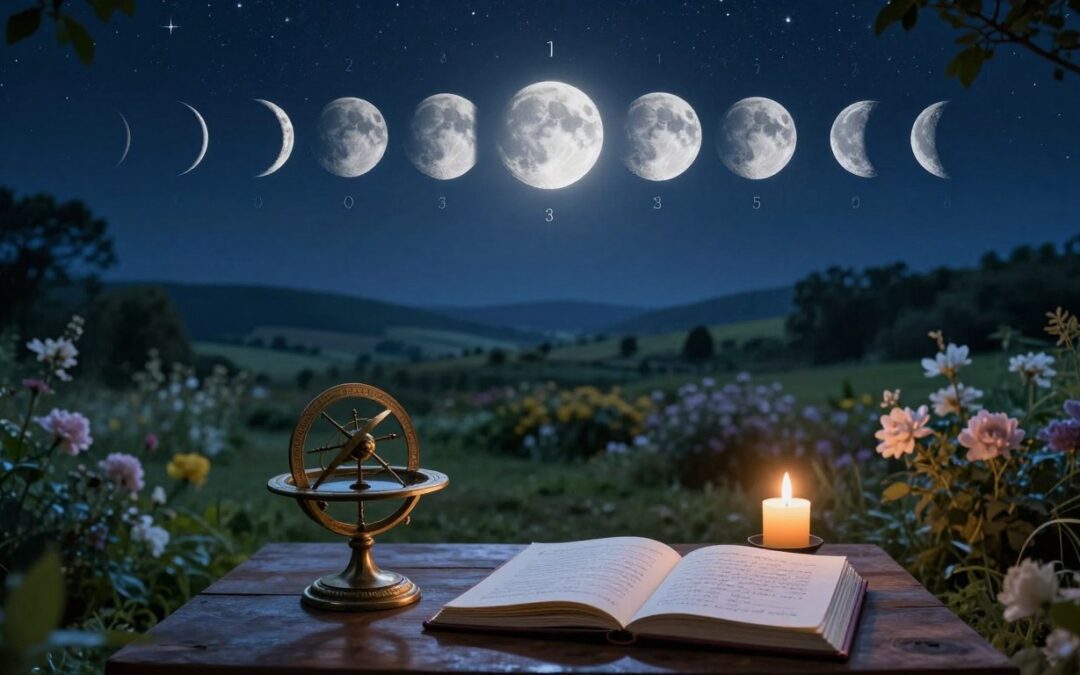
Ever felt a change in energy that matches the moon’s glow? Most people rarely look up. Yet, moon cycles quietly shape our world.
By tuning into celestial shifts, we can align our goals with nature’s rhythm.
Ancient civilizations watched the night sky for spiritual guidance. They knew cosmic movements controlled ocean tides and plant growth. Yet, today, we often ignore these forces.
Learning about cosmic rhythms helps us appreciate nature’s elegance and boosts productivity. Staying connected to sky patterns enhances daily focus. We believe these cycles bring peace to our busy lives.
Our journey is about understanding why sky movements matter. We seek harmony through watching the sky. This practice turns our routines into meaningful experiences.
Key Takeaways
- Understanding phases helps plan activities.
- Moon cycles influence emotions and energy.
- Sky watching connects us with nature.
- Observing patterns improves daily mindfulness.
- Awareness supports personal growth and balance.
Understanding the Lunar Calendar
Learning about the lunar calendar helps us see how the Earth and Moon interact. It’s based on the Moon’s orbit around our planet. This orbit, called a lunation, takes about 29.5 days. During this time, the Moon goes through different phases.
What is the Lunar Calendar?
The lunar calendar organizes days by the Moon’s cycles. It’s different from the solar calendar, which follows the Earth’s orbit around the Sun. The lunar calendar focuses on the Moon’s phases. This makes its dates change compared to the solar calendar.
Many cultures use the lunar calendar for planning. It helps with farming, festivals, and other important events. For example, the lunar calendar is used in various ways around the world.
The lunar cycle has many phases. It starts with the new moon and ends with the waning crescent. Each phase has its own special meaning and is tied to different activities and rituals.
Importance of Lunar Tracking
Tracking the lunar calendar is key for many reasons. It has helped farmers plan planting and harvesting for centuries. Some believe planting during the new moon can improve crop yields.
The lunar calendar also sets the dates for cultural and religious festivals. For those interested in lunar influence, tracking the Moon’s phases can offer insights into personal and spiritual growth.
Lunar tracking has uses today, from gardening to astrology and personal planning. By following the lunar calendar, people can sync their activities with the Moon’s natural cycles. This can boost productivity and spiritual awareness.
Phases of the Moon Explained
When we look up at the night sky, we see the moon’s phases change. This reminds us of the lunar cycle calendar, a wonder that has inspired many cultures. The moon orbits the Earth, going through phases based on its position relative to the Earth and sun.
The lunar cycle has eight distinct phases, each with its own features. Knowing these phases helps us track the moon calendar and appreciate the moon’s cycles.
New Moon and Waxing Phases
The cycle starts with the New Moon, when the moon is between the Earth and sun, making it invisible. This phase is linked to new beginnings. It’s a good time to set goals, as our article on New Moon reading online explains.
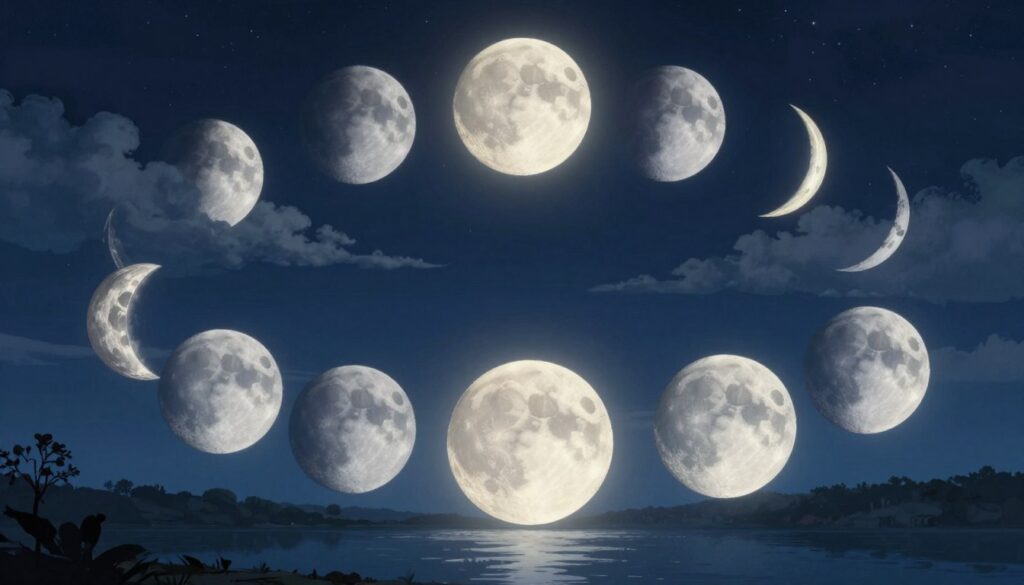
Then, the moon becomes visible as a growing sliver of light in the Waxing Crescent phase. It reaches the First Quarter as half-illuminated. The Waxing Gibbous phase follows, with the moon appearing larger and fuller as it gets closer to full illumination.
Full Moon and Waning Phases
The Full Moon is easily recognizable, with the entire moon lit up by the sun. This phase is linked to high energy and is important in many cultures and astronomy.
After the Full Moon, the moon starts to wane, entering the Waning Gibbous phase. We see a decrease in light. The cycle continues with the Last Quarter, where the moon is half-illuminated but on the opposite side. Then, the moon enters its Waning Crescent phase, appearing as a thin crescent before returning to the New Moon phase.
Understanding these phases and their role in the lunar cycle calendar deepens our appreciation for the moon’s beauty and its impact on our world.
Tools to Track the Lunar Calendar
To keep up with the lunar cycle, having the right tools is key. There are many options out there. People can easily track the lunar calendar and know about moon phases and events.
Online Lunar Calendar Websites
Many websites give detailed lunar calendar info, including moon phase and event tracking. They also offer moonrise and moonset times. This helps users plan their lunar observations.
Key Features to Look for:
- Accurate moon phase information
- Moonrise and moonset times
- Lunar event tracking
Mobile Apps for Moon Tracking
Mobile apps make tracking the lunar calendar easy on the go. Apps like My Moon Phase and Sky Tonight have various features for different needs.
My Moon Phase is loved for its sleek design and detailed info. It shows the current moon cycle and the next full moon’s timing.
- User-friendly interface
- Accurate and up-to-date information
- Customizable settings for personalized lunar tracking
Using these tools, people can improve their lunar awareness. They can stay connected with the lunar cycle.
How to Use Lunar Calendar for Gardening
Gardening with the lunar cycle is an old tradition. Many think the Moon affects soil water, like it does ocean tides. By using the lunar calendar, gardeners can find the best times to plant, water, or harvest.
The lunar calendar helps gardeners know when to do gardening tasks. With a lunar calendar website or tool, they can plan with the Moon’s phases.
Best Planting Times According to the Moon
The Moon’s cycles affect plant growth. The new moon and waxing crescent phases are best for planting above-ground crops like leafy greens and tomatoes.
The waning crescent phase is better for root vegetables, such as carrots and beets. Knowing the Moon’s phases helps gardeners plan their planting.
| Moon Phase | Planting Activities |
|---|---|
| New Moon | Plant above-ground crops |
| Waxing Crescent | Continue planting above-ground crops |
| Full Moon | Avoid planting; focus on maintenance |
| Waning Gibbous | Prune and harvest |
| Waning Crescent | Plant root vegetables |
Moon Phases and Harvesting
The Moon’s phases also guide when to harvest. For example, crops are believed to taste better and be more nutritious during the waning gibbous phase.
Using the lunar calendar can improve gardening. It’s useful for both new and experienced gardeners. Adding it to your routine can enhance your gardening skills.
Lunar Calendar in Cultural Context
The lunar calendar has a big role in many parts of our lives. It has been used for tracking time, planning farming, and setting up cultural events for centuries. We will look at how it has shaped our traditions and how it affects us today.
Influence on Festivals and Traditions
For ages, people have named Full Moons, showing the lunar calendar’s deep cultural impact. Many cultures use the lunar cycle to plan their celebrations and farming. For example, the lunar calendar helps set the dates for important festivals.
| Culture | Festival/Tradition | Lunar Calendar Significance |
|---|---|---|
| Chinese | Mid-Autumn Festival | Celebrated during the full moon of the 8th lunar month |
| Native American | Harvest Moon Festival | Observed during the full moon closest to the autumnal equinox |
| Buddhist | Uposatha Days | Observed on new moon and full moon days |
Astrology and the Lunar Cycle
The lunar cycle is also linked to astrology, shaping beliefs about personality and destiny. Astrologers use the lunar calendar to understand the movements of stars and their effects on us.
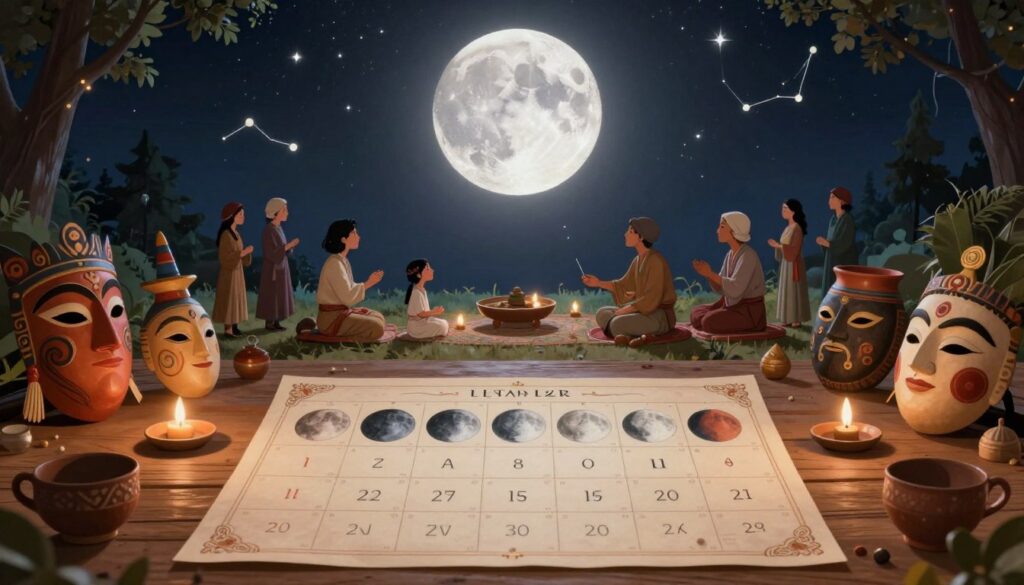
In conclusion, the lunar calendar’s impact goes beyond its practical uses. It deeply influences our culture and traditions. By understanding and valuing the lunar calendar, we can learn more about our rich cultural heritage.
Observing the Moon: A Beginner’s Guide
Exploring the lunar cycle calendar is exciting. It leads to observing the moon, a rewarding experience. You’ll learn about the lunar cycle and its phases.
Equipment for Moon Observation
You don’t need special equipment to start. But, the right tools can make it better.
- The naked eye can observe the moon’s phases and some surface features.
- Binoculars provide a closer look, revealing more details on the moon’s surface.
- Telescopes offer the most detailed views, allowing observers to see craters, mountains, and other lunar features.
Tips for Viewing Different Phases
Different moon phases offer unique views.
The Full Moon is bright and big. But, it’s not great for details because of the sunlight.
The crescent and gibbous phases are better. They show surface details because of the sun’s shadows.
| Moon Phase | Best Viewing Method | Notable Features |
|---|---|---|
| New Moon | Not observable | – |
| Crescent | Binoculars/Telescope | Shadowed craters and mountains |
| First Quarter | Telescope | Detailed surface features due to angled sunlight |
| Full Moon | Naked Eye | Brightness, size, and some surface features |
| Last Quarter | Telescope | Similar to First Quarter, with detailed surface features |
| Gibbous | Binoculars/Telescope | Shadows highlighting lunar topography |
For a deeper understanding, read Understanding the Moon Phases: A Beginner’s.
Follow these tips to enjoy moon-gazing. You’ll appreciate the lunar cycle calendar more.
Keeping a Lunar Journal
Writing down the lunar cycle can help us understand its impact on our lives. A lunar journal lets us connect with the moon’s phases. It’s a way to reflect on our experiences and observations.
Keeping a lunar journal is both therapeutic and enlightening. It makes us more aware of the moon’s influence on our daily lives. Moon calendar tracking becomes more meaningful when we record our insights over time.
Benefits of Documenting Moon Phases
Writing about the moon’s phases in a journal has many benefits. It deepens our understanding of the lunar cycle and its influences. By regularly recording our observations, we can spot patterns and connections between the moon and our experiences.
- Improved awareness of the lunar cycle
- Enhanced personal reflection and insight
- Better understanding of the moon’s influence on natural phenomena
For those looking to deepen their practice, starting a lunar self-care journaling ritual can be a powerful way to integrate lunar awareness into daily life.
What to Include in Your Journal
There are several things you can include in your lunar journal to make it more meaningful.
| Entry Type | Description | Example |
|---|---|---|
| Date and Phase | Record the date and the corresponding moon phase. | December 10, 2023 – Full Moon |
| Observations | Note your observations about the moon’s appearance and any related events. | The full moon was very bright, and the tides were higher than usual. |
| Personal Reflections | Include your thoughts, feelings, and experiences related to the moon’s phase. | I felt a sense of release during the full moon, letting go of things that no longer serve me. |
By including these elements, your lunar journal will become a rich and personal record of your journey with the moon. Lunar event tracking through journaling deepens our connection with the lunar cycle. It also fosters a greater appreciation for the natural world.
Integrating the Lunar Calendar into Daily Life
Using the lunar calendar in our daily lives helps us connect with nature and ourselves. It makes our lives more balanced and harmonious.
We can start by making routine adjustments based on lunar phases. For example, during the new moon, we set intentions and plan new projects. As the moon grows, we focus on growth and action towards our goals.
The full moon is for reflection and release. We let go of things that no longer serve us. During the waning moon, we focus on closure and preparing for the next cycle.
Routine Adjustments Based on Lunar Phases
With a lunar calendar website or lunar calendar app, we stay updated on the lunar phase. This helps us plan our activities. For instance, many plan important decisions during the new moon.
Others schedule rituals or ceremonies during the full moon. This marks significant life events or transitions.
Some adjust their daily routines with the lunar cycle. They might be more active during the waxing phase and introspective during the waning. This aligns our energy with nature’s rhythms.
Mindfulness and Lunar Awareness
Using the lunar calendar in our lives boosts mindfulness and lunar awareness. It makes us more connected to the natural world and its cycles. This awareness increases our connection to the earth and its rhythms.
Practicing lunar awareness also makes us more present and mindful. For example, during the full moon, we reflect on our accomplishments and release negative thoughts. Keeping a lunar journal helps track our progress and insights.
Embracing the lunar calendar brings a mindful and balanced approach to life. It helps us grow personally and live in harmony with nature.
Common Misconceptions About the Lunar Calendar
Exploring the lunar calendar tracking world, it’s key to know what’s real and what’s not. The lunar calendar, a valuable lunar calendar tool for many, is often misunderstood. This leads to many misconceptions about its role in our lives.
Many think the lunar calendar mainly predicts when to plant crops or affects our behavior. But, it’s used for more than just planning farm work. Its uses and effects are wider and more complex.
Myth vs. Fact
Let’s look at some common myths about the lunar calendar:
- Myth: The full moon makes people act crazy.
- Fact: There’s no proof that the full moon changes how we behave.
- Myth: The moon’s cycle affects hair growth.
- Fact: Some think the moon’s phases can affect hair growth. But, there’s no solid scientific proof for this.
For more on debunking lunar tracking myths, check out this resource. It talks about myths that stop people from starting their lunar tracking journey.
Clarifying Popular Beliefs
Some believe the lunar calendar helps with gardening. They think planting and harvesting should match the moon’s phases. This practice is old and followed by many. But, scientists are not all agreed on its benefits.
| Belief | Fact |
|---|---|
| Gardening according to lunar phases improves crop yield. | Some gardeners believe it, but there’s not much scientific proof. |
| The full moon is a good time for harvesting. | Some believe it, but it’s not widely accepted. |
“The moon is not just a rock orbiting around the Earth; it’s a symbol of the cyclical nature of life.”
Using a lunar calendar tool can help clear up these beliefs. It gives a structured way to track and observe the lunar cycle’s possible effects.
By knowing the facts and myths about the lunar calendar, we can better see its value. It helps us organize our lives in sync with nature’s cycles.
Resources for Further Learning
To learn more about the lunar cycle, check out different resources. You can track lunar phases using online tools and study materials. This will help you understand the lunar cycle better.
Books and Online Resources
There are many books and websites for lunar studies. You can find lots of info on the lunar cycle calendar and its effects on life. Visit newmoonreadingonline.com to learn about scheduling moon readings and planning dates.
Workshops and Community Events
Workshops and community events can also teach you about lunar phases. These events let you learn from experts and meet others who are interested in the lunar cycle.
[…] journal can be incredibly helpful. Tracking energy levels throughout the different phases of the moon allows us to recognize…
[…] Reading is a new platform that offers personalized insights based on the lunar cycle1. It’s different from generic horoscopes,…
[…] As we set intentions aligned with the New Moon energy, we open ourselves to the power of manifestation. By…
[…] intentions during the new moon is a powerful practice that allows me to declare my goals and aspirations. It…
[…] These readings provide a convenient and accessible way to connect with the energies of the new moon and gain…