
Ever wondered why you toss and turn more on bright nights? We think there’s a secret connection between our sleep and the moon. Humans have been curious about this for centuries.
Ancient tales said our moods and actions follow the moon. Now, modern science backs up these old stories. Studies show a strong link between the moon’s phases and our sleep quality.
Do lunar phases really change our sleep patterns? Let’s explore the data and see what happens when it’s dark. Understanding these patterns can improve our health.
For ages, people looked to the stars for health clues. Today, we have tools to measure brain and heart activity. This helps us see if moonlight really messes with our internal clocks.
Many of us feel more tired or alert based on the lunar calendar. We’ll look at how gravity and light affect our habits.
Key Takeaways
- Full lunar phases might reduce total rest time.
- It often takes longer to fall into deep slumber.
- Scientists found brain activity changes based on light levels.
- Melatonin levels stay lower when that night sky is bright.
- Men and women may react differently to these cosmic patterns.
- Modern data confirms historical theories about lunar influence.
An Overview of Sleep Cycles
Exploring thelunar connection to sleep cycles starts with sleep basics. Sleep cycles are key for our health, helping our bodies and minds recover.
Sleep has different stages, each important for our well-being. Knowing these stages helps us see how the moon might affect our sleep.
Understanding the Stages of Sleep
Sleep is not just one state but a series of stages. These stages are divided into REM (Rapid Eye Movement) and non-REM sleep. Non-REM sleep has three stages, each with its own brain wave patterns and level of consciousness.
The first non-REM stage is when we start to fall asleep, with slower brain waves. The second stage is deeper, with a slower heart rate and lower body temperature. The third stage, slow-wave sleep, is key for physical recovery.
REM sleep is when we dream most, important for our mental health and memory. A full sleep cycle lasts about 90-120 minutes, with several happening each night.
Importance of Sleep for Health
Sleep is essential for our health, affecting our brain and emotions. It helps our body repair, build bone and muscle, and boost our immune system.
A study from theUniversity of Washington showed sleep can be influenced by the moon. Learning about moon phases and sleep can help us sleep better, as seen inNew Moon Reading Online.
In summary, knowing about sleep cycles and their role in health is vital. By understanding how sleep works and its importance, we can see how the moon might impact our rest.
The Moon’s Phases Explained
The moon’s phases have always fascinated people. Their effect on sleep is now being studied more. By learning about the lunar cycle, we can see how it might affect our sleep.
The lunar cycle shows different phases, based on how much of the moon we can see from Earth. It’s not just a pretty sight; it might also affect our sleep quality. For more on moon phases and sleep, check out Sleep Foundation.
New Moon to Full Moon Cycle
As the moon goes from new to full, it gets brighter. More of its light is visible from Earth. This change in light might affect our sleep patterns.
Experts say the full moon has been linked to sleep and behavior in folklore and culture.
“The full moon, being the brightest phase, has been a subject of human fascination and has been linked to various aspects of human life.”
To learn about the moon’s influence on sleep, visit New Moon Readings Online. They offer insights into lunar cycles and their effects.
How Moonlight Changes
Moonlight changes a lot during the lunar cycle, with the full moon being the brightest. This change in light might affect our sleep-wake cycles. As the moon gets brighter, it might make it harder to fall asleep or shorten our sleep time.
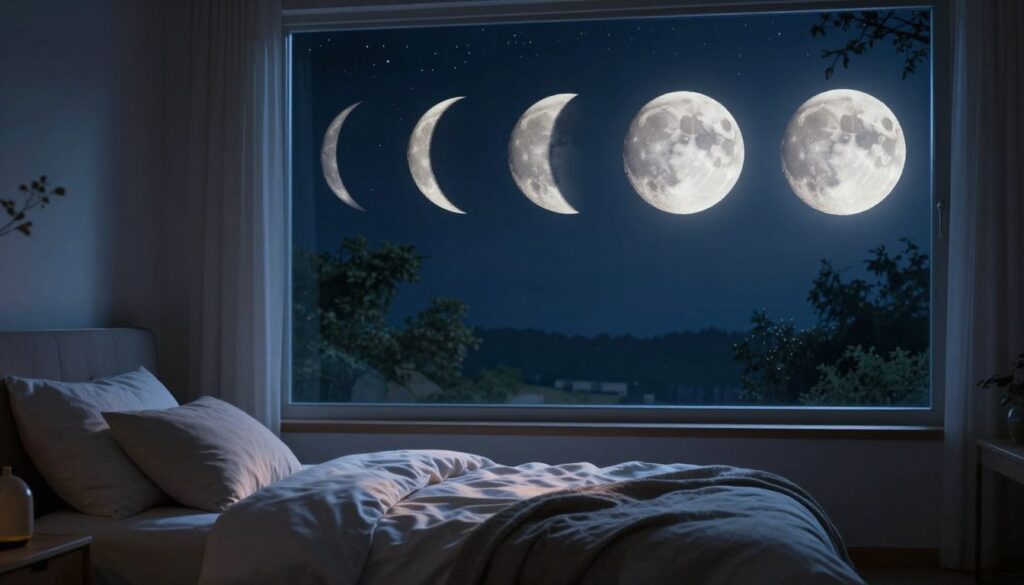
The change in moonlight is not just about how bright it is. It’s also about the feelings and traditions tied to each phase. Knowing these can help us understand how the moon might affect our sleep.
Historical Perspectives on Moon and Sleep
For centuries, the moon has been linked to human experiences, including sleep. The moon’s phases have fascinated people, influencing many aspects of life.
Ancient cultures revered the moon, believing it could affect more than just the tides. They thought it could influence human affairs too.
Ancient Beliefs about the Moon
Many ancient civilizations saw the moon as having mythological and mystical powers. The Greeks linked it to Selene, while the Romans called it Luna. These beliefs often tied the moon to human behavior and sleep.
They believed the lunar cycle could affect our circadian rhythm. Some thought the full moon could disrupt sleep. This history helps us understand why the moon is studied in sleep research today.
Cultural References in Literature
Literature worldwide often mentions the moon’s effect on humans. From folklore to poetry, the moon is seen as deeply impactful on the human mind.
In some cultures, the full moon is linked to more activity or altered behavior. This idea is seen in literature and popular culture. These stories reflect old beliefs and shape our views on the moon’s impact on sleep today.
Looking at these historical and cultural views helps us understand the moon’s role in sleep and behavior. It shows how the lunar cycle has been seen and its possible effects on us.
Scientific Studies on Moon Influence
As we explore sleep mysteries, studies show the moon’s subtle impact. The lunar cycle, with its phases and moonlight changes, is studied for its effect on sleep.
Key Findings from Recent Research
Recent studies use modern methods to look at the moon’s sleep effect. For example, a study found people sleep less and have poorer quality sleep during the full moon as reported by research. This shows the lunar impact on sleep behavior is a key area of study.
Sleep Quality and Moon Phases
Sleep quality is influenced by many factors, including the moon’s phases. Research shows that during the full moon, people:
- Have less sleep
- Experience poorer sleep quality
- Take longer to fall asleep
These findings are key to understanding the lunar influence on our rest. Recognizing the moon’s role in sleep helps us tackle sleep issues.
In summary, studies confirm the moon’s phases, like the full moon, impact our sleep. By grasping these lunar effects, we can improve our sleep and well-being.
The Role of Light in Sleep
Light has a big impact on our sleep. It helps control our sleep-wake cycles. This affects how long and well we sleep.
Artificial and natural light both play key roles. Artificial light, like from screens, can stop melatonin production. This hormone helps us sleep. Blue light tricks our brain into thinking it’s daytime.
Impact of Artificial Light
More people use electronic devices and energy-saving lights. This means more artificial light, which can mess with our sleep. Try to cut down on artificial light in the evening to help.
Natural Light Sources
Natural light, like from the moon, affects sleep differently. Studies show that the moon’s cycles can change our sleep. For example, full moon nights might lead to worse sleep.
A Yale study found that the moon’s cycles impact our sleep. Sleep quality changes with the lunar phases. Learn more about this interesting research here.
In summary, knowing how light affects sleep is key to better sleep. Being aware of both artificial and natural light helps create a good sleep space.
Effects of the Full Moon on Sleep
The full moon’s impact on sleep is complex. It’s influenced by psychological, behavioral, and environmental factors. This shows that the full moon can greatly affect our sleep.
The full moon’s brightness can disrupt our natural sleep cycle. This is because the moon affects our internal clocks that control sleep.
Common Experiences During Full Moon
Many people struggle with sleep disturbances during a full moon. They might find it hard to fall asleep, sleep lightly, or wake up often. Some studies support these claims, linking the lunar cycle to sleep quality.
Common issues during full moon nights include:
- Increased alertness and restlessness
- Vivid dreams or nightmares
- Early waking and trouble falling back asleep
Psychological and Behavioral Effects
The full moon can also affect our minds and actions, which can impact sleep. For some, it raises anxiety and stress, making sleep harder.
Our behavior can change with the full moon, affecting sleep. Some might stay out late or do things that disrupt their sleep routine.
Understanding these factors helps us see how the lunar cycle and sleep are connected. This knowledge can help us manage any negative effects on our sleep.
Individual Variations in Sleep Patterns
Sleep patterns vary a lot among people. This is due to differences in age, lifestyle, and biology. When we look at the moon’s effect on sleep quality, it’s clear that everyone is different.
Sleep Preferences Across Different Demographics
People of different ages and lifestyles have unique sleep needs. For example, older adults often sleep less deeply. Work schedules and how active someone is can also affect their sleep.
Research shows that younger people have more flexible sleep times. Older adults stick to traditional sleep patterns. Cultural and societal factors also play a role, with some cultures sleeping in two parts a day.
The Role of Circadian Rhythms
Circadian rhythms control our sleep-wake cycles. These rhythms are influenced by light, which can change with the moon. The moon’s brightness, like during a full moon, might affect our sleep, mainly for those who are light-sensitive.
For those curious about the moon’s impact on dreams and sleep, moon reading for dream interpretation can provide insights. It explores how lunar phases might affect our subconscious and sleep.
The moon’s cycles and our internal clocks interact in complex ways. Some studies suggest the full moon can disrupt sleep, but others say this effect is small. Knowing these influences can help improve sleep hygiene.
- Demographic factors like age and lifestyle greatly affect sleep patterns.
- Circadian rhythms are key in managing sleep-wake cycles and can be influenced by the moon.
- Being aware of the moon’s effect on sleep quality can help in finding better sleep strategies.
Connection Between Lunar Events and Mental Health
The moon’s effect on our lives is a mystery we’re trying to solve. We’re looking into how lunar cycles affect our mental health. The moon’s phases and changes in moonlight are key areas of study.
Mood and the Moon
Research shows the moon might change our mood. The full moon, in particular, is linked to mood swings. This could be because of its brightness and cultural significance.
Lunar energy is being studied for its effects on us. It might help us perform better, showing its importance in our lives.
Studies say the full moon can make us feel more emotional and anxious. This might be because of the moon’s impact on our body’s rhythms and its bright light.
Anxiety and Sleep Disruptions
Anxiety can mess with our sleep. If the moon affects our anxiety, it could also mess with our sleep. Understanding this link is key to better sleep and mental health.
The moon’s cycles, anxiety, and sleep issues are complex. But research is finding patterns. This could lead to new ways to manage our sleep and mental health.
To grasp the moon’s impact on our mental health and sleep, let’s look at some findings:
| Lunar Phase | Potential Effect on Mood | Potential Effect on Sleep |
|---|---|---|
| New Moon | Renewal, new beginnings | Variable, potentially improved |
| Full Moon | Increased emotional intensity | Disrupted, potentially due to increased anxiety |
| Waxing Crescent | Increasing energy, motivation | Generally stable |
| Waning Gibbous | Release, letting go | Variable, potentially challenging |
By studying the moon’s phases and their effects on mood and sleep, we can learn to manage these changes. This helps us stay mentally well.
Sleep Hygiene Tips for Lunar Nights
Good sleep hygiene is key, even more so during lunar nights. The moon’s effect on our sleep can be stronger. Simple strategies can help reduce the moon’s impact on our sleep.
Creating a Better Sleep Environment
Our bedrooms should be dark, quiet, and cool for better sleep. Blackout curtains are great for full moon nights. They block out the moon’s light. Also, white noise machines or earplugs can block out noise.
Managing Light Exposure
Light exposure is vital, even more so at night. Natural light during the day helps our body clock. But, we should limit light at night. Dimming lights and avoiding screens before bed helps.
For moon phase checks, use a moon phase app in night mode. This keeps the room dark.
“A consistent sleep schedule helps regulate the body’s internal clock, making it easier to fall asleep and stay asleep.”
By following these tips, we can improve our sleep during lunar nights. It’s about making our sleep space right and watching our light use.
Current Trends in Lunar Sleep Research
New studies and technologies are changing how we look at the moon’s effect on sleep. Researchers use advanced tools and work together across fields. They aim to understand lunar cycle sleep disturbances and how they affect our health.
Wearable tech and mobile apps help collect sleep data linked to lunar cycles. This data is key for spotting patterns and grasping the lunar impact on sleep behavior.
Emerging Studies and Technologies
Studies now use machine learning algorithms to link sleep patterns with lunar phases. They’ve found links between the full moon and sleep quality issues. For example, a study on The Conversation shed light on the moon’s role in sleep and mood.
Advances in actigraphy and sleep tracking tools offer detailed insights into sleep during lunar phases. These tools help us understand the moon’s effect on sleep better.
Collaborations Between Astronomy and Sleep Science
The field where astronomy meets sleep science is growing fast. It promises to deepen our knowledge of lunar sleep effects. For instance, a study on moon readings for students showed how lunar awareness can improve learning and sleep.
By working together, astronomers and sleep scientists are creating new research methods. These methods consider the moon’s cycles, sleep, and health. This teamwork is essential for a detailed understanding of the moon’s sleep impact.
Practical Takeaways on Lunar Influence on Sleep
Learning about the moon’s effect on sleep can help us sleep better. Knowing the moon’s phases can guide us to improve our sleep. We can take steps to lessen any negative moon effects.
Better Sleep Considerations
To sleep better during the moon’s cycles, try not to use electronics before bed. Make your bedroom a sleep-friendly space by keeping it dark. Mindfulness or meditation can also help.
Getting comfortable bedding is another smart move for better sleep. A study on Bedthreads shows that being aware of the moon’s impact can improve our sleep habits. This knowledge helps us care for our sleep in a more complete way.
Fostering Lunar Awareness
Adding lunar awareness to our daily lives can help us manage our sleep. This approach can boost our overall health and sleep quality.
[…] journal can be incredibly helpful. Tracking energy levels throughout the different phases of the moon allows us to recognize…
[…] Reading is a new platform that offers personalized insights based on the lunar cycle1. It’s different from generic horoscopes,…
[…] As we set intentions aligned with the New Moon energy, we open ourselves to the power of manifestation. By…
[…] intentions during the new moon is a powerful practice that allows me to declare my goals and aspirations. It…
[…] These readings provide a convenient and accessible way to connect with the energies of the new moon and gain…