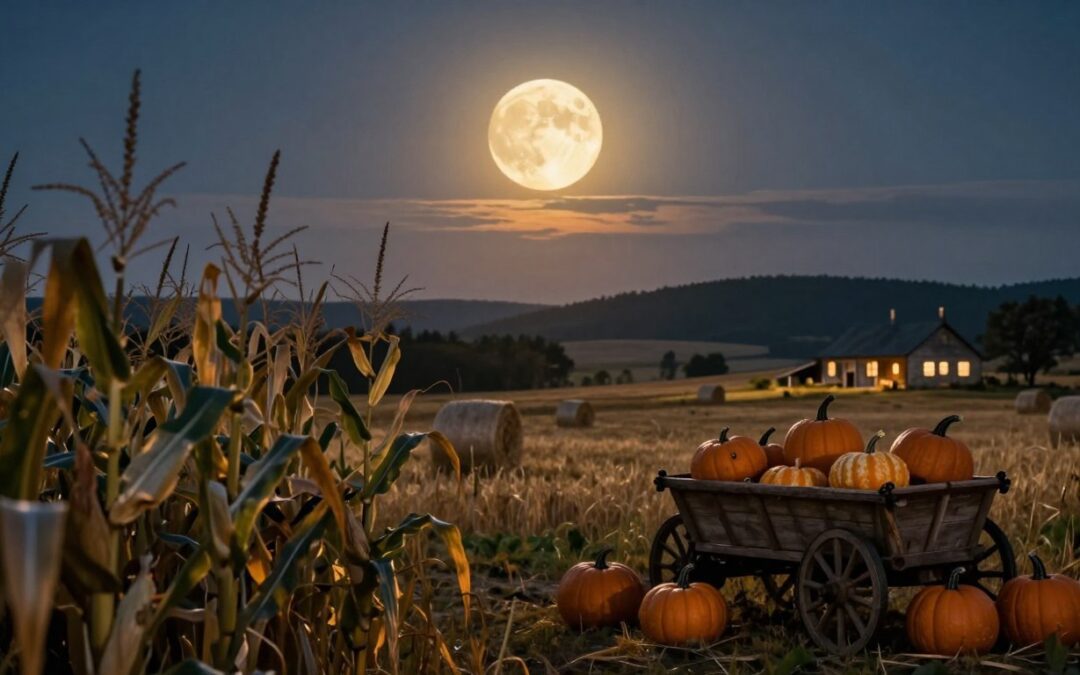
Have you ever noticed how one specific autumn night feels more magical than others? We often watch our horizon for this golden glow to understand its true harvest moon meaning. This bright event arrives right around Autumn Equinox each year.
In the Northern Hemisphere, it signals a peak in our gathering season. We rely on its extra brilliance to finish our work before winter’s chill. It marks a vital bridge between summer heat and coming cold.
This celestial occurrence carries full moon significance that touches both fields and spirits. We see it as a time for community, gratitude, and careful preparation. It serves as a powerful cultural phenomenon that connects us to our ancestors.
Key Takeaways
- It occurs closest to Autumn Equinox each year.
- Extra light helps farmers gather crops late into evening.
- This event signals preparation for darker months ahead.
- Many cultures view it as a time for spiritual reflection.
- It represents a peak in Northern Hemisphere gathering seasons.
- We celebrate it as a symbol of seasonal balance.
What is the Harvest Moon?
The full moon near the Autumn Equinox is called the Harvest Moon. It’s filled with tradition and has big astronomical importance.
Looking up at the sky, the Harvest Moon is special. It’s because of its timing and its role in our lunar calendar.
Definition and Timing
The Harvest Moon is close to the Autumn Equinox. It’s the full moon near when day and night are the same length.
This happens in September or October in the Northern Hemisphere. The Almanac says the exact date changes each year because of the lunar cycle’s complexity.
Astronomical Explanation
The Harvest Moon’s orbit and Earth’s tilt explain it. The Moon orbits the Earth at an angle, not parallel to the Earth’s equator. This makes the Moon rise almost the same time for a few nights around the full moon near the Autumn Equinox.
This special rise is because of Earth’s tilt and the Moon’s position relative to the Earth’s equator at this time.
| Moon Phase | Rising Time | Significance |
|---|---|---|
| Harvest Moon | Shortly after sunset for several nights | Provides extra light for harvest activities |
| Other Full Moons | Rises approximately 50 minutes later each night | Typical lunar cycle behavior |
The unique rising pattern of the Harvest Moon can be visualized in the following image:
Understanding the Harvest Moon’s definition, timing, and astronomical reasons helps us see its importance. It’s not just a full moon. It’s key for farming and cultural traditions.
Cultural Importance of the Harvest Moon
The Harvest Moon is celebrated worldwide, with traditions and festivities that vary. It holds cultural importance, showing our historical tie to lunar cycles for farming.
Traditions Around the World
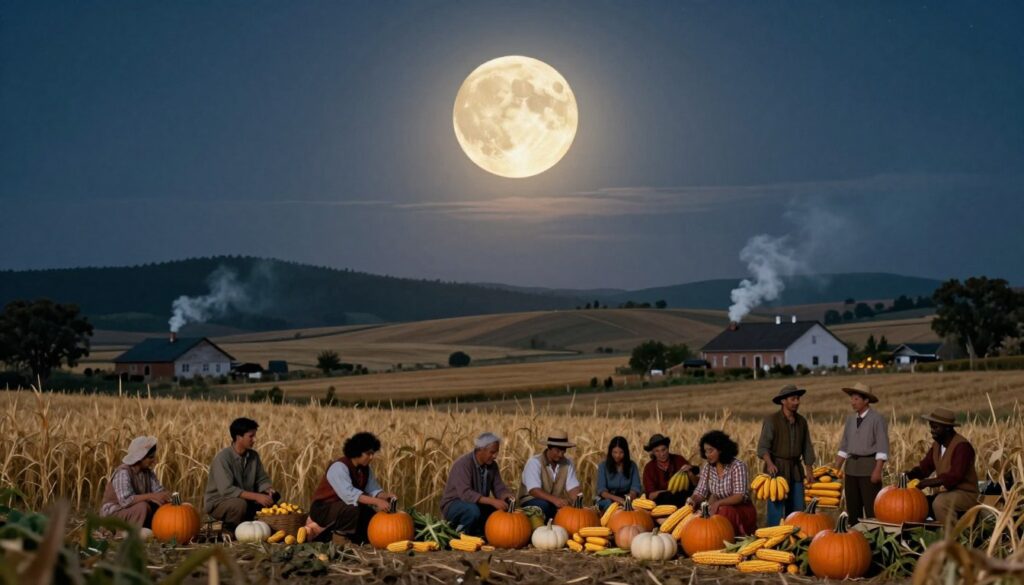
Many cultures celebrate the Harvest Moon in their own ways. In China, the Mid-Autumn Festival is a big event where families come together. They admire the moon, showing gratitude for the harvest and unity.
In Japan, the Tsukimi or “moon viewing” tradition is a highlight during the Harvest Moon. It celebrates the beauty of the moon.
Across the globe, lunar traditions are linked to the Harvest Moon. In the U.S., it was vital for farmers, providing light for late-night harvests. You can learn more about the history of the Harvest Moon and its role in farming.
Influence on Agriculture
The Harvest Moon greatly influenced agriculture, before modern lighting. Its extra light helped farmers work longer, ensuring crops were harvested on time. This harvest moon symbolism is celebrated today, showing the moon’s historical role in farming.
For gardeners interested in lunar cycles, new moon readings for gardening offer insights. They show how lunar phases can guide planting and harvesting.
The Harvest Moon in Folklore
The Harvest Moon is filled with myths and legends from around the world. It stands for gratitude, abundance, and looking back. We’ll see how cultures view this special moon and what it means to them.
Myths and Legends
The Harvest Moon is a key part of many myths and legends. It’s tied to harvest festivals and rituals that honor the season’s gifts. For example, in some Asian cultures, it’s a time for family gatherings and thanking the gods for the harvest.
In European folklore, the Harvest Moon is linked with love, fertility, and the supernatural. These stories show the moon’s effect on farming and our imagination. The full moon’s light has sparked countless tales of mystery and magic.
Symbolism in Different Cultures
The Harvest Moon’s meaning changes with each culture, yet some themes are shared. In many places, the moon is a symbol of femininity and fertility, showing its cycle and impact on nature. For instance, in some Native American cultures, it marks the season’s change and winter’s approach.
In other cultures, the Harvest Moon is a time for reflection and thanks. It signals the end of harvest and the start of rest and renewal. This shows the moon’s complex role in human culture.
Looking at how the Harvest Moon is seen and celebrated, we understand its deep meaning in lunar folklore. The common thread is the moon’s deep influence on us and our world.
How the Harvest Moon Affects Tides
The Harvest Moon, a key celestial event, greatly impacts our planet’s tides. This is because of its gravitational pull. This effect is most noticeable during the full moon, when the Moon is closest to Earth.
The Moon’s gravitational force makes the oceans bulge, creating high and low tides. During the Harvest Moon, this effect is stronger. This makes the tidal changes more noticeable. It’s important to understand this to see how the Moon affects our oceans.
Understanding the Moon’s Gravitational Pull
The Moon’s gravitational pull is what mainly changes tides on Earth. As the Moon orbits our planet, it pulls on the ocean water. This creates two high tides and two low tides each day, as the Earth rotates.
During the Harvest Moon, the Moon’s full phase and closeness to Earth make its pull stronger. This leads to bigger tidal changes. The Sun’s pull also adds to this, making the tides even more extreme, known as spring tides.
Impact on Coastal Areas
The stronger tides during the Harvest Moon can cause big problems for coastal areas. Higher high tides and lower low tides can lead to erosion, flooding, and more. Coastal communities and residents need to be ready for these changes.
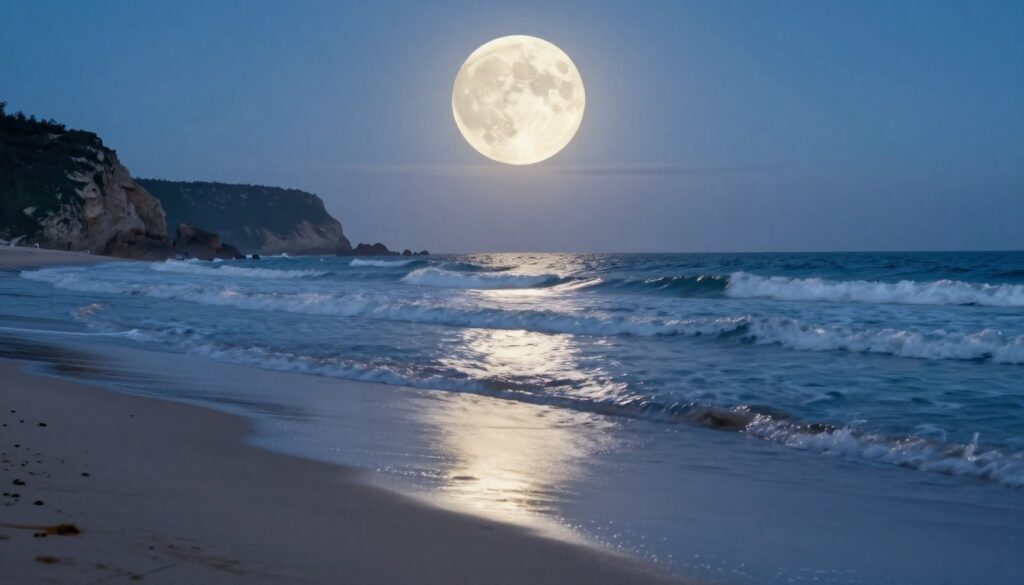
Understanding how the Harvest Moon affects tides helps us see the complex relationship between our planet and its satellite. This knowledge is also important for preparing for and responding to tidal events in coastal areas.
The Harvest Moon in Photography
The Harvest Moon is the full moon closest to the autumnal equinox. It’s a great time for photographers. Its large size and bright light make it perfect for amazing photos.
Understanding the significance of the full moon phase in photography is key. The full moon lets you capture the moon’s surface and its surroundings in a unique way.
Best Practices for Capturing the Moon
To get great shots of the Harvest Moon, you need to plan and have the right gear. Here are some tips:
- Use a tripod to keep your camera steady and avoid shake.
- Choose a camera with manual settings to adjust exposure and focus.
- Shoot in RAW format to capture more image data.
- Consider using a telephoto lens to get a closer shot of the moon.
For more tips on photographing the Harvest Moon, check out Sky at Night Magazine. They have expert advice on astrophotography.
Popular Locations for Photography
The Harvest Moon can be photographed from anywhere. But some places offer more stunning backdrops. Try capturing the moonrise or moonset over:
- Coastal areas with interesting rock formations or beaches.
- Mountainous regions with dramatic silhouettes.
- Urban landscapes with iconic buildings or monuments.
By using the right techniques and a beautiful location, you can take incredible photos of the Harvest Moon.
Celebrating the Harvest Moon
The Harvest Moon is celebrated for its bright light and deep meaning. It’s a time of lunar traditions in the United States. These traditions come from the country’s rich cultural and agricultural history.
When we see the Harvest Moon, people all over come together. They celebrate the season with many festivals and events. These focus on harvest and being thankful.
Festivals and Events in the U.S.
In the United States, there are many festivals and events during the Harvest Moon. Some include:
- Harvest festivals with local food, crafts, and music.
- Community gatherings with traditional foods and dances.
- Special events at historical sites and museums about the Harvest Moon’s cultural importance.
For example, many towns hold moon viewing parties. People gather to enjoy the full moon’s beauty. Some communities also join in group moon readings. This helps them connect with the lunar cycle more deeply.
Community Gatherings and Activities
Harvest Moon gatherings are about more than just fun. They’re about connecting with others. People share joy and gratitude for the season. Activities might include:
- Traditional crafts and workshops.
- Storytelling about harvest and moon folklore.
- Outdoor activities like moonlit walks or farm visits.
These events bring people together. They help us reconnect with nature and each other. Celebrating the Harvest Moon reminds us of the value of these shared experiences.
Health and Wellbeing during the Harvest Moon
The Harvest Moon has always fascinated us, and its effects on health and wellbeing are now a big topic. It impacts our sleep and mental health, which are key to our overall wellbeing.
Many think the full moon, including the Harvest Moon, deeply affects our lives. This is based on harvest moon symbolism and lunar folklore. Let’s look at how this moon phase can affect us.
The Moon’s Influence on Sleep
The full moon’s bright light and gravitational pull can affect our sleep. Some studies show that during a full moon, people sleep less well and take longer to fall asleep. This is thought to be due to the moon’s brightness and its effect on our body’s natural sleep cycle.
To fight the moon’s sleep effects, keep a regular sleep schedule and make your bedroom sleep-friendly. Dimming lights and avoiding screens before bed can also help improve sleep during the Harvest Moon.
Connection to Nature and Mental Health
Being in nature during the Harvest Moon can boost our mental health. The moon’s cycles have shaped human culture and folklore, deepening our bond with nature. Doing outdoor activities, like moonlit walks, can make us feel better.
The Harvest Moon also invites us to think about our lives and practices, like in lunar folklore. By embracing the moon’s symbolism, we can connect more with nature and possibly improve our mental health.
The Science Behind Harvest Moon’s Appearance
When we look at the Harvest Moon, its size and brightness amaze us. This isn’t just an illusion. There are real reasons behind it. The Moon’s look is shaped by its sky position and the Earth’s air.
Why it Looks Bigger and Brighter
The Moon seems bigger and brighter when it’s near the horizon. Our brain thinks it’s larger than when it’s higher. This is because of the Moon Illusion. It’s how our brain tricks us into seeing the Moon differently.
Role of Atmospheric Conditions
The air around us also changes how we see the Moon. The Earth’s atmosphere bends and scatters light. This makes the Moon seem larger and more vibrant when it’s full and near the horizon.
Learning about the science behind the Harvest Moon makes it even more special. The Moon’s position and the Earth’s air create a stunning sight. This sight has amazed people for centuries, tied to different moon phases.
Fun Facts About the Harvest Moon
The Harvest Moon has amazed people for centuries. It’s a full, bright Moon that lights up the night during harvest time. NASA says the term “harvest moon” comes from when farmers used the Moon’s light to work late https://spaceplace.nasa.gov/full-moons/.
Characteristics and Significance
The Harvest Moon is more than just a sight. It marks a time of achievement and gratitude. It shines a light on our accomplishments, urging us to celebrate and thank others. The full moon also brings truth and the chance to let go, helping us find balance in life https://newmoonreadingonline.com/beginner-moon-readings-online-learn-the-basics-of-lunar-influence/.
Observing the Autumn Moon
Watching the autumn moon is a special experience. Its brightness and timing make it a highlight in the lunar calendar. It’s a favorite among astronomers and sky watchers for its unique qualities.
[…] journal can be incredibly helpful. Tracking energy levels throughout the different phases of the moon allows us to recognize…
[…] Reading is a new platform that offers personalized insights based on the lunar cycle1. It’s different from generic horoscopes,…
[…] As we set intentions aligned with the New Moon energy, we open ourselves to the power of manifestation. By…
[…] intentions during the new moon is a powerful practice that allows me to declare my goals and aspirations. It…
[…] These readings provide a convenient and accessible way to connect with the energies of the new moon and gain…