
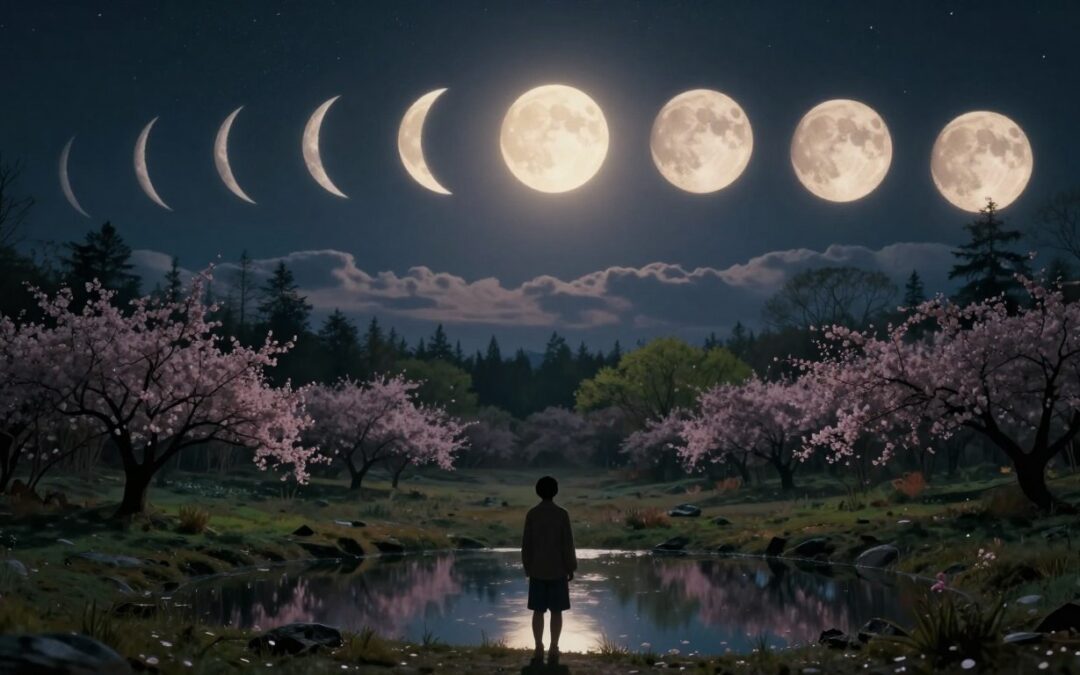
Have you ever thought about why our hidden sides come out at night? Luna, the moon, is more than just a glowing rock. She reflects our inner world, helping us understand our deep secrets.
Shadow work, exploring our dark sides, is not just about willpower. It also needs the right timing and patience. By learning about moon influence, we can better handle our emotions.
The moon doesn’t just move oceans; it also stirs our subconscious. By syncing with moon phases, we can naturally integrate our hidden selves. This way, our daily routines become a path to spiritual growth. *Are we ready to embrace this darkness to find our true light?*
Key Takeaways
- Moon phases act as a guide for self-discovery.
- Deep inner healing becomes easier with cosmic timing.
- New moons favor setting internal intentions.
- Full moons reveal hidden truths and emotional blocks.
- Rhythmic alignment supports long-term growth.
- Consistent shadow work builds emotional resilience.
Understanding Shadow Integration and Its Importance
Exploring shadow work reveals its key role in achieving self-balance during different lunar phases. Shadow integration is about recognizing and accepting our hidden personality aspects.
What Is Shadow Integration?
Shadow integration means facing and accepting our darker sides. This makes us whole and balanced. It’s based on psychological theories and is vital for personal growth.
By integrating our shadow, we understand our actions better. This self-discovery helps us change for the better. It shows us why we react in certain ways.
The Psychological Perspective
From a psychological view, shadow integration brings our hidden selves to light. This is key for healing and growth. It helps us face and solve unresolved issues.
Psychological theories say our shadow holds parts we’ve denied, often due to societal norms. Accepting these parts reduces guilt, shame, and anxiety. It leads to a more real and satisfying life.
If you want to learn more about shadow work, check out new moon readings for shadow work. They offer valuable insights and guidance.
The Scientific Basis of Lunar Cycles
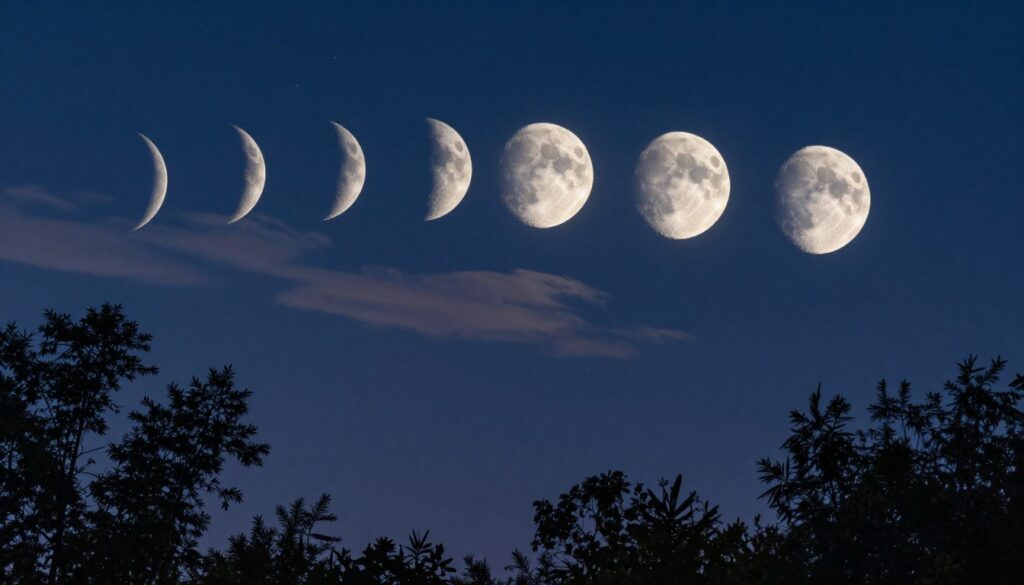
Learning about lunar cycles can help us understand their effects on us. The moon orbits the Earth in about 29.5 days. This journey is split into phases, each with its own look.
Phases of the Moon: An Overview
The moon’s phases change based on its position with Earth and the sun. The main phases are the new moon, waxing crescent, first quarter, waxing gibbous, full moon, waning gibbous, last quarter, and waning crescent.
- New Moon: The side of the moon facing the Earth is not lit by the sun.
- Waxing Crescent: The moon looks bigger as more of its lit side is seen from Earth.
- First Quarter: Half of the moon’s lit side is visible, with the right half seen from Earth.
- Waxing Gibbous: The moon looks fuller as more of its lit side is seen.
- Full Moon: The whole lit side of the moon faces Earth, making it fully visible.
- Waning Gibbous: The moon looks smaller as less of its lit side is seen.
- Last Quarter: Half of the moon’s lit side is visible again, but on the opposite side from the first quarter.
- Waning Crescent: The final phase before the new moon, where the moon appears as a thin crescent in the sky.
The Influence of Lunar Phases on Human Behavior
Studies show that lunar phases can affect our behavior and feelings. For example, the full moon is linked to more intense emotions and changes in behavior in some people.
Lunar phases can impact us in several ways:
- Increased emotional sensitivity during the full moon, leading to stronger emotional reactions.
- Changes in sleep patterns, with some sleeping less during the full moon.
- Menstrual cycle synchronization with the lunar cycle in some women, hinting at a hormonal connection.
These effects are not the same for everyone and can vary a lot. Yet, knowing about the lunar cycle’s influence can help us grow and understand ourselves better.
Historical Context of Lunar Cycles
Lunar cycles have been a big part of human history. They’ve shaped our spiritual, cultural, and farming ways. The moon’s phases have always fascinated us, guiding many parts of our lives.
Ancient Civilizations and Lunar Observations
Old civilizations watched the moon closely. They saw spiritual and cultural meanings in its phases. For example, the Maya civilization was great at astronomy, including the moon’s cycles. Their calendars often included lunar phases, showing the moon’s big role in their lives.
Also, ancient Mesopotamians used the moon to plan their year. Months started when they first saw the new moon. This helped with farming and their religious and cultural events.
| Civilization | Lunar Observation Significance | Cultural Impact |
|---|---|---|
| Maya | Astronomical observations, calendar systems | Influenced spiritual and cultural practices |
| Mesopotamians | Calendar organization, agricultural planning | Shaped religious rituals and cultural events |
| Native American Tribes | Spiritual significance, storytelling | Influenced community gatherings and ceremonies |
Cultural Significance of Lunar Phases
The moon’s phases have meant different things to different cultures. For instance, the full moon is linked to strong feelings and spiritual power. Many have held special ceremonies during this time, seeing it as a peak moment for spiritual connection.
To learn more about how lunar cycles can help us grow, check out our article on Moon-Guided Shadow Work. It shows how to use the moon’s power for personal growth.
Lunar phases have also shaped art, literature, and stories. The moon often stands for mystery, change, and the hidden parts of us.
The Connection Between Luna and Shadow Work
Exploring the link between lunar cycles and our inner world can change us. The moon’s phases deeply affect our feelings, influencing our subconscious and shadow selves.
As the moon changes, so do our emotions. This isn’t just a feeling; it’s based on the moon’s role in showing us our inner lives. By working with these lunar effects, we can grow and heal.
How Lunar Cycles Influence Emotions
The moon’s cycles are linked to our emotions. At the new moon, we feel fresh and ready to start anew. As the moon grows, so do our feelings, peaking at the full moon when we feel everything more intensely.
The full moon is great for shadow work. It’s when we face our hidden feelings and desires. The moon’s decline, or waning, is for releasing old patterns and emotions.
Harnessing Lunar Energy for Personal Growth
To grow personally, we can use the moon’s cycles. At the new moon, we can plan our shadow work. The full moon is for facing our shadow through journaling or meditation.
Linking our growth with the moon’s phases helps us reflect and heal. It makes our journey to self-awareness more meaningful. Working with the moon helps us understand ourselves better, leading to deeper shadow integration.
Shadow Integration Across Different Cultures
Exploring shadow integration across cultures reveals a rich tapestry of traditions tied to lunar cycles. This diversity shows the universality of shadow work. It also highlights the unique ways cultures confront and integrate their shadow selves.
Lunar Rituals in Various Traditions
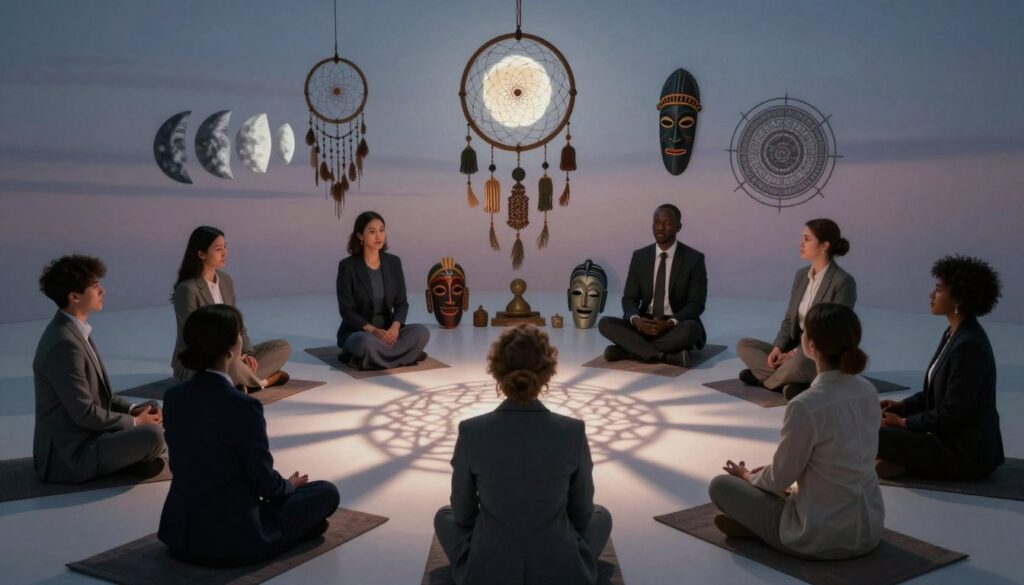
Lunar rituals are key in many cultures and spiritual practices. They often spark shadow work. For example, in many indigenous cultures, the full moon is for release. It’s a time to let go of negative energies and emotions, symbolizing shadow integration.
In various African cultures, the new moon is for new beginnings and setting intentions. This is a powerful practice for personal growth. By setting clear goals, individuals can confront their shadow selves that may hinder their progress. Learn more about moon-guided shadow work for deep healing.
How Different Cultures Approach Shadow Work
Shadow work approaches vary across cultures, reflecting their unique contexts. In some, it’s deeply tied to spiritual practices and rituals. In others, it’s more individual.
In Buddhist traditions, shadow work is part of meditation to recognize and transcend the ego. This integrates the shadow. In contrast, Western cultures often use a psychological approach, influenced by Carl Jung. This involves exploring the repressed self through therapy and journaling.
By looking at these diverse approaches, we understand the universal principles of shadow integration. We see how different cultures enrich this complex field.
Practical Steps for Shadow Integration
Integrating your shadow can be easier with simple practices tied to the moon’s phases. These practices help us grow and understand ourselves better. They use the moon’s energy to guide us.
Journaling During Specific Lunar Phases
Journaling is a great tool for shadow work. It lets us reflect on our thoughts, feelings, and experiences. By linking our journaling to the lunar cycle, we can use each phase’s energy for self-reflection.
At the new moon, we set intentions and think about what we want to change or achieve. It’s a time for starting anew and planting seeds for growth. Use journaling prompts to explore your dreams and goals.
As the moon grows, we journal about our journey, successes, and challenges. The full moon is for looking back, celebrating, and seeing what needs more work.
| Lunar Phase | Journaling Focus |
|---|---|
| New Moon | Setting intentions, new beginnings |
| Waxing Crescent | Tracking progress, identifying challenges |
| Full Moon | Reflection, celebration, and acknowledgment |
| Waning Gibbous | Release, letting go, and closure |
Meditation Practices Aligned with the Moon
Meditation, tied to the lunar cycle, boosts shadow work. It connects us to our inner selves and the world. By following the moon’s energy, we deepen our self-awareness.
At the new moon, meditation helps set intentions and envision our goals. As the moon grows, focus on patience, perseverance, and kindness to yourself. The full moon is best for meditation on release and letting go.
For more on moon-guided shadow work, check out Moon-Guided Shadow Work. It shares ways to use lunar cycles for healing.
Embracing the Energy of the New Moon
The new moon is a key moment in the lunar cycle. It offers a chance for renewal and setting new goals. This phase is great for personal growth and healing as it brings new beginnings.
Setting Intentions and Goals
At the new moon, we can reflect on our past and set new goals. We identify what we want to achieve and make sure it matches our values. It’s a time to be honest about our true desires.
To set good intentions, try journaling or meditating. Ask yourself:
- What are my core desires and goals for the next cycle?
- How can I make my daily actions match these goals?
- What obstacles might I face, and how can I overcome them?
Rituals for Release and Renewal
New moon rituals help us focus our intentions and let go of old patterns. Simple rituals include:
- Writing down what we want to release and then burning it.
- Making a vision board to represent our goals.
- Cleansing our space with sage or sweetgrass.
| Ritual | Benefit |
|---|---|
| Journaling Intentions | Clarifies goals and desires |
| Burning Release Letters | Symbolically lets go of past issues |
| Creating a Vision Board | Visualizes goals and focuses intentions |
For more on new moon readings and personal growth, check out New Moon Reading Online. It offers insights into using the new moon’s energy for self-improvement.
The Full Moon and Shadow Integration
The full moon lights up the night sky, shining a light on our inner shadows. It’s a special time for looking within and growing. The full moon helps us face parts of ourselves we usually hide.
Understanding Peak Emotions
Emotions are at their highest during the full moon. It’s a great time to understand and work with our feelings. Heightened emotions can reveal underlying issues that block our spiritual growth.
By exploring these emotions, we learn more about our shadow selves. This helps us grow spiritually.
The full moon makes our feelings stronger, perfect for looking inward. We can reflect on our emotions, spotting patterns and triggers. This helps us understand our shadow better.
For more on using the moon for healing, check out moon-guided shadow work.
Celebrating Achievements and Acknowledging Fears
The full moon is for facing fears and celebrating wins. Acknowledging our accomplishments boosts our confidence. Facing our fears helps us integrate our shadow fully.
This makes us more balanced and whole, helping our spiritual growth.
By embracing the full moon’s energy, we can deepen our shadow work. This leads to greater self-awareness and personal change.
Integrating Lunar Wisdom into Daily Life
Exploring the link between lunar cycles and shadow integration can enhance our personal growth. By aligning with the Moon’s phases, we can better understand our emotional journeys. Creating a lunar calendar for shadow work helps us grasp the psychological aspects of our feelings.
Creating a Personal Lunar Calendar
Start by tracking the lunar phases and noting your emotions, thoughts, and experiences. This practice reveals patterns and triggers, aiding in shadow integration. For more on using lunar cycles for shadow work, check out The Feminine Principle.
Nurturing Community Support
Sharing our experiences with a community can offer valuable support and deepen our understanding. Joining a lunar community or group provides a space to discuss challenges and successes. This fosters a sense of connection and shared growth. Find such communities through resources like New Moon Readings Online, which guides on connecting through lunar cycles.
[…] journal can be incredibly helpful. Tracking energy levels throughout the different phases of the moon allows us to recognize…
[…] Reading is a new platform that offers personalized insights based on the lunar cycle1. It’s different from generic horoscopes,…
[…] As we set intentions aligned with the New Moon energy, we open ourselves to the power of manifestation. By…
[…] intentions during the new moon is a powerful practice that allows me to declare my goals and aspirations. It…
[…] These readings provide a convenient and accessible way to connect with the energies of the new moon and gain…