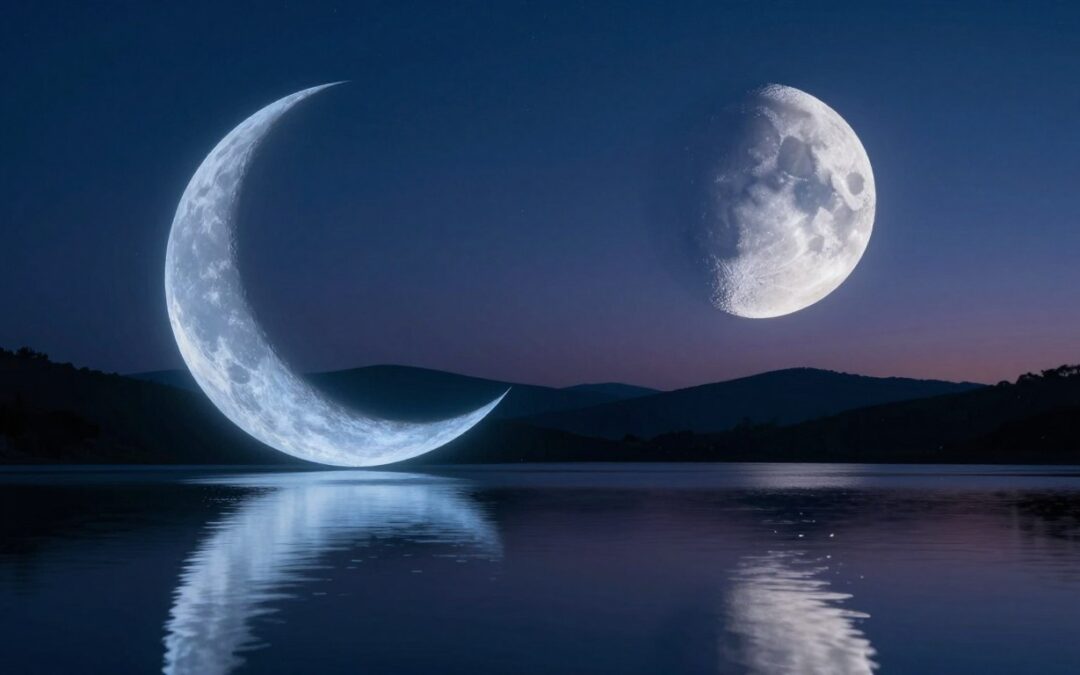
Have you ever looked up at the night sky and wondered why the moon seems to change its shape every night? The Earth, sun, and moon dance together in a beautiful way. Our team often looks at the moon, curious about the lunar phases.
The moon doesn’t make its own light. It reflects the sun’s rays back to us. As it moves around the Earth, we see different parts of its bright side.
So, what is the difference between waxing and waning moon? Waxing means the light grows, while waning means it fades. You can tell them apart by seeing which side is in shadow each night. Learn more at this link.
Many people use the moon cycle to find clarity for their goals and desires. By tracking these changes, we can align with the universe’s rhythm. Embracing these changes helps us grow with the stars.
Key Takeaways
- Waxing means the visible light is increasing toward a full state.
- Waning describes the period when the illumination decreases after the full phase.
- The moon’s appearance changes because it reflects sunlight at various angles during its orbit.
- The sun always illuminates exactly half of the moon’s surface at all times.
- We experience eight unique phases throughout a complete lunar month.
- Understanding these shifts helps us reflect on personal progress and set new intentions.
Understanding Moon Phases
The lunar cycle has captivated humans for centuries. It shapes our culture and deepens our understanding of astronomy. To understand the waxing and waning moon, we must first learn about moon phases.
The Moon doesn’t light up itself; it reflects the Sun’s light. The Sun shines on one half of the Moon. As the Moon orbits Earth, we see different amounts of this light, which we call moon phases.
The Science Behind Lunar Phases
The science of lunar phases lies in the Moon’s orbit and Earth’s orbit around the Sun. As the Moon moves, we see different parts of its lit side. This is why we see different moon phases. For more on the current moon phase and its meaning, check out moon phase today astrology.
How the Moon Orbits the Earth
The Moon orbits Earth in about 27.3 days. But the lunar cycle, or synodic month, is about 29.5 days. This difference comes from Earth’s orbit around the Sun, affecting the Moon’s orbit.
Studying the Moon’s orbit and its dance with the Sun and Earth deepens our solar system knowledge. It connects us to the natural world and enhances our astronomy understanding.
What Does Waxing Mean?
The term ‘waxing moon’ describes the moon growing larger as it gets closer to full moon. This phase shows more of the moon’s lit surface from Earth.
As the moon moves from new moon to full moon, it seems to get brighter and bigger. This isn’t because the moon is actually getting bigger. It’s because the sun’s light hits it at different angles as it orbits our planet.
Definition of Waxing Moon
A waxing moon is when the moon looks like it’s getting bigger and brighter. This happens as it moves from new moon to full moon. More of its lit side is seen from Earth.
“The waxing moon is a time for growth, expansion, and increased energy. It’s a period when we can tap into our inner strength and manifest our desires.”
Stages of the Waxing Cycle
The waxing cycle has several stages, each with its own traits. These stages are:
- Waxing Crescent: The moon is seen in the western sky after sunset and looks like it’s growing.
- First Quarter: The moon is half-illuminated, with the right half visible from Earth.
- Waxing Gibbous: The moon looks larger and fuller as more of its lit side is seen.
- Full Moon: The whole face of the moon is lit up, making it visible all night.
| Stage | Description | Visibility |
|---|---|---|
| Waxing Crescent | Appears to be growing larger | Visible in the western sky after sunset |
| First Quarter | Half-illuminated | Right half visible from Earth |
| Waxing Gibbous | Continues to appear larger and fuller | More of its illuminated surface is visible |
| Full Moon | Entire face illuminated | Fully visible all night long |
The waxing moon phase is all about growth, expansion, and abundance. It’s a time to focus on our goals and work towards them. By understanding the waxing cycle, we can better connect with lunar energy and make the most of this period.
What Does Waning Mean?
When the moon looks smaller in the sky, it’s in the waning phase. This is a time for release and looking inward. The moon’s light fades as it moves away from full moon.
The waning moon is linked to release, surrender, and rest. It’s a moment to let go of old things. This makes room for new experiences and growth.
Definition of Waning Moon
The waning moon starts when the moon’s light begins to decrease. It lasts until it reaches the dark moon phase. The moon’s bright side gets smaller as it orbits the Earth.
To tell if the moon is waxing or waning, watch its position and shadow. For more info, check out this guide.
Stages of the Waning Cycle
The waning cycle has several stages:
- Full Moon: The moon is fully lit at the start of the waning phase.
- Last Quarter Moon: Half of the moon is lit, with the other half in shadow.
- Waning Crescent: The moon looks like a decreasing crescent in the sky.
- Dark Moon: The moon is not seen because it’s between the Earth and the sun.
Here’s a quick overview of the waning cycle stages and what they mean:
| Stage | Description | Energy/Theme |
|---|---|---|
| Full Moon | Entire face illuminated | Release, celebration |
| Last Quarter | Half illuminated, half shadow | Re-evaluation, adjustment |
| Waning Crescent | Decreasing crescent shape | Surrender, letting go |
| Dark Moon | Not visible | Rest, renewal |
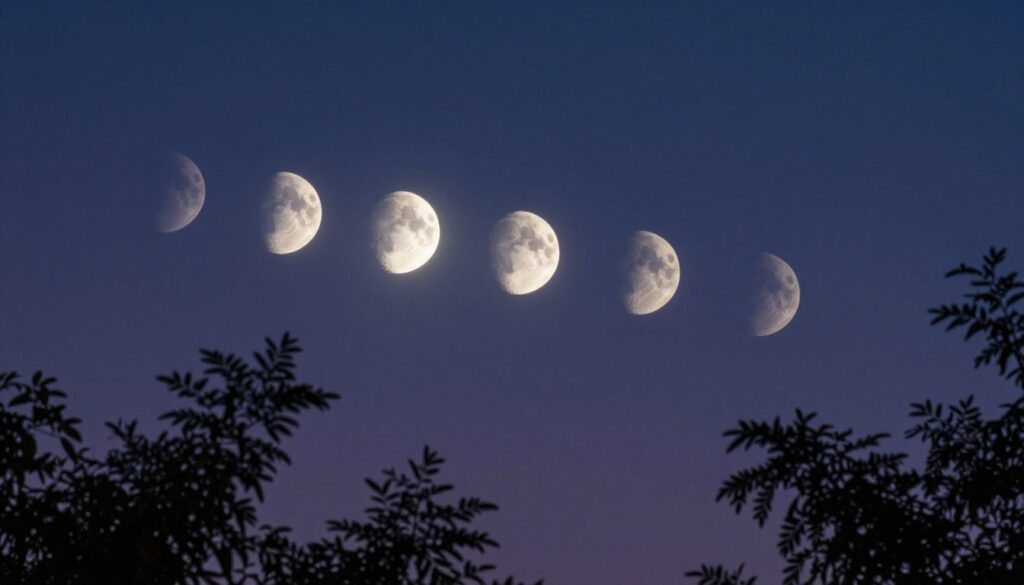
For more on waning moon practices, like new moon readings for personal transformation, check out spiritual and astrological resources.
Key Differences Between Waxing and Waning
The moon goes through two main phases: waxing and waning. Each phase has its own unique features. Knowing these differences helps us appreciate the beauty and complexity of the lunar cycle.
Visual Differences in the Moon
In the Northern Hemisphere, the moon looks different as it changes. The right side of the moon is lit up during the waxing phase. The left side is lit up during the waning phase.
The moon’s orbit around Earth changes how much we see of it. This is why the waxing moon seems to grow and the waning moon seems to shrink.
Timing and Duration of Phases
The waxing and waning phases are part of the moon’s cycle around Earth. This cycle, called a synodic month, lasts about 29.5 days. The waxing phase goes from new moon to full moon, and the waning phase goes from full moon back to new moon.
For those into moon reading and visualization, knowing when these phases happen is important. It can help with spiritual practices.
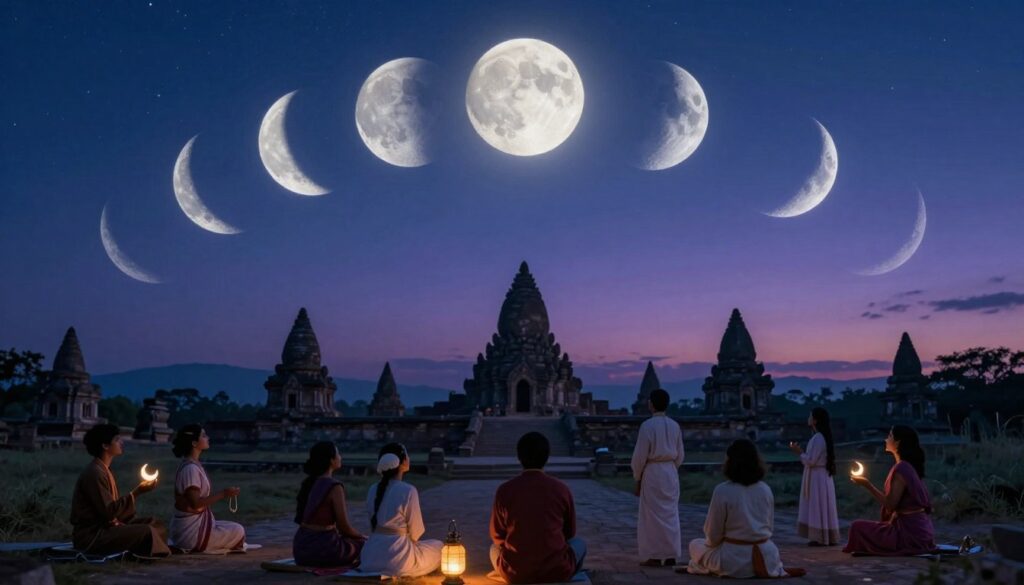
The difference between waxing and waning is not just about looks. It also has cultural and astrological importance. Many cultures link different moon phases to various activities, beliefs, and rituals.
Cultural Significance of Moon Phases
The lunar cycle has captivated people worldwide. It has shaped astrology, folklore, and traditions. Exploring its cultural importance reveals how different cultures view and use these phases.
Moon Phases in Astrology
In astrology, the moon’s phases are seen as key to human life. The waxing moon is about growth and new starts. The waning moon is for finishing things and looking inward. For more on this, check outFirst Quarter Moon Astrology.
Lunar Influence in Folklore
The moon’s cycles have deeply influenced folklore and traditions. Many myths and legends tie to the moon’s phases. For example, the full moon is often seen as a sign of fertility and plenty. The new moon is about starting anew.
| Culture | Waxing Moon Significance | Waning Moon Significance |
|---|---|---|
| Vedic/Hindu | Growth, new beginnings | Completion, self-reflection |
| Western Astrology | Action, progress | Release, introspection |
| Chinese Culture | Yang energy, growth | Yin energy, harvest |
The moon’s cultural significance is rich and varied. It shows how lunar cycles have been seen and used across cultures. For more on moon phases, visitUnderstanding Phases of the Moon.
How Waxing and Waning Affect Tides
The Moon’s waxing and waning phases have a big impact on Earth’s tides. The Moon’s pull is what mainly moves our oceans.
The Connection Between the Moon and Ocean Tides
The Moon’s pull on Earth’s tides comes from its gravity. As the Moon goes around Earth, it pulls on our oceans. This pull makes water bulge out in two places.
These bulges create high tides. The areas in between have low tides. The Moon’s cycles are key to these tidal patterns.
The waxing and waning Moon affect tides differently. At new moon and full moon, the Moon’s pull is strongest. This leads to bigger tidal movements, called spring tides.
Variations in Tide Patterns
Many things can change how tides move. Coast shape, ocean depth, and wind all play a part. These factors make predicting tides tricky.
It takes a lot of astronomy and celestial events
In short, the Moon’s phases greatly affect our tides. Knowing this can make us appreciate the Moon’s role in our oceans. It encourages us to learn more about moon observation.
Practical Applications of Moon Phases
Understanding the lunar cycle is key to our daily lives. It helps us plan better and achieve more. By matching our activities with the moon’s phases, we can do things more effectively.
The moon’s cycles have guided many cultures. They’ve shaped everything from farming to spiritual growth. We’ll look at how knowing the moon’s phases helps in gardening and spiritual practices.
Gardening by the Moon
Gardening by the moon is an old tradition. It’s about planting, caring for, and harvesting crops with the moon’s light. The growing moon is best for plants that grow above ground, like greens and fruits.
The decreasing moon is better for underground plants and for tasks like harvesting. This way, gardeners can grow better crops and use less chemicals.
Enhancing Spiritual Practices
The moon’s cycles affect our spiritual growth. The growing moon is great for setting goals and growing. The decreasing moon is for letting go and looking inward.
Many use the moon to improve their meditation and rituals. For example, the full moon is for releasing negative feelings. Learn more about using the moon’s energy in our guide on waxing vs waning lunar energy.
By following the moon’s cycles, we can deepen our spiritual practices. This helps us connect more with nature and ourselves.
Observing the Waxing and Waning Moon
The Moon’s journey through its phases is truly amazing. Each phase gives us a special view of our Moon. As we watch the Moon, we see a dance between the Earth, Moon, and Sun. This dance creates the different lunar phases we see from Earth.
Best Times to View Each Phase
The best times to see the Moon’s phases depend on its position. The waxing Moon looks best in the evening, after sunset. It’s visible in the western sky.
The waning Moon is best seen in the early morning, before sunrise. It appears in the eastern sky.
Optimal Viewing Conditions include a clear sky. The Moon should also be high enough to see above the horizon.
Tools and Apps for Moon Observation
There are many tools and apps to help you observe the Moon:
- Lunar Calendars: These give detailed info on the Moon’s phases and timing.
- Astronomy Apps: Apps like Sky Map or Star Walk help find the Moon in the sky. They also tell you about its current phase.
- Telescopes and Binoculars: For a closer look, telescopes and binoculars show more detail on the Moon’s surface.
Using these tools and knowing the best viewing times can deepen our love for the Moon’s cycles. They add beauty to our night sky.
Conclusion: Embracing the Moon’s Cycles
Reflecting on the waxing and waning moon cycles shows us life’s dynamic nature. Understanding these cycles helps us connect with nature and ourselves. The moon’s phases, from Waxing Crescent to Waning Crescent, symbolize growth, manifestation, and release.
Nature’s Rhythms and Our Lives
The lunar calendar helps us connect with nature’s rhythms. Appreciating the moon’s phases brings balance to our lives. For more on the moon’s spiritual significance, check out lufolk’s blog on moon phases.
Connecting with the Lunar Cycle
Now, we can use our moon phase knowledge to guide our actions. Connecting with the lunar cycle lets us appreciate astronomy and the world more.
[…] journal can be incredibly helpful. Tracking energy levels throughout the different phases of the moon allows us to recognize…
[…] Reading is a new platform that offers personalized insights based on the lunar cycle1. It’s different from generic horoscopes,…
[…] As we set intentions aligned with the New Moon energy, we open ourselves to the power of manifestation. By…
[…] intentions during the new moon is a powerful practice that allows me to declare my goals and aspirations. It…
[…] These readings provide a convenient and accessible way to connect with the energies of the new moon and gain…