
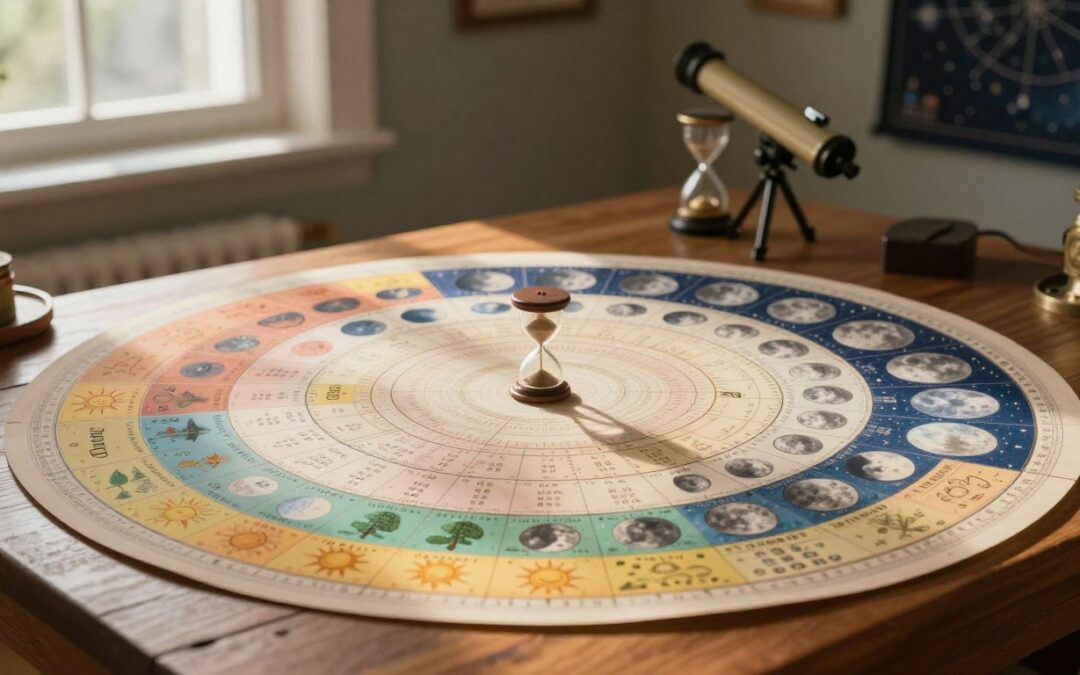
Ever wondered why certain holidays dance around our dates each year? We often misunderstand how we track days. Have we ever pondered why some cultures look at astronomical bodies differently?
Most people live daily lives using a solar calendar. This system tracks Earth as it travels around the Sun. It keeps seasons steady.
This ensures July feels like summer every single year. Our modern world relies on this orbit for consistency. It provides a fixed structure for our global society.
Many vibrant cultures follow natural rhythms. A lunar calendar relies on changing phases within night skies to define months. This creates a beautiful, shifting cycle.
Such systems connect communities to cosmic phases. We find these systems fascinating because they offer unique perspectives. Every culture finds meaning through these celestial paths.
We love exploring how these choices impact our lives daily. Our team enjoys learning about traditional procedures.
Key Takeaways
- Solar systems follow Earth’s orbit around Sun.
- Lunar versions track Moon phases for months.
- Seasons stay fixed in Sun-based models.
- Many cultures use Moon cycles for traditions.
- Time tracking varies across global communities.
- Celestial patterns guide how we measure years.
Understanding the Basics of Calendars
A calendar is more than a tool for tracking days. It’s a system that helps us understand time. It organizes time into units like days, weeks, months, and years. Around the world, many calendars exist, each with its own features and uses.
Definition of a Calendar
A calendar divides time into segments like days, weeks, months, and years. This helps us plan, organize, and record events. The purpose of a calendar is the same everywhere, but it can vary slightly by culture.
Purpose of Calendar Systems
Calendar systems have many uses, like organizing time for farming, religion, and social events. They help us remember important dates, like holidays and anniversaries. Calendars let us plan for the future and look back at the past.
For example, the different calendars worldwide show how societies organize time. They reflect cultural, religious, and practical needs.
Importance of Timekeeping in Society
Timekeeping is key in society for coordination and cooperation. Calendars give us a common way to understand and organize time. This shared understanding helps with daily routines, long-term plans, and keeping historical records.
In summary, knowing about calendars is vital for understanding timekeeping and its role in our lives. By seeing how calendars work, we can grasp the differences between solar and lunar calendars and their importance in cultures.
What is a Solar Calendar?
A solar calendar is based on the Earth’s journey around the Sun. It keeps pace with the Earth’s orbit. This ensures the calendar stays in sync with the seasons.
Characteristics of Solar Calendars
Solar calendars match the solar year, which is about 365.24 days. To fix the extra day, calendars like the Gregorian add a leap year every four years. This keeps the calendar in line with the Earth’s orbit around the Sun.
Examples of Solar Calendars
The Gregorian calendar is a well-known solar calendar. It’s used worldwide for official purposes. It was created in 1582 to fix the Julian calendar’s error.
For more on different calendars, check out our article on lunar vs solar calendar.
Advantages of Using Solar Calendars
Solar calendars have many benefits. They match the seasons well, helping with planning for farming and other seasonal activities. Experts say, “The solar calendar’s alignment with the Earth’s orbit makes it essential for modern society.” 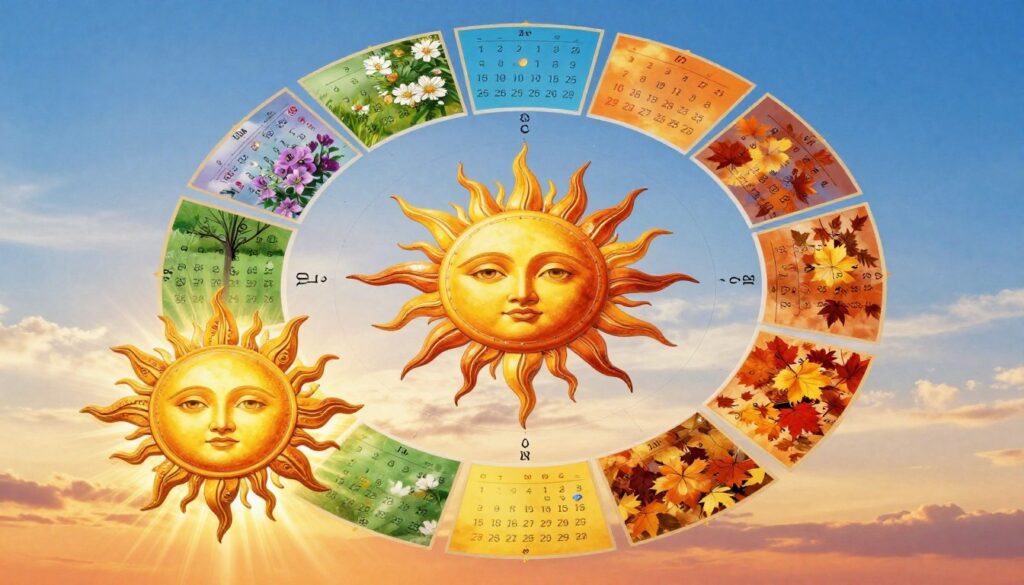
In summary, solar calendars are key to modern timekeeping. They help us organize our lives with the Earth’s natural cycles. For more on lunar influences, beginner moon readings online offer great insights.
What is a Lunar Calendar?
Lunar calendars are special because they follow the Moon’s cycles. Each month is tied to the Moon’s phases. This makes them different from solar calendars.
Characteristics of Lunar Calendars
Lunar calendars stick to the Moon’s cycles. A lunar month is about 29.5 days, the time for the Moon to orbit Earth. This means a lunar year is about 354 days, shorter than a solar year.
Because of this, lunar calendars are not aligned with the seasons like solar calendars are.
The Islamic or Hijri calendar is a pure lunar calendar. It starts with the new moon sighting. It’s used for important Islamic dates and holidays.
Examples of Lunar Calendars
Many cultures use lunar calendars, each with its own history and importance. The Islamic calendar is well-known worldwide. It helps Muslims find the dates for Ramadan and Eid al-Fitr.
The Chinese calendar is another example. It’s mostly lunisolar but has big lunar parts. It helps set the dates for Chinese holidays like the Chinese New Year.
Benefits of Lunar Calendars
Lunar calendars have many benefits, mainly in culture and religion. They offer a special way to organize time, linked to the Moon’s cycles. This is great for religious events and cultural traditions tied to the Moon.
They also celebrate cultural heritage and diversity. Different groups worldwide have their own lunar calendars. This adds richness to our global culture.
Key Differences Between Solar and Lunar Calendars
When we look at solar and lunar calendars, we see some big differences. These differences affect how we use them today. Let’s dive into what these differences mean.
Length of the Year
A key difference is the length of their years. A solar year is about 365.24 days, matching Earth’s orbit around the sun. A lunar year is about 354 days, based on the moon’s cycles. This difference changes how calendars match up with seasons and natural events.
The solar calendar stays in sync with Earth’s orbit. This means the seasons always fall on the same dates. Lunar calendars, though, move relative to the solar year. This can make months shift through the seasons over time. To learn more, check out this article.
Monthly Structure
Months in solar and lunar calendars are structured differently. Solar calendars have months that are not tied to the moon’s cycle. These months can be 28 to 31 days long. Lunar calendars, on the other hand, follow the moon’s cycle. Their months start with the new moon and last 29 or 30 days.
Alignment with Natural Events
Solar and lunar calendars also differ in how they align with natural events. Solar calendars keep up with the solar year. This helps keep seasonal events and farming cycles consistent. Lunar calendars, while not tied to the solar year, are linked to the moon’s cycle. This is important for some cultural and religious practices.
For example, farming communities often use solar calendars for planting and harvesting. But, some cultures use lunar calendars for religious events and festivals. Knowing these differences helps us understand how calendars are used worldwide.
Popular Solar Calendars Around the World
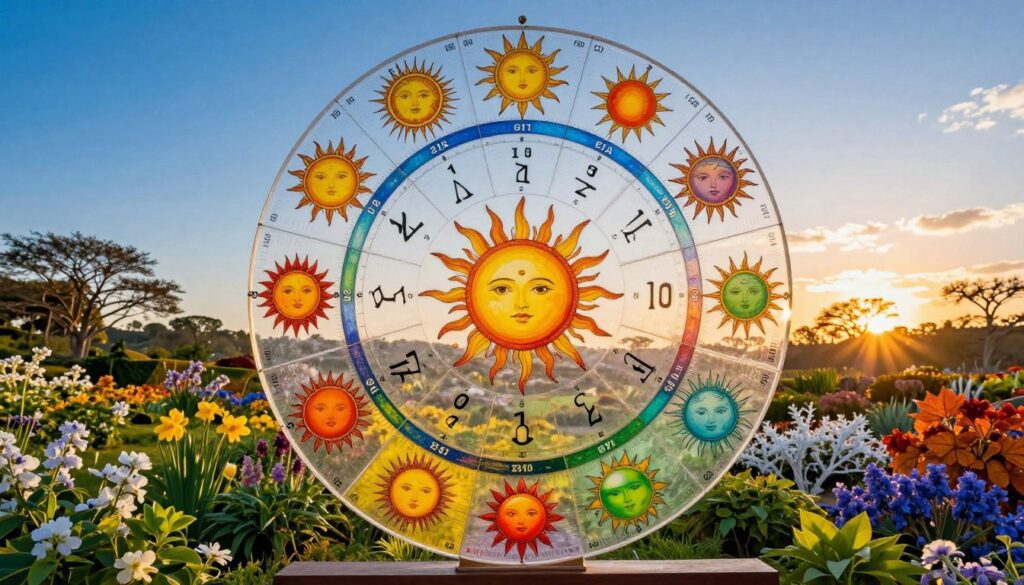
Solar calendars are used in many countries. The Gregorian and Persian calendars are among the most popular. They follow the Earth’s orbit around the Sun, aligning with the seasons.
We’ll look at the Gregorian and Persian calendars. Each has its own features and is used in different parts of the world.
Gregorian Calendar
The Gregorian calendar is used by most of the world. It was introduced in 1582 by Pope Gregory XIII. It fixes the Julian calendar’s leap year rule for better accuracy.
For more on the Gregorian calendar and other systems, check out our article on calendars and date converters.
| Calendar Feature | Description |
|---|---|
| Leap Year Rule | Years divisible by 4, except for years divisible by 100 but not by 400 |
| Number of Days in a Year | 365 days in a common year, 366 days in a leap year |
| Months | 12 months, with varying numbers of days |
Persian Calendar
The Persian calendar, also known as the Solar Hijri calendar, is used in Iran and Afghanistan. It’s a solar calendar with a precise leap year rule based on the vernal equinox.
The Persian calendar is known for its accuracy in tracking the solar year. It has a complex leap year rule that ensures it remains aligned with the astronomical seasons.
Popular Lunar Calendars Around the World
Lunar calendars are key in many cultures and religions globally. They follow the moon’s cycles. They help plan cultural, religious, and social events.
The Islamic and Chinese Calendars are well-known. Let’s dive into them.
Islamic Calendar
The Islamic Calendar, or Hijri calendar, marks key Islamic dates like Ramadan. It has 12 months, starting with the new moon.
It’s about 11 days shorter than the solar year. This means its months shift compared to the solar calendar. For more on lunar and solar calendars, check our article on lunar vs solar calendars.
Chinese Calendar
The Chinese Calendar is a mix of lunar and solar cycles. It’s used for festivals like the Chinese New Year.
It has a long history, blending astronomy and math. It’s a big part of Chinese culture, used with the Gregorian calendar today.
In summary, lunar calendars like the Islamic and Chinese are vital in many cultures. They offer a special way to organize time. They’re deeply connected to their cultures’ traditions and heritage.
Cultural Significance of Solar Calendars
The solar calendar is key in shaping cultures worldwide. It affects many parts of society, like festivals, religious events, and farming plans.
Festivals and Observances
Solar calendars help plan cultural and religious festivals. Many groups use them to set dates for big events like New Year’s, harvest festivals, and more. For example, the Gregorian calendar sets the dates for Christmas and Easter in many Christian communities.
Agricultural Planning
For farmers, the solar calendar is essential for planning. It helps them know when to plant and harvest crops. This is very important in areas where the solar calendar matches the seasons well.
| Festival | Date (Gregorian Calendar) | Cultural Significance |
|---|---|---|
| Christmas | December 25 | Celebrates the birth of Jesus Christ |
| Nowruz | March 20/21 | Marks the beginning of spring |
| Thanksgiving | Fourth Thursday of November | Expresses gratitude for the harvest |
“The way we keep track of time reflects our values and our connection to the natural world.”
Using solar calendars shows how important it is to match human activities with the Earth’s orbit around the Sun.
In summary, solar calendars deeply impact cultural practices. They influence religious events and farming cycles. Learning about solar calendars helps us understand different cultures and traditions. For more on solar vs. lunar calendars, check out Sciencing.
Cultural Significance of Lunar Calendars
Lunar calendars do more than just keep time. They deeply impact culture and religion worldwide. Many cultures use them to plan their lives, from holidays to historical events.
Lunar calendars are key in many cultures. They help plan important events. For example, the Islamic calendar sets the dates for Ramadan and Eid al-Fitr. The Chinese calendar is vital for the Chinese New Year.
Religious Celebrations
Religious events are a big part of lunar calendars. Ramadan, a month of fasting for Muslims, is set by the Islamic lunar calendar. The Chinese New Year, based on the Chinese lunisolar calendar, is a time for renewal and family.
Lunar calendars are also important in other religions. The Jewish calendar, which is lunisolar, helps plan holidays like Passover and Rosh Hashanah.
| Religious Celebration | Lunar Calendar Used | Significance |
|---|---|---|
| Ramadan | Islamic Calendar | Month of fasting for Muslims |
| Chinese New Year | Chinese Lunisolar Calendar | Celebration of renewal and family |
| Passover | Jewish Lunisolar Calendar | Commemoration of the Israelites’ exodus |
Historical Events
Lunar calendars have marked historical events for centuries. Many dates are remembered using lunar calendars, showing their lasting impact.
The Mid-Autumn Festival in Chinese culture is celebrated on the 15th day of the 8th lunar month. It’s a time for family and moon gazing. This festival has deep roots and is celebrated with enthusiasm.
To understand how lunar cycles affect our goals, we can look into New Moon readings. They are believed to bring clarity and direction.
Hybrid Calendars: A Blend of Solar and Lunar
There’s a special category of calendars that combines solar and lunar tracking: hybrid or lunisolar calendars. They mix the best of both worlds, keeping time in sync with the Sun and the Moon. This makes them unique and useful for many cultures.
Lunisolar calendars are great for cultures that value both the solar year and the lunar cycle. They adjust the calendar to match the solar year but keep the lunar cycle intact. This way, they honor both the Sun and the Moon.
Overview of Lunisolar Calendars
Lunisolar calendars track the Moon and the Sun. The lunar cycle sets the months, and the solar year adjusts the calendar to match the seasons. This adjustment is called intercalation and happens in some years.
Intercalation keeps the calendar in line with the solar year. This is key for festivals tied to specific seasons. It prevents the calendar from getting out of sync over time.
Uses and Examples
Lunisolar calendars are used in many cultures worldwide. The Hebrew and Chinese calendars are two well-known examples.
- The Hebrew calendar sets the dates for Jewish holidays like Passover and Rosh Hashanah.
- The Chinese calendar helps plan traditional festivals, including the Chinese New Year.
These calendars are important for religious and cultural events. They also shape the social and cultural identity of their communities.
Choosing the Right Calendar for Your Needs
When picking between a solar calendar and a lunar calendar, think about what you need. Your choice depends on your culture and what you like. It’s all about finding the right fit for you.
Factors to Consider
Calendars play a big role in how people organize their lives. For example, the Islamic calendar is tied to the moon for religious and farming reasons. On the other hand, many in the West use the Gregorian calendar, a solar calendar, for daily tasks.
Personal and Cultural Preferences
Think about what you prefer and your cultural background. You might find useful info online, like Moon Reading for Love Compatibility. It shows how calendars can affect different parts of our lives.
Knowing the differences between solar and lunar calendars helps us choose the best one. It should match our lifestyle and cultural roots.
[…] journal can be incredibly helpful. Tracking energy levels throughout the different phases of the moon allows us to recognize…
[…] Reading is a new platform that offers personalized insights based on the lunar cycle1. It’s different from generic horoscopes,…
[…] As we set intentions aligned with the New Moon energy, we open ourselves to the power of manifestation. By…
[…] intentions during the new moon is a powerful practice that allows me to declare my goals and aspirations. It…
[…] These readings provide a convenient and accessible way to connect with the energies of the new moon and gain…