
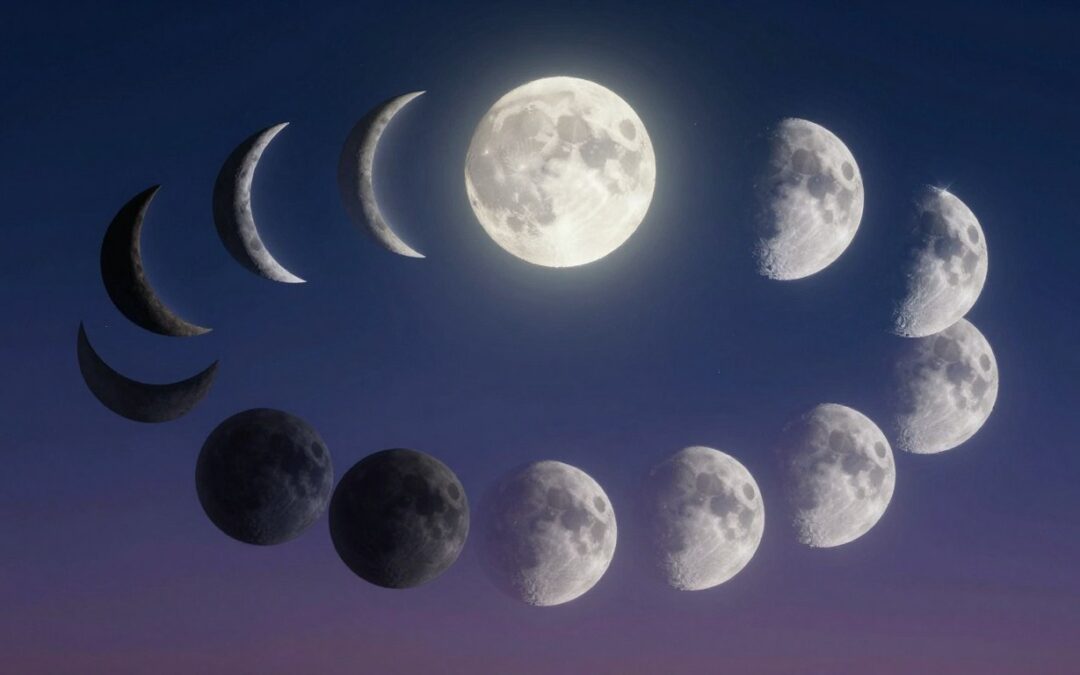
Have you ever looked up at the night sky and wondered why the glowing orb above looks so different every few nights? It is easy to feel a deep sense of wonder as we watch the light shift from a thin sliver to a bright circle. Many of us ask ourselves, what are the 8 phases of the moon? and how do these changes affect our own energy?
The lunar cycle is a beautiful journey that takes approximately 29.5 days to complete. During this time, the Moon travels through four primary and four intermediate phases. We call this entire period a lunation, which represents a full circuit of the Moon around our Earth.
Understanding these shifts helps us stay in tune with the natural world. For instance, the New Moon is a perfect time to reflect on your inner world. You can use this quiet moment to gain clarity on your goals and prepare for the growth ahead.
Key Takeaways
- The lunar month consists of eight distinct stages that repeat every 29.5 days.
- There are four primary phases and four intermediate phases in each cycle.
- A complete trip of the Moon around the Earth is scientifically known as a lunation.
- The New Moon represents a time of renewal and is ideal for setting fresh intentions.
- Each phase offers a unique energy that we can use for personal transformation.
- The Full Moon marks the peak of the cycle, focusing on realization and abundance.
Introduction to the Moon Phases
The lunar cycle has amazed humans for thousands of years. It has shaped our science and culture. Exploring the Moon’s phases helps us understand their importance.
What Causes Moon Phases?
The Moon doesn’t make its own light; it reflects sunlight. The Sun’s light changes as the Moon moves around Earth. This creates the different lunar phases we see.
Importance of Moon Phases in Culture
Moon phases have shaped cultures all over the world. They guide calendars, farming, and spiritual practices. The Moon’s phases are deeply rooted in human culture and history.
| Lunar Phase | Description | Cultural Significance |
|---|---|---|
| New Moon | The side of the Moon facing Earth is not lit. | New beginnings, renewal |
| Waxing Crescent | Increasingly more of the Moon’s illuminated surface is visible. | Growth, expansion |
| Full Moon | The entire face of the Moon is illuminated. | Completion, celebration |
| Waning Gibbous | Decreasing amount of the Moon’s illuminated surface is visible. | Release, transformation |
In conclusion, the Moon’s phases are due to its orbit and sunlight reflection. These phases have captivated humans and influenced our culture and traditions.
The New Moon Phase
The lunar cycle starts anew with the New Moon. This phase has fascinated humans for centuries. It marks the start of a new cycle, full of possibilities and growth.
During the New Moon, the Moon is between the Sun and Earth. This makes the Moon’s side facing Earth not lit by the Sun. This alignment is key to understanding the New Moon.
Characteristics of the New Moon
The New Moon has unique traits. Some of these include:
- The Moon is not visible from Earth because the side facing us is not lit by the Sun.
- It marks the start of a new lunar cycle.
- The New Moon is often linked with new beginnings and fresh starts.
Significance in Astrology
In astrology, the New Moon is a big deal. It’s seen as a powerful time for setting intentions and making wishes. Many reflect on their goals and plan for the future during this phase.
The New Moon is also about renewal and rebirth. It’s a chance to let go of the old and welcome the new. This idea is seen in many cultural and spiritual practices during the New Moon.
People observe the New Moon in different ways. Some include:
- Meditation and reflection to set personal intentions.
- Creating vision boards to manifest goals.
- Engaging in rituals and ceremonies to mark new beginnings.
The Waxing Crescent Phase
We can start observing the Moon again as it enters the Waxing Crescent phase. This is a time of increasing light.
Observing the Waxing Crescent
The Waxing Crescent Moon is visible in the sky after the New Moon. It looks like a growing crescent. This phase is great for seeing Earthshine, where the Moon’s dark areas are lit by sunlight reflected from Earth.
To see the Waxing Crescent, look for the Moon in the western sky after sunset. The crescent shape will get bigger each night. This is because more of the Moon’s lit surface is visible from Earth.
Traditions Associated with This Phase
The Waxing Crescent phase is important in many cultures and traditions. It’s seen as a time for growth, increase, and positive change. Many people use this phase to set intentions and goals for the next lunar cycle.
For more info on the lunar cycle and its phases, check out NASA’s Moon Phases page.
| Characteristics | Traditions |
|---|---|
| Visible after New Moon | Setting intentions for the lunar cycle |
| Appears as a growing crescent | Cultural significance for growth and increase |
| Observable in the western sky after sunset | Astronomical observations, including Earthshine |
By understanding and observing the Waxing Crescent phase, we can deepen our connection with the lunar cycle. We can also appreciate the beauty of the night sky.
The First Quarter Phase
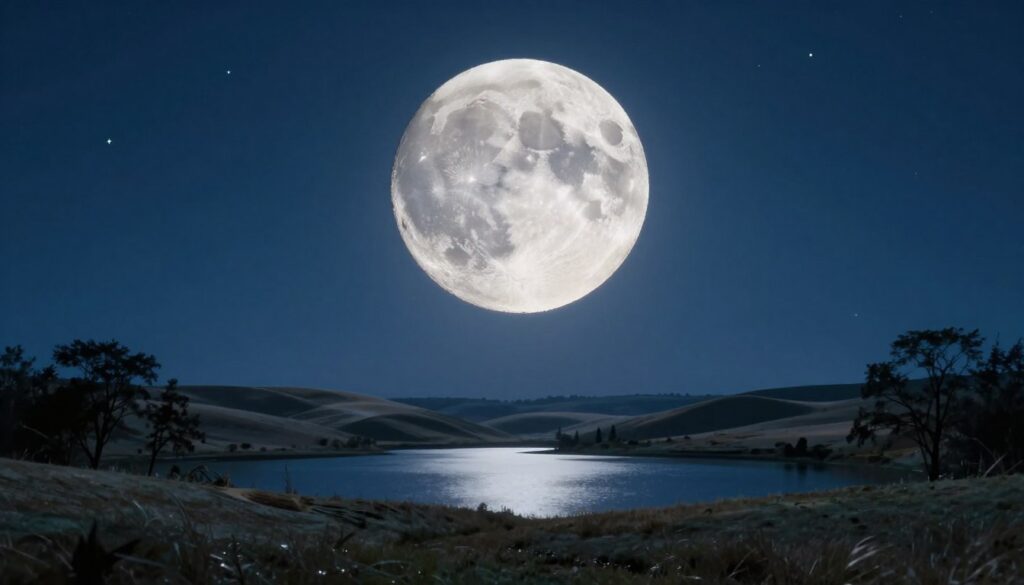
The moon is half-illuminated as it orbits Earth, marking the First Quarter Moon phase. This happens when the moon is at a 90-degree angle to Earth and the sun.
Characteristics of the First Quarter
In the Northern Hemisphere, the right half of the moon is visible during the First Quarter Moon. In the Southern Hemisphere, it’s the left half. This phase is known for the moon’s growing brightness. It’s seen in the sky late in the afternoon and evening.
The First Quarter Moon rises around noon and sets at midnight. This makes it visible in the sky from late afternoon into the early evening.
Agricultural Uses of the First Quarter Moon
Farmers use the First Quarter Moon for planning because of its connection to plant growth. They think the moon’s gravitational pull can increase soil moisture. This makes it a good time to plant certain crops.
| Crop | Planting Time | Reason |
|---|---|---|
| Corn | First Quarter Moon | Believed to enhance growth due to increased soil moisture. |
| Leafy Greens | First Quarter Moon | Thought to promote healthy leaf development. |
| Root Vegetables | New Moon or Full Moon | Associated with root development during these phases. |
The Waxing Gibbous Phase
The Moon orbits Earth and enters the Waxing Gibbous phase. During this time, the Moon looks more than half full and gets bigger. This makes the Waxing Gibbous a special part of the lunar cycle.
Identifying the Waxing Gibbous Moon
The Waxing Gibbous Moon shines brighter and looks larger. To spot it, look for a Moon that’s more than half lit but not full yet. It happens after the First Quarter and before the Full Moon, building up to full light.
Watching the Waxing Gibbous Moon is fun. As it gets fuller, we see more details on its surface. It’s a thrilling time for those who love the Moon and astronomy.
The Waxing Gibbous in Lunar Calendars
The Waxing Gibbous phase is key in many lunar calendars. It’s linked to growth and expansion, showing the Moon’s growing light. In different cultures, it’s seen as a time for taking action and moving forward. The Moon’s growing light is a sign of more energy and life.
In summary, the Waxing Gibbous phase is a unique time in the lunar cycle. It’s marked by the Moon’s growing light and its role in culture and astronomy.
The Full Moon Phase
The Full Moon is when the Moon’s whole face shines bright from the Sun’s light. It happens when the Moon is opposite the Earth from the Sun. This makes it fully visible to us at night.
Rituals and Cultural Significance
The Full Moon is key in many cultures and spiritual practices worldwide. It’s seen as a time of high energy, perfect for rituals and ceremonies. For example, some groups hold Full Moon rituals for important life events or spiritual growth.
You can learn more about these celebrations on the United States Naval Observatory’s website.
Also, the Full Moon is tied to myths and legends. It’s believed to affect human behavior, causing mood swings or strange events. These stories show the Moon’s deep influence on our culture and imagination.
The Science Behind the Full Moon
Scientifically, the Full Moon happens because of the Moon’s position relative to Earth and Sun. As the Moon orbits Earth, different parts of it are seen from our planet, creating the lunar phases. The Full Moon occurs when the Moon is opposite the Sun, lighting up its whole face.
For those interested in the Full Moon’s astrological side, check out New Moon Reading Online.
This alignment is not just beautiful but also affects our oceans. The Moon’s pull on Earth’s oceans is strongest during the Full Moon. This leads to higher high tides and lower low tides, known as spring tides.
The Waning Gibbous Phase
The Waning Gibbous moon looks smaller in the sky as it moves. This happens after the full moon. The moon is getting smaller and less bright as it orbits Earth.
Features of the Waning Gibbous
The Waning Gibbous moon is getting less bright. It’s more than half but not fully lit. It looks smaller as it moves towards the Last Quarter.
This phase is perfect for seeing the moon’s surface. The sunlight makes the features stand out. The moon rises later and is seen until morning.
For those who love to watch the moon, this phase is special. You can see the moon’s shape and details. Learn more about the moon’s cycle and phases on TimeAndDate.
Cultural References to the Waning Gibbous
The Waning Gibbous has a special place in many cultures. It’s seen as a time for release and letting go. It’s like ending projects or letting go of bad vibes.
Some people reflect on their achievements and challenges during the full moon. Then, they release what’s holding them back as the moon wanes. For more on moon readings and their meaning, check out NewMoonReadingOnline.
The Waning Gibbous shows the moon’s big impact on our culture and spirit. Watching the moon’s cycle helps us connect with nature and its rhythms.
The Last Quarter Phase
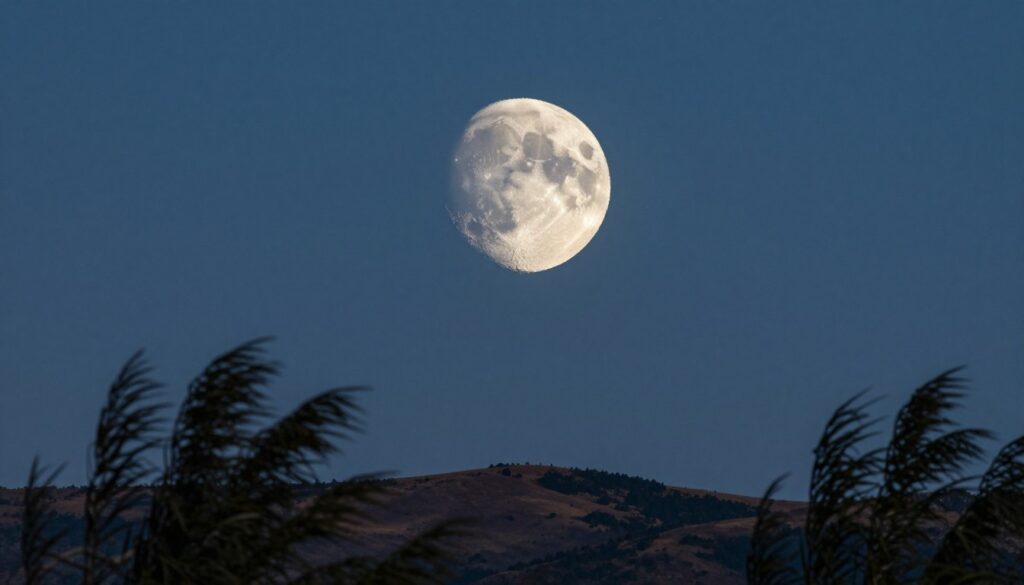
The Last Quarter Moon, also known as the Third Quarter Moon, is a key moment in the lunar cycle. It happens when the Moon is half-illuminated on the opposite side from the First Quarter. This phase is important because it marks a turning point in the Moon’s illumination. The amount of illuminated surface area starts to decrease.
Characteristics of the Last Quarter
During the Last Quarter phase, the Moon keeps moving around Earth. Half of its illuminated surface is visible from our planet. This phase is perfect for observing the Moon’s surface. The sunlight hits the lunar surface at an angle, making topographic features more visible.
Impact on Tides and Nature
The Last Quarter Moon affects Earth’s tides due to its gravitational pull. During this phase, the gravitational forces of the Moon and Sun on Earth’s oceans are at a right angle. This results in neap tides. The difference between high and low tide is minimized.
| Moon Phase | Tidal Effect | Characteristics |
|---|---|---|
| Last Quarter (Third Quarter) | Neap Tides | Minimal difference between high and low tide |
| First Quarter | Neap Tides | Minimal difference between high and low tide |
| Full Moon and New Moon | Spring Tides | Maximum difference between high and low tide |
For more detailed information on the Moon’s phases and their effects, you can visit NASA’s Moon Phases page.
The Waning Crescent Phase
The lunar cycle is ending with the Waning Crescent phase. It’s a time for reflection and getting ready for the new cycle. We see the Moon’s light getting smaller, showing it’s almost time for the New Moon.
The Waning Crescent’s Appearance
The Waning Crescent Moon looks like a thin crescent in the sky. Its bright part gets smaller every day. You can see it early in the morning, just before the sun comes up. It looks best when the sky is clear.
Symbolism of the Waning Crescent
The Waning Crescent has deep meaning in many cultures. It’s linked to release, letting go, and looking inward. People think it’s a great time to clean up and get ready for fresh starts.
| Characteristics | Description |
|---|---|
| Appearance | Decreasing crescent shape visible in the morning sky |
| Symbolism | Release, letting go, introspection |
| Cultural Significance | Ideal for cleansing and preparation for new beginnings |
This phase reminds us of the Moon’s changing nature. As we finish looking at this phase, we value the Moon’s different stages more. They touch our culture and personal lives deeply.
The Moon’s Role in Folklings
The lunar cycle has become a part of many cultures and traditions. Its changing phases have inspired stories, myths, and legends. These reflect the Moon’s big impact on society.
The Moon’s phases have always fascinated people. They are linked to myths and legends about renewal, change, and life’s cycle.
Common Myths About the Moon Phases
Many cultures have myths about the Moon’s phases. Some thought the Moon’s changes came from battles or creatures. The variety of these myths shows the Moon’s universal appeal and our desire to connect with it.
The Full Moon is often seen as affecting human behavior, known as the “lunar effect.” Though science doesn’t fully back this, it’s a big part of our culture. It shows the Moon’s lasting impact on our imagination.
“The Moon is a harsh mistress, governing the tides and the mysteries of the human heart.”
How Different Cultures Celebrate the Moon
Cultures celebrate the Moon in many ways, often tied to farming, spirituality, or myths. For example, the Mid-Autumn Festival in East Asia celebrates the Full Moon. It symbolizes unity and harvest.
In other cultures, the Moon is honored through rituals and ceremonies. These aim to tap into its spiritual or mystical powers. These celebrations highlight the Moon’s role in culture and community.
Looking up at the Moon reminds us of our shared experiences. It also shows the rich cultural practices around the lunar cycle.
The Practical Applications of Moon Phases
Many cultures believe the moon’s phases affect the natural world. This includes gardening and hunting. By working with these lunar cycles, people can improve their results in different activities.
The tradition of aligning activities with the moon phases is based on observation. For example, the lunar calendar helps plan tasks according to the moon’s cycles.
Gardening by the Moon Phases
Gardening with the moon phases is an old practice. It involves planting, pruning, and harvesting with the lunar cycle. During the new moon, it’s best to plant underground crops like potatoes and carrots.
As the moon grows, it’s a good time to plant above-ground crops like tomatoes and corn. For more gardening tips, check out new moon readings for gardening.
Moon Phases in Fishing and Hunting
The moon phases also impact fishing and hunting. The full moon, for example, makes fish more active due to the strong tides. Hunters plan their hunts based on the lunar cycle, as it affects animal behavior.
Knowing these patterns can help fishermen and hunters plan better. This might lead to more successful outings.
Conclusion: Embracing the Moon Phases
Exploring the lunar cycle shows us how the 8 phases of the moon affect our lives and cultures. Knowing about these phases helps us appreciate the natural world and our place in it.
Reflecting on the Lunar Cycle
Watching the lunar phases lets us connect with the universe’s rhythms. It shows us the beauty of the Moon’s changes. By recognizing these phases, we gain a better understanding of our world and our role in it.
To learn more about moon phase astrology, check out newmoonreadingonline.com. It offers insights into how the lunar cycle shapes our lives.
Appreciating the Moon’s Influence
Embracing the Moon phases helps us understand the lunar cycle’s impact on Earth and cultures. This way, we can live in harmony with nature and access the Moon’s timeless wisdom.
# What Are the 8 Phases of the Moon?
## Introduction to the Moon Phases
Looking up at the night sky, we marvel at the Moon’s changing shape. This change is part of the lunar cycle, lasting about 29.5 days. We see the 8 phases of the moon, from dark to bright and back again. These phases deeply connect us to time and nature.
### What Causes Moon Phases?
The Moon’s changing look isn’t from Earth’s shadow. It’s how we see its reflection of sunlight as it orbits Earth. Because the Moon always shows the same side, the light on that side changes. This creates the lunar cycle we see from our homes.
### Importance of Moon Phases in Culture
Throughout history, cultures like the ancient Greeks and Maya guided their lives by the sky. Today, we see this in religious holidays, festivals, and stories. The lunar phases remind us of our connection to the heavens and Earth.
## The New Moon Phase
The journey starts with the New Moon. Here, the Moon is between Earth and Sun, with its bright side hidden from us. It’s almost invisible in the dark sky.
### Characteristics of the New Moon
The New Moon rises and sets with the Sun, lost in sunlight. It marks the start of the lunar cycle. For NASA, it’s a great time for stargazing, as distant stars shine brighter without moonlight.
### Significance in Astrology
In astrology, the New Moon is for new beginnings and setting goals. It’s a time to plant seeds for the month ahead, symbolizing growth.
## The Waxing Crescent Phase
As the Moon moves, a sliver of light appears on the right side. This is the Waxing Crescent, the first step toward fullness.
### Observing the Waxing Crescent
We spot the Waxing Crescent in the western sky after sunset. Look for Earthshine, or the “Da Vinci Glow,” where sunlight reflects off Earth to dimly light the Moon.
### Traditions Associated with This Phase
Many cultures celebrate the first crescent sighting. In lunar calendars, it marks the start of a new month, a tradition alive today.
## The First Quarter Phase
About a week after the New Moon, we reach the First Quarter Moon. It looks like a half-moon, with half of the illuminated side facing us.
### What Happens During the First Quarter?
The Moon is at a 90-degree angle from the Sun. It rises around noon and sets around midnight, becoming a morning and evening sky feature.
### Uses of the First Quarter in Agriculture
Farmers use the First Quarter for planting “above-ground” crops. This is based on The Old Farmer’s Almanac, believing in the Moon’s influence on growth.
## The Waxing Gibbous Phase
The illumination grows, entering the Waxing Gibbous phase. The name “gibbous” means “humpbacked,” fitting its swollen shape.
### Identifying the Waxing Gibbous Moon
The Moon is more than half-lit but not full. It rises in the late afternoon and stays visible at night, providing enough light for walks.
### The Waxing Gibbous in Lunar Calendars
This phase is a final build-up in the lunar calendar. It’s a time for refinement and preparation before the Full Moon.
## The Full Moon Phase
The Full Moon is the most famous phase. It occurs when the Moon is opposite the Sun, with Earth in between.
### Full Moon Rituals and Beliefs
From the Harvest Moon to the Hunter’s Moon, we’ve named this phase for its importance. Many cultures celebrate with festivals and rituals, reflecting its peak energy.
### The Science Behind the Full Moon
The Moon is technically full for a brief moment when it’s exactly 180 degrees opposite the Sun. To us, it appears full for two to three days. This is also when a lunar eclipse can happen if the alignment is perfect.
## The Waning Gibbous Phase
After the peak, the light starts to decrease. The Waning Gibbous is the first phase back toward darkness.
### Features of the Waning Gibbous
A sliver of darkness appears on the right side (in the Northern Hemisphere). It rises later and later each night, lingering into the early morning hours after sunrise.
### Cultural References to the Waning Gibbous
In various mythologies, the Waning Gibbous is linked to release and letting go. It’s a time for reflection and gratitude for the abundance received during the Full Moon.
## The Last Quarter Phase
The Last Quarter Moon appears as a half-moon again, but with the opposite side illuminated compared to the First Quarter.
### Explaining the Last Quarter Phase
During this phase, the Moon rises around midnight and sets around noon. It’s often seen in the morning sky as we start our day, looking like a pale ghost against the blue sky.
### Impact on Tides and Nature
The Last Quarter and First Quarter result in “neap tides,” with the smallest tidal range. We see less drastic changes in sea levels during these times because the gravitational pulls of the Sun and Moon are working at right angles to each other.
## The Waning Crescent Phase
The final phase before the cycle resets is the Waning Crescent. The sliver of light has now moved to the left side and is shrinking daily.
### The Waning Crescent’s Appearance
We can spot this “Old Moon” in the early morning sky just before sunrise. It appears thin and delicate, often accompanied by the bright planet Venus in what we call a “conjunction.”
### Symbolism of the Waning Crescent
Symbolically, the Waning Crescent is a time for rest and introspection. It represents the end of a cycle, a moment to clear away the old to make room for the New Moon that is just around the corner.
## The Moon’s Role in Folklore
The Moon has inspired countless legends. From the “Man in the Moon” to the “Jade Rabbit” in East Asian folklore, we’ve projected our stories onto the lunar surface.
### Common Myths About the Moon Phases
Many believe the Full Moon causes “craziness” or an increase in hospital visits—the “Transylvania Effect.” While studies show no link, the belief remains a fascinating part of our culture.
### How Different Cultures Celebrate the Moon
From the Mid-Autumn Festival in China to the Moon Festival in Vietnam, the Moon is celebrated. These celebrations highlight our shared human experience under one sky.
## The Practical Applications of Moon Phases
Understanding the lunar cycle isn’t just for astronomers; it has real-world uses for many of us today.
### Gardening by the Moon Phases
Some practice lunar gardening, using the Moon’s gravitational pull and light levels to time planting. For example, planting leafy greens during the waxing phases and root vegetables during the waning phases, a practice popularized by the Biodynamic Association.
### Moon Phases in Fishing and Hunting
Anglers and hunters often consult a lunar calendar to find the best times for their sport. The Moon’s gravity affects tide levels and animal activity, making the Full and New Moon periods active times for wildlife.
[…] journal can be incredibly helpful. Tracking energy levels throughout the different phases of the moon allows us to recognize…
[…] Reading is a new platform that offers personalized insights based on the lunar cycle1. It’s different from generic horoscopes,…
[…] As we set intentions aligned with the New Moon energy, we open ourselves to the power of manifestation. By…
[…] intentions during the new moon is a powerful practice that allows me to declare my goals and aspirations. It…
[…] These readings provide a convenient and accessible way to connect with the energies of the new moon and gain…