
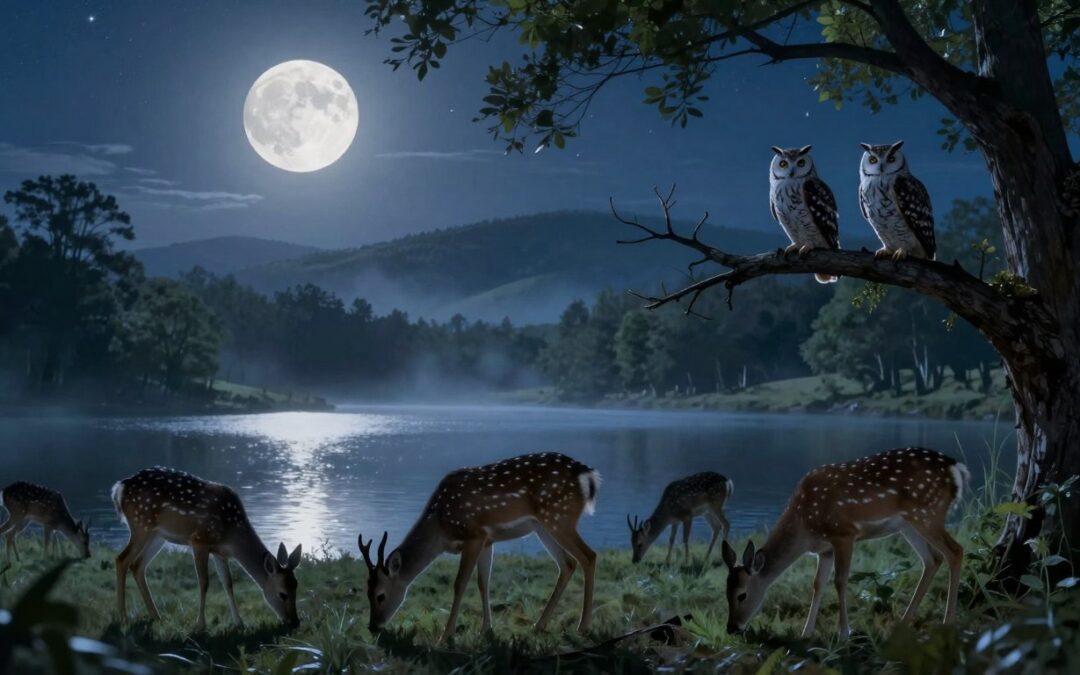
Ever thought the moon’s glow might control animal secrets at night? For over 4.5 billion years, the moon has silently guided life on Earth. We see its impact in oceans and forests, as we recognize these patterns as essential.
Gravity and light changes lead to complex animal movements. By studying lunar cycle and animal behavior, we unlock secrets of how creatures navigate. These forces affect migration and daily life for many species.
Many animals depend on these ancient signals to survive. We’re just starting to understand the moon’s role in our world. These interactions create a beautiful balance in our ecosystems.
Let’s dive into these natural wonders together. Join us as we explore how our world moves to the rhythm of stars. This journey shows how distant lights shape life on Earth.
Key Takeaways
- Lunar phases guide migration paths for various animals.
- Changing light impacts predator and prey interaction.
- Gravitational pull alters tides and marine life activity.
- Species use celestial cycles for timing reproduction perfectly.
- Night light levels influence movements of nocturnal creatures.
Understanding Lunar Phases and Cycles
The lunar cycle deeply affects the natural world, changing how wildlife behaves. Exploring lunar phases and cycles shows their key role in animal activities and behaviors.
The difference between a full moon and a new moon changes the night world. Full moons bring more light, changing nocturnal animals’ behavior. New moons make nights darker, changing their activity patterns.
New Moon vs. Full Moon
New moons and full moons are very different, with new moons being much darker. This difference in light affects many species’ behaviors.
Some animals are more active under full moon’s light. Others prefer the darkness of a new moon.
The Importance of Moonlight
Moonlight is key for nocturnal animals, affecting their behavior like finding food and mates. Many rely on moonlight to move and hunt.
Lunar Cycle Duration
The lunar cycle, or synodic month, lasts about 29.5 days. It has several phases, like new moon and full moon, each affecting wildlife differently.
| Lunar Phase | Description | Impact on Wildlife |
|---|---|---|
| New Moon | Minimal lunar illumination | Increased activity in some nocturnal species |
| Full Moon | Maximum lunar illumination | Altered behavior in many nocturnal animals |
| Waxing Crescent | Increasing lunar illumination | Gradual change in behavior |
| Waning Gibbous | Decreasing lunar illumination | Adjustments in nocturnal activities |
Historical Perspective on Moon and Wildlife
The moon’s cycle has always fascinated humans. For centuries, people have noticed how animals act differently during the moon’s phases. Some stories are true, while others are myths.
Looking back, we see that both old cultures and new science have helped us understand the moon’s effect on animals. The Natural History Museum says the moon’s cycles change life on Earth in many ways.
Anecdotal Evidence from Ancient Cultures
Old cultures worldwide have shared stories of the moon’s power over animals. Many indigenous groups planned their hunts by the moon, believing it made their hunts better.
These stories aren’t just about hunting. Ancient cultures also noticed how animals acted during different moon phases. They included these stories in their myths and legends.
Scientific Studies Over the Years
But it’s not just stories. Science has also shown how the moon affects animals. Over years, scientists have found many ways the moon changes animal behavior.
Some important findings are listed in the table below:
| Study Focus | Observed Effect | Lunar Phase |
|---|---|---|
| Coral Spawning | Mass spawning events | Full Moon |
| Marine Turtle Nesting | Increased nesting activity | New Moon |
| Nocturnal Predator Activity | Altered hunting patterns | Full Moon |
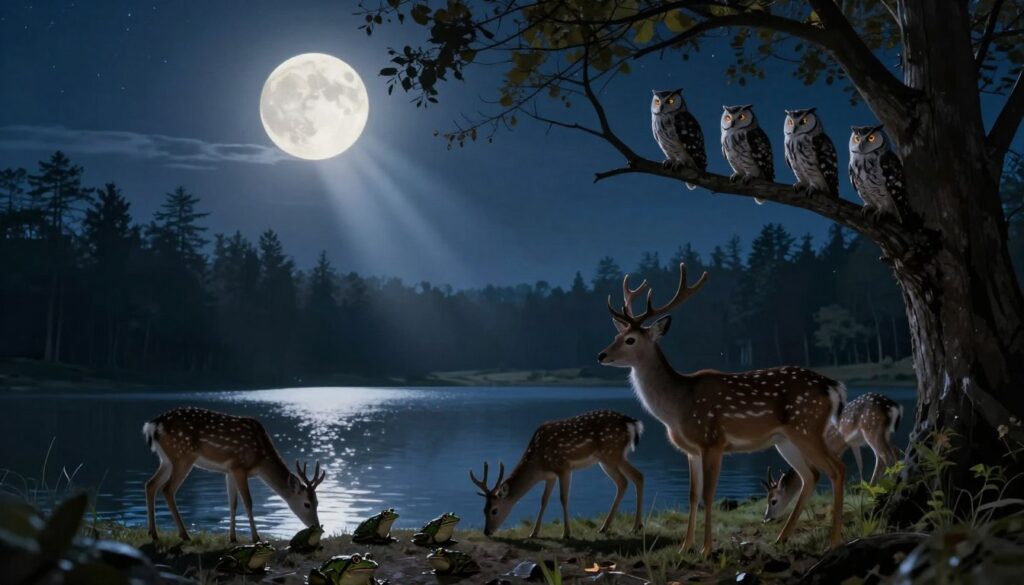
These studies show how the moon affects animals in many ways. From how they have babies to how they hunt. As we learn more, we see the moon’s big role in nature.
Marine Life and the Moon’s Influence
The moon’s cycles deeply affect marine life, from coral reefs to the deep sea. Marine activities sync with the lunar cycle, showing the complex connections in our planet’s ecosystems.
Coral Spawning Events
The moon’s influence is seen in coral spawning. The Great Barrier Reef’s mass coral spawning happens after the full moon. This timing helps with fertilization and larval dispersal.
Tidal Patterns and Behavior
The moon’s gravity drives tidal patterns in oceans. These changes impact marine animals’ behavior. Fish and crustaceans move with the tides for feeding or shelter.
| Tidal Phase | Marine Behavior |
|---|---|
| High Tide | Increased feeding activity among fish and crustaceans |
| Low Tide | Exposure of intertidal zones, affecting species like mollusks and sea stars |
| Tidal Changes | Migration and breeding behaviors triggered by changing water levels |
Nocturnal Marine Activity
Nocturnal marine animals adjust to the moon’s light. During full moon, some species hide to avoid predators. Others become active, using the light for feeding or mating. Knowing these behaviors helps in conservation and understanding marine ecosystems.
Terrestrial Wildlife Responses to Moon Phases
Terrestrial wildlife shows many responses to the moon’s phases. These include changes in mating habits and migration patterns. The lunar cycle affects their behavior in many ways, like mating seasons, migration, and foraging.
Animal Mating Seasons
The moon’s cycles impact animal mating behaviors. For example, deer and some mammals adjust their mating seasons to the lunar cycle. This might be because of better visibility or changes in predator-prey dynamics during certain moon phases. Further research shows lunar cycles can sync breeding in various species.
Some species mate during specific moon phases to increase their chances of successful reproduction. For instance, some coral species release gametes during full moon. This is more common in marine life, but some terrestrial species also show this synchronization.
Migration Patterns
Many terrestrial animals migrate at specific times, and the moon can influence this timing. While food, weather, and breeding are main drivers, the lunar cycle adds another cue. For example, some species migrate during certain moon phases to avoid predators or use better visibility.
A study on bird migrations found they often align with the lunar cycle. The moon’s light helps in navigation and can influence migration timing.
Foraging Behavior
The moon’s phases also affect foraging behavior in terrestrial animals. Nocturnal animals, for example, adjust their foraging to moonlight. Some rodents are more active during darker nights to avoid predators that hunt by moonlight.
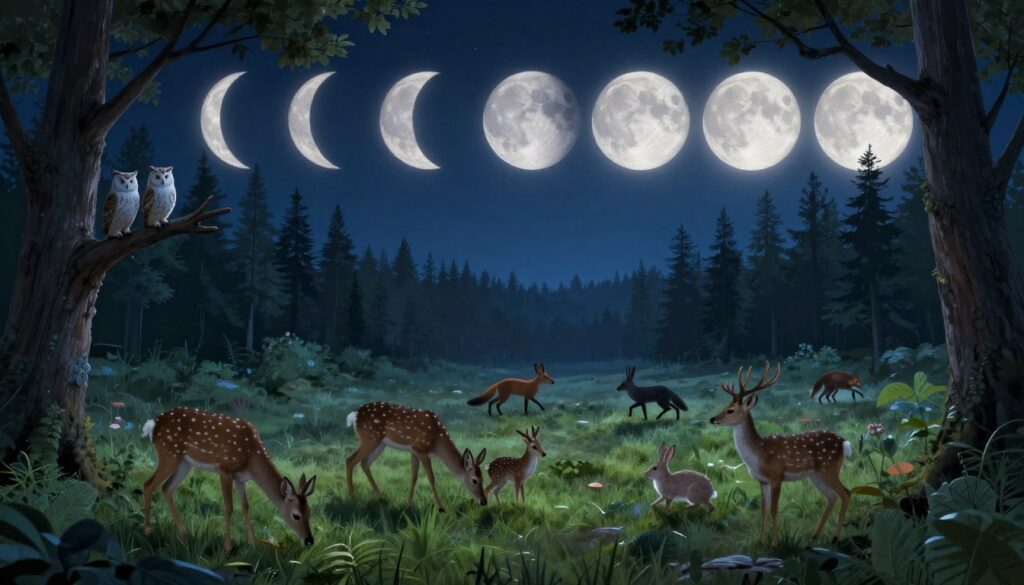
Foraging behavior is influenced by food availability and predation risk, both affected by the lunar cycle. Some animals forage more during certain moon phases when risks are lower or food is more abundant.
| Behavioral Aspect | Influence of Moon Phases | Example Species |
|---|---|---|
| Mating Seasons | Synchronization with lunar cycle | Deer, certain mammals |
| Migration Patterns | Timing influenced by moonlight | Nocturnal bird species |
| Foraging Behavior | Adjustment based on moonlight and predation risk | Rodents, nocturnal mammals |
Understanding these patterns helps us see how terrestrial wildlife and their environment interact, influenced by the lunar cycle. For more on lunar cycles and animal companions, check out pet moon readings.
Moonlight and Predation
Moonlight is key in how predators and prey interact. The way the moon affects hunting is complex and seen worldwide.
The amount of moonlight changes how predators hunt. Nocturnal hunters use darkness to sneak up on prey. But, more moonlight means they can be seen more easily. This might make them hunt at different times.
Visibility and Hunting Strategies
Predators have many ways to catch prey, and moonlight is important. Full moon makes it easier for them to see prey, but prey gets more careful. New moon makes everything darker, leading to different hunting plans.
Some predators hunt better under certain moon conditions. Lions, for example, hunt better in the dark. They are more successful when it’s not too bright.
Prey Behavior Under Moonlight
Prey also change their ways because of the moon. They get more careful and stay hidden during full moon. But during new moon, they might feel safer to move around.
This shows how moonlight affects the balance in nature. It’s important to understand this balance and how the moon influences animal behavior.
Bird Migration and Lunar Influence
The moon’s cycle deeply affects bird migration patterns. It influences when and how birds travel. Many birds migrate at night, and the moon’s light is key to their journey.
Studies show that some birds use the moon to guide their migration. Others use it to avoid predators or find their way. The moon’s role in bird migration is complex, involving timing and navigation.
Timing of Migration
For many birds, migrating at the right time is essential. Some birds migrate during certain moon phases. This is often when the weather is best or food is plentiful.
For example, some songbirds migrate during the full moon. This helps them navigate and find food better. A study on Catharus thrushes found they migrate around the full moon too. This shows the moon’s influence on their migration.
| Species | Migration Timing | Lunar Phase Influence |
|---|---|---|
| Catharus thrushes | Nocturnal migration | Full moon |
| Warblers | Nocturnal migration | New moon to full moon |
| Sparrows | Diurnal/Nocturnal migration | Variable |
Moon Phase Impact on Navigation
The moon’s light is vital for birds migrating at night. They use the moon and stars to guide them. The moon’s brightness affects how well they can see these cues.
“The moon is an important cue for nocturnal migrants, providing a reliable source of light that can aid in orientation and navigation during their journeys.”
Studying the moon’s effect on bird migration reveals its complex role. The moon influences when and how birds migrate. Understanding this helps us appreciate the moon’s impact on wildlife.
Insect Activity and the Moon
The moon’s light has a big impact on the natural world, including insects. Some insects change their behavior with the moon’s phases. For example, moths are more active when the moon is full.
Moths and Nighttime Illumination
Moths are active at night and are drawn to light. The moon’s phases provide a lot of light. This makes moths easier to see and helps them find mates.
Research shows moths are more active when the moon is full. This is because the moon’s light makes it easier for them to move around and find mates. Other insects that are active at night also change their behavior with the moon.
Pollination Patterns at Night
The moon’s light also affects pollination at night. Plants that need moths or bats to pollinate them are influenced by the moon. For example, some plants bloom when the moon is full to attract pollinators.
| Plant Species | Nocturnal Pollinator | Lunar Cycle Influence |
|---|---|---|
| Evening Primrose | Moths | Increased pollination during full moon |
| Night-Blooming Jasmine | Moths | Peak fragrance release during full moon |
| Cactus | Bats | Blooming synchronized with lunar cycle |
Studying how themoon affects animals shows its big role in nature. The connections between the moon, insects, and plants are complex and beautiful.
Influence of the Moon on Reptiles
The moon’s cycle changes how reptiles behave. This includes their nesting, migration, and how active they are. Sea turtles show this most clearly, with their nesting tied to the moon’s phases.
Sea turtles are a prime example of how the moon affects reptiles. They nest on beaches during certain moon phases. Scientists have studied this behavior a lot.
Sea Turtle Nesting Behavior
Sea turtles nest during the new moon or full moon. The new moon’s darkness helps them avoid predators. The full moon’s light makes it easier for them to find their way. This is a great example of how animals adapt to their environment.
Changes in Activity Levels
The moon also changes how active reptiles are. Some species are more active at certain moon phases. This might be because of better hunting or avoiding predators.
Studying how the moon affects reptiles helps us understand them better. It also helps us protect them. Knowing how the moon influences reptiles helps conservationists create better plans to save these animals.
The Effect of Moon on Mammals
The moon’s cycles affect more than just the tides. They also shape mammal behavior in subtle but significant ways. From deer to rodents, mammals change their actions based on the moon’s phases. This study reveals how wildlife interacts with their environment.
Deer Movement Patterns
Deer behavior is closely tied to the lunar cycle. Studies show deer move more during certain moon phases. For example, they might be more active during the full moon and new moon.
During the full moon, deer feel safer and move more. At the new moon, they’re more cautious due to the darkness. We’ll dive deeper into how the moon affects deer.
Rodent Behavior Changes
Rodents also change their behavior with the moon. Some species forage more during the new moon, when it’s dark. This helps them avoid predators.
These changes in rodent behavior impact ecosystems. Predators, for instance, might hunt differently based on the moon. This shows how moon phases and wildlife behavior patterns are connected.
Studying these changes helps us understand the moon’s role in mammal behavior. It’s key for conservation and managing wildlife.
Conservation Considerations
Understanding how the moon affects wildlife is key to good conservation strategies. The lunar cycle impacts many species, so we need a broad approach to manage wildlife.
Looking into conservation, we see that wildlife management strategies must consider the lunar cycle. This means planning conservation around important lunar events. These events can greatly affect how species behave.
Wildlife Management Strategies
Good wildlife management means knowing how species react to the moon. Some species are more active during certain moon phases. Others are not affected. By studying these patterns, we can protect vulnerable species better.
It’s also important to understand how the moon affects migration patterns and mating seasons. For example, some marine species need specific moon phases to spawn. By matching conservation efforts with these natural cycles, we help these populations stay healthy.
| Lunar Phase | Species Activity | Conservation Implication |
|---|---|---|
| Full Moon | Increased nocturnal activity in some species | Adjust monitoring and protection efforts |
| New Moon | Reduced visibility, potentially increased predation | Enhance protective measures for vulnerable prey species |
Impact of Artificial Light
Artificial light pollution is a big problem for conservation. It messes with natural behaviors tied to the moon. A study on lunar cycles and their effects shows artificial light can confuse species that use moonlight for navigation.
To fight this, we need to cut down on artificial light pollution. This means setting lighting rules in sensitive areas and using light fixtures that don’t spread out light too much.
By recognizing the moon’s role in wildlife and tackling artificial light pollution, we can make better conservation plans. These efforts are vital for keeping the natural world safe for the future.
Future Research Directions
As we dive deeper into the moon’s impact on wildlife, new tech will be key. Camera traps, GPS, and sensors help us learn more about animals under different moon conditions. This info is vital for understanding how the moon affects animal behavior.
Technological Advancements
Tools like satellite imaging and machine learning will be huge. They can sort through big data to find patterns in animal behavior linked to the moon. These tools are essential for studying the moon’s effect on wildlife.
Long-Term Observations
Watching wildlife over time is critical. It helps us see how moon phases really impact animals. This research will guide us in protecting and managing wildlife, based on what we learn about the moon’s influence.
[…] journal can be incredibly helpful. Tracking energy levels throughout the different phases of the moon allows us to recognize…
[…] Reading is a new platform that offers personalized insights based on the lunar cycle1. It’s different from generic horoscopes,…
[…] As we set intentions aligned with the New Moon energy, we open ourselves to the power of manifestation. By…
[…] intentions during the new moon is a powerful practice that allows me to declare my goals and aspirations. It…
[…] These readings provide a convenient and accessible way to connect with the energies of the new moon and gain…