
Ever felt a sudden wave of emotion that seemed to mirror the glowing orb in the night sky? Many of us notice a shift in our energy as the lunar cycle progresses. We often wonder about the lunar influence on mood swings and why our feelings change so rapidly during these times.
Exploring the moon’s effect on mental health helps us understand our hidden inner rhythms. We are diving deep into these celestial connections to see what science and tradition say about our well-being. Does the silver light truly pull at our hearts just as it pulls at the tides?
We believe that when you learn the basics of lunar influence, you take the first step toward emotional clarity. By understanding how does the moon affect mood swings, we can find better ways to balance our daily lives. This journey into lunar cycles provides the guidance we need for lasting mental harmony.
Key Takeaways
- Lunar cycles often correlate with natural emotional shifts and heightened awareness.
- The full moon is frequently associated with the illumination of suppressed feelings.
- Tracking lunar phases can significantly improve your personal mood understanding.
- Moon mapping helps align your daily life with natural celestial rhythms.
- Daily moon reading practices offer spiritual guidance during challenging emotional times.
- Understanding your moon sign reveals deep patterns within your subconscious mind.
Introduction to Lunar Influence on Human Behavior
The moon’s effect on human behavior has long been a topic of interest. Many believe that lunar cycles can greatly affect our emotions. It’s important to understand the different factors involved.
Understanding Mood Swings
Mood swings are a natural part of life, influenced by hormones, environment, and psychology. The moon’s cycles, like the full moon, are anecdotally linked to increased emotional intensity. Astrology says our Moon sign shows a unique part of our personality, reflecting our emotional responses to the world.
During a full moon, some people feel more anxious or restless. While science is mixed, many think the full moon’s bright light and gravitational pull can affect our internal rhythms. You can learn more about the full moon’s impact on mood on Almanac.com.
The Role of Biological Rhythms
Our bodies have internal clocks that respond to light and darkness. The moon’s cycles can affect these rhythms, like sleep and hormones. Research shows that lunar cycles can synchronize with our internal clocks in complex ways.
For example, studies suggest the full moon can disrupt sleep. Knowing this can help us manage our rest better during different lunar phases.
Cultural Perspectives on Moon Phases
Different cultures have always seen the moon’s phases as significant. The full moon is often seen as a time of celebration, while the new moon is for reflection and new starts. You can find the current moon phase and its astrological meaning on New Moon Reading Online.
Cultural stories and traditions about the moon are rich and varied. They show our deep connection to lunar cycles. By exploring these views, we can understand how the moon affects our collective emotions and psyche.
The Science Behind the Moon’s Cycles
Exploring the moon’s cycles reveals how lunar phases affect human biology. The moon’s pull on Earth’s tides is well-known. But its impact on human behavior and emotions is also significant.
Lunar Phases: A Breakdown
The lunar cycle has eight phases: new moon, waxing crescent, first quarter, waxing gibbous, full moon, waning gibbous, last quarter, and waning crescent. Each phase is linked to different effects on human behavior and emotions.
| Lunar Phase | Characteristics | Potential Effects on Humans |
|---|---|---|
| New Moon | Beginning of a new cycle, dark moon | Renewal, introspection, new beginnings |
| Full Moon | Entire face of the moon is illuminated | Increased energy, emotional intensity, sleep disturbances |
| Waxing Crescent | Increasing moonlight | Increased motivation, growth, expansion |
| Waning Gibbous | Decreasing moonlight | Release, letting go, transformation |
A study found that the full moon can affect sleep, behavior, and mental health. This suggests a link between the lunar cycle and emotional stability.
“The moon’s gravitational pull affects not just the Earth’s tides but potentially our mood and behavior as well.”
How Light Affects the Human Brain
Light exposure impacts our brain, affecting our circadian rhythms and mood. The changing moonlight during different phases could alter our brain chemistry.
The full moon’s bright light may disrupt sleep and emotional stability. Knowing these effects helps us manage lunar calendar and mood changes better.
History of Moon and Mood Interpretations
The moon’s cycles have long been linked to human emotions, a theme explored in many cultures. This connection between the moon’s phases and our feelings has fascinated people for centuries. Studies, including those on Frontiers in, have looked into this.
Ancient Beliefs and Myths
Ancient civilizations saw the moon as very important. They included it in their myths and beliefs. For example, the ancient Greeks believed in Selene, the moon goddess, who controlled the tides and human fates.
In Roman mythology, Luna was the moon goddess. These stories show how the moon was thought to affect human lives, including our emotions.
Folklore from Around the World
Folklore from all over talks about the moon’s impact on us. In some Native American cultures, the full moon is for special ceremonies. These are to use the moon’s power.
In other places, the new moon is for starting new things. This idea is used today in new moon readings to set goals and learn about astrology.
Different cultures have seen the moon in many ways. Whether through myths, stories, or today’s practices, the moon is a big deal in our feelings and thoughts.
Looking at these old and new views helps us understand the moon’s role in our moods. This knowledge can help us deal with the moon’s effect on our feelings better.
The Connection Between the Moon and Emotions
The moon’s cycles have long been linked to human emotions. This connection has fascinated people for centuries. The moon’s cycles affect our emotions in many ways, including psychology, culture, and astronomy.
Psychological Effects of Moon Phases
Studies and personal stories show the moon’s phases can change our mood. For example, many feel more sensitive, creative, and intuitive during the full moon. This phase can bring out strong emotions, either happiness or anger.
Let’s look at how the moon’s phases can affect our feelings:
- The full moon makes us feel more emotionally charged and sensitive.
- The new moon is a time for new starts and setting goals.
- The waxing crescent phase is about growing and gaining energy.
- The waning gibbous phase is for releasing and letting go.
| Moon Phase | Emotional Influence |
|---|---|
| New Moon | Renewal, Introspection |
| Waxing Crescent | Increasing Energy, Motivation |
| Full Moon | Heightened Sensitivity, Emotional Intensity |
| Waning Gibbous | Release, Letting Go |
Anecdotal Evidence and Personal Experiences
Many people say the moon’s cycle affects their mood. Some feel more creative and inspired during certain phases. Others might feel more anxious or restless. Learning about the moon’s phases can help us understand these patterns.
By recognizing the moon’s impact on our emotions, we can better manage our feelings. We can use mindfulness, journaling, or other practices to cope. Knowing about the lunar cycle can help us improve our emotional health.
Studies on Moon Phases and Behavior
Research into the lunar cycles’ impact on human behavior has shown some interesting results. By looking into these studies, we can learn more about how the moon’s phases might affect our mood and actions.
Overview of Scientific Research
Many studies have looked into the link between the moon’s cycles and human behavior. Some research suggests that the full moon can greatly affect our sleep patterns, behavior, and even mental health. For example, a study found that the full moon is linked to more sleep problems and emotional issues. You can learn more about the moon’s phases and their effects on our well-being by visiting Pure Arts Group’s journal on moon.
The scientific community is working to understand how the moon affects human behavior. While the exact reasons are not yet known, research has pointed out several areas where the lunar cycle may have an impact.
Key Findings from Recent Studies
Recent studies have provided more insight into the lunar cycles’ impact on mood swings and our overall mental health. Some key findings include:
- More emotional disturbances reported during the full moon phase.
- A link between the new moon phase and chances for reflection and setting intentions, as discussed in resources like New Moon Reading Online.
- Differences in sleep quality across different lunar phases.
These findings show that the moon’s cycles can deeply affect our behavior and emotions. By understanding these patterns, we can better handle the challenges and opportunities the lunar cycle brings.
The Full Moon Phenomenon
The full moon is a fascinating part of the lunar cycle. It has a unique impact on human behavior.
Across cultures, the full moon has long been a topic of interest. Many believe it affects various aspects of life. Research into the moon phases effect on emotions and behavior has found some interesting results.
Increased Sleep Disruption
The full moon is known to disrupt sleep patterns. Studies show that people may sleep less during this time. The moon’s brightness or other factors could be the cause.
The bright night sky can mess with our sleep cycles. This can make our sleep quality and duration worse. For more on the full moon’s impact on sleep, check out Healthline’s article on full moon effects.
Higher Reports of Emotional Disturbance
The full moon is also linked to heightened emotions. Many feel more anxious, irritable, or emotional during this time. The lunar cycle and emotional stability are closely studied, with some research showing the full moon’s deep emotional impact.
“During the full moon, the lunar energy is at its peak… heightening emotions,” says one source. This can show up in many ways, from increased creativity to irritability.
Understanding the full moon’s effects on emotions and sleep can help us manage these changes. By knowing the lunar cycle’s impact, we can lessen negative effects and use the full moon’s positive energy.
The New Moon’s Effects on Mood
The new moon is a key moment in the lunar cycle, often linked to personal reflection and emotional renewal. It marks a time when we look inward and start anew. The moon’s absence in the sky invites us to reflect and begin again.
During the new moon, we focus on ourselves and our goals. It’s a time to re-evaluate our goals and intentions. This makes it perfect for personal growth and development.
Opportunities for Reflection
The new moon is a chance for deep self-reflection. With the moon hidden, we explore our thoughts, feelings, and desires. This period helps us understand our emotions and find areas to improve.
“The new moon is a time to plant the seeds of intention, to sow the dreams that will grow into the light of the full moon.”
Reflecting on our experiences and emotions during the new moon helps us understand ourselves better. It leads to a more balanced and healthy emotional state.
Influence on Creativity and Intention Setting
The new moon boosts creativity and encourages setting new intentions. It’s a time to think about what we want to achieve and manifest in our lives. This can be a powerful time for setting intentions and finding inspiration for our creative pursuits.
Many find the new moon sparks their creativity, helping them overcome blocks and find new inspiration. By using this energy, we can tap into our inner creativity and motivation.
| Aspect | New Moon Influence | Benefits |
|---|---|---|
| Reflection | Encourages introspection and self-assessment | Deeper understanding of oneself and emotional state |
| Creativity | Stimulates new ideas and inspiration | Overcoming creative blocks and finding new motivation |
| Intention Setting | Supports setting new goals and intentions | Clear direction and focus for personal growth |
By embracing the new moon’s energy, we can improve our emotional well-being. Whether through reflection, creativity, or setting intentions, the new moon is a powerful time for growth and renewal.
How the Moon Influences Sleep Patterns
The moon’s cycle affects our sleep, just like it does our mood. It’s interesting to see how the moon impacts our sleep quality.
Sleep Quality and Lunar Phases
Studies show the full moon can mess with our sleep. People sleep less well during the full moon. This is because the moon’s pull affects our body’s rhythms.
- Sleep duration tends to be shorter during the full moon.
- Sleep latency (the time it takes to fall asleep) is often longer around the full moon.
- The overall quality of sleep is generally poorer during the full moon phase.
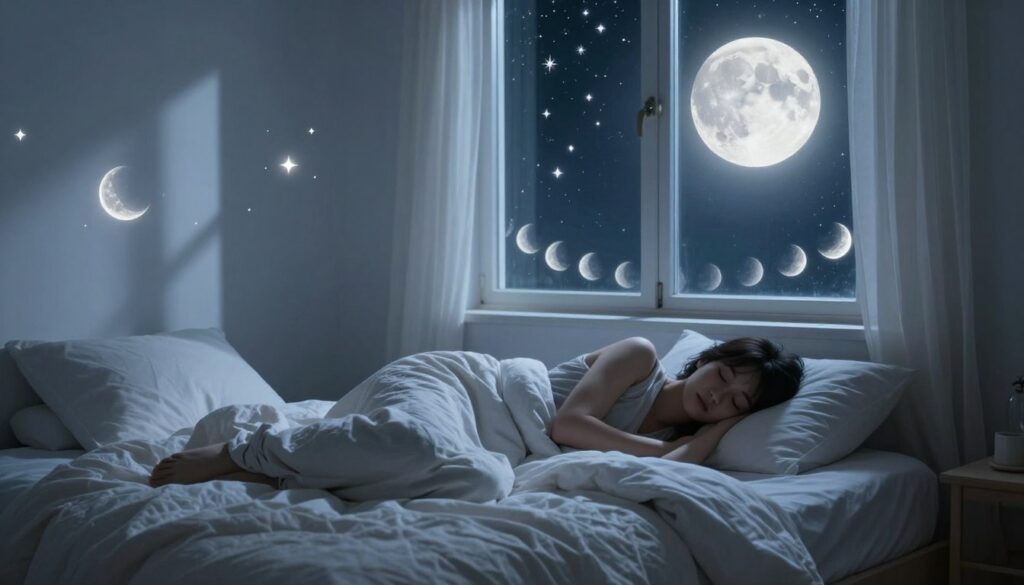
Tips for Better Sleep During Full Moons
To fight the full moon’s sleep disruption, try these tips.
- Establish a Consistent Sleep Schedule: Stick to a regular sleep time. This helps your body’s clock stay in sync, even when the moon is full.
- Create a Sleep-Conducive Environment: Make your bedroom dark, quiet, and cool. Blackout curtains or earplugs can help during the moon’s brightest nights.
- Avoid Stimulating Activities Before Bedtime: Do calming things before bed, like reading or meditation. It tells your body it’s time to sleep.
Knowing how the moon affects our sleep and using these tips can help us sleep better, even during the full moon.
Lunar Effect on Mental Health
Exploring the moon’s effect on our well-being is fascinating. It’s important to know what’s real and what’s not about its impact on mental health. The moon’s cycle has long been a topic of interest and study.
Many believe the moon’s phases can change our mood and behavior. Lunar psychology suggests the moon’s phases can affect our emotions, leading to mood swings and other psychological effects.
Myths vs. Facts
One myth is that the full moon makes people act strangely and affects mental health. Some studies show a link between the full moon and more emotional problems. But, other studies find no connection. It’s important to look at the science behind these claims.
Research on lunar psychology and mood swings has given mixed results. Some studies say the full moon can mess with our sleep, making mental health issues worse. But, we need more research to really understand the moon’s effect on our minds.
Recommendations for Managing Mood Swings
Knowing about the moon’s cycles can help us get ready for mood swings. Here are some tips to handle emotional ups and downs:
- Practice mindfulness and meditation to boost emotional strength.
- Keep a mood journal to track your emotional changes.
- Adjust your sleep schedule during full moons to avoid sleep problems.
- Do relaxing activities, like yoga or reading, to lower stress.
Understanding and using the lunar cycle can help us manage our emotions better. As one source suggests, learning to handle our emotions well is key to feeling better.
Coping Strategies During Different Lunar Phases
The moon’s phases can really affect our mood swings. It’s important to find good ways to cope. Knowing how the moon affects us can help us manage our feelings better.
Our emotions change with the moon’s phases. For example, the full moon makes us feel more and have lots of energy. The new moon is for looking inside and starting fresh. Knowing this helps us pick the right ways to handle our mood swings.
Mindfulness and Meditation Techniques
Mindfulness and meditation are great for dealing with mood swings caused by the moon. Mindfulness keeps us in the moment and calms our feelings. Meditation soothes our mind and body.
- Mindful Breathing: Focus on your breath to calm your mind and reduce stress.
- Body Scan Meditation: Lie down or sit comfortably, and bring awareness to different parts of your body, releasing tension as you exhale.
- Loving-Kindness Meditation: Cultivate compassion and kindness towards yourself and others, promoting emotional balance.
To learn more about the moon’s effect on mood, check out this article. It talks about how the moon’s phases impact our feelings.
Journaling and Emotional Awareness
Journaling is also a good way to deal with mood swings caused by the moon. Writing down our thoughts and feelings helps us understand ourselves better.
Here are some tips for journaling during the moon’s cycle:
- New Moon Reflections: Use the new moon to think about the past and plan for the future. Find new moon journal prompts here.
- Full Moon Release: Write down what you want to let go of during the full moon. Then, symbolically release it by burning or throwing away the paper.
By using these strategies, we can handle the moon’s emotional effects better. It’s about being proactive and taking care of our feelings.
Harnessing the Moon’s Energy for Wellness
Understanding the lunar cycle can boost our wellness. The moon’s cycles have inspired many cultures. They offer a natural rhythm for personal growth and self-care.
Exploring lunar influence on well-being is key. Setting intentions during different phases can enhance emotional balance and mental health. For more insights, check out moon mapping.
Setting Intentions with the Moon Cycles
Aligning personal goals with the moon’s phases is powerful. At the new moon, we start fresh. As the moon grows, we nurture our goals. At the full moon, we release what’s holding us back.
Practices like journaling and meditation help. For example, write down goals at the new moon. Reflect on them at the full moon to see progress or needed changes.
Rituals and Practices to Try
Practices honoring the lunar cycle deepen our connection. Consider moonlit meditation, journaling at the new moon, and releasing rituals at the full moon.
These practices connect us to nature and give us purpose. They can improve emotional stability and well-being.
| Lunar Phase | Practice | Intention |
|---|---|---|
| New Moon | Journaling, Setting Intentions | New Beginnings |
| Waxing Crescent | Meditation, Visualization | Growth, Expansion |
| Full Moon | Releasing Rituals, Reflection | Release, Illumination |
| Waning Gibbous | Gratitude Practice, Letting Go | Closure, Renewal |
Conclusion: Embracing Lunar Cycles in Our Lives
Exploring how the moon affects mood swings helps us understand its role in our emotional health. By recognizing the moon’s cycles, we can better manage our emotions. This leads to greater self-awareness.
The Moon’s Impact on Our Emotional Landscape
The moon’s phases influence our feelings and energy. Knowing these cycles helps us match our actions with the moon’s phases. This brings emotional clarity and strength.
The full moon makes us feel more emotionally charged. The new moon is a time for looking inward and starting anew.
Embracing Lunar Wisdom for Personal Growth
Embracing lunar cycles can boost our personal growth. We can set intentions, be mindful, and use traditional remedies to connect with the moon’s energy. For more on using lunar energy for personal growth, check out Moon Readings Online.
By aligning with the moon’s influence, we can live a more balanced and fulfilling life.
[…] journal can be incredibly helpful. Tracking energy levels throughout the different phases of the moon allows us to recognize…
[…] Reading is a new platform that offers personalized insights based on the lunar cycle1. It’s different from generic horoscopes,…
[…] As we set intentions aligned with the New Moon energy, we open ourselves to the power of manifestation. By…
[…] intentions during the new moon is a powerful practice that allows me to declare my goals and aspirations. It…
[…] These readings provide a convenient and accessible way to connect with the energies of the new moon and gain…