
Can the stars above really change the soil below? Many people are amazed by the night sky. But, few know how it affects our crops. We dive into biodynamic agriculture, a method that sees every field as alive.
By looking at holistic farming, we learn to live in sync with nature. This approach focuses on the sun and moon. It helps us grow food that feels connected to the universe.
These farming systems use old wisdom and lunar cycles for daily tasks. These patterns guide when to plant seeds. Following them builds a strong ecosystem.
We believe every plant and animal is part of a bigger circle. This way of farming protects the land for the future. Embracing these practices brings balance to our work.
Key Takeaways
- This approach views the farm as a single, self-sustaining living organism.
- Celestial rhythms, including moon phases, play a vital role in plant development.
- Growers use specific seasonal patterns to plan sowing plus harvesting activities.
- Natural methods integrate spiritual plus physical elements for better soil health.
- Tuning into nature helps produce high-quality, sustainable food for our communities.
Understanding Biodynamic Farming
Biodynamic farming sees a farm as a living being, connected to Earth’s cycles. It was created by Rudolf Steiner, blending spiritual and philosophical ideas.
“You don’t need to choose between science and spirit. You don’t need to already believe anything. Curiosity is enough.” This quote shows how open biodynamic farming is. It welcomes all to explore its ways.
History and Origins of Biodynamic Farming
In the early 20th century, Rudolf Steiner helped farmers with soil and animal health issues. His talks, later in a book, started biodynamic farming. It views the farm as a complete ecosystem.
Key Principles of Biodynamics
The main ideas of biodynamics are:
- Seeing the farm as a self-contained ecosystem
- Using special preparations to boost soil and plant health
- Following a planting and harvesting schedule based on lunar cycles
- Encouraging biodiversity and ecological balance
These ideas aim to work with nature, making the farm healthier and stronger.
| Principle | Description | Benefit |
|---|---|---|
| Holistic Approach | Viewing the farm as a living organism | Enhanced ecological balance |
| Biodynamic Preparations | Using natural preparations to stimulate health | Improved soil and plant vitality |
| Lunar Cycle Planting | Planting and harvesting according to lunar phases | Optimized growth and yield |
Comparing Biodynamics to Organic Farming
Both biodynamic and organic farming avoid synthetic chemicals. But biodynamics adds spiritual and lunar elements. Organic farming mainly focuses on ecology, while biodynamics sees the farm as a whole, self-sustaining system.
In summary, biodynamic farming is a special way to farm. It mixes ecological practices with a spiritual bond to the land. By following its principles, farmers can build stronger, more diverse farms.
The Role of Lunar Cycles in Agriculture
Lunar cycles are key in agriculture, affecting plant growth and development. Farmers have used the moon’s phases for centuries. This helps them plan the best times to plant, grow, and harvest crops.
What Are Lunar Cycles?
Lunar cycles are the monthly changes in the moon’s appearance as it orbits Earth. These changes include new moon, full moon, and the quarters. For ages, farmers worldwide have followed these cycles to know when to plant, care for, and harvest crops.
The moon’s cycles affect soil moisture, plant growth, and the ecosystem. This is why lunar cycles are important in agriculture.
How Lunar Phases Influence Plant Growth
Different lunar phases affect plant growth in unique ways. For example, the new moon is great for planting root crops. This is because the moon’s pull helps roots grow.
The full moon is best for crops that grow above ground. This includes fruits and flowers. Knowing the moon’s phases helps farmers plan better.
The moon’s cycles also impact soil and plants. For instance, the waxing moon boosts leaf growth. The waning moon is better for roots.
Farmers can plan their work with the lunar calendar to boost crop quality. By understanding lunar phases, farmers can use natural cycles to enhance their farming. For more tips, check out new moon readings for gardening.
Lunar Cycle and Planting Schedule
| Lunar Phase | Ideal Crops for Planting | Reason |
|---|---|---|
| New Moon | Root Crops (e.g., carrots, beets) | Encourages root development |
| Waxing Moon | Leafy Greens (e.g., lettuce, spinach) | Promotes leaf growth |
| Full Moon | Fruiting Crops (e.g., tomatoes, peppers) | Enhances fruit production |
| Waning Moon | Root Crops and Pruning | Ideal for root development and pruning |
By aligning farming with lunar cycles, farmers can increase yields. This also supports sustainable farming.
Core Practices of Biodynamic Farming
Biodynamic farming has key practices that set it apart. These practices work with nature to improve farm health and biodiversity.
Composting and Soil Health
Composting is vital in biodynamic farming. It makes soil healthier by adding nutrients and beneficial microbes. Efficient composting breaks down organic materials into nutrient-rich soil.
Biodynamic farmers mix crop residues, animal manure, and organic waste for compost. They manage this process to get the best results and a diverse microbial community.
Planting and Harvesting Schedules
Biodynamic farming uses lunar cycles for planting and harvesting. This approach can boost crop yields and quality. For more on moon gardening, visit New Moon Readings.
The lunar cycle affects plant growth. For example, the new moon is best for planting root crops. The full moon is better for harvesting fruits and flowers.
Use of Biodynamic Preparations
Biodynamic preparations boost soil and plant vitality. They are made from natural materials like cow manure and herbs. These are applied in special ways.
Biodynamic preparations help soil microbes and plant growth. They are key to achieving biodynamic farming’s goals.
Benefits of Biodynamic Farming
Biodynamic farming helps farmers make their farms healthier and more productive. It also boosts their income. This method views the farm as a whole, working with nature, like lunar cycles, to grow nutritious food.
Environmental Impact
Biodynamic farming is great for the environment. It avoids harmful chemicals, keeping soil healthy and biodiversity rich. It also saves water and promotes ecological balance.
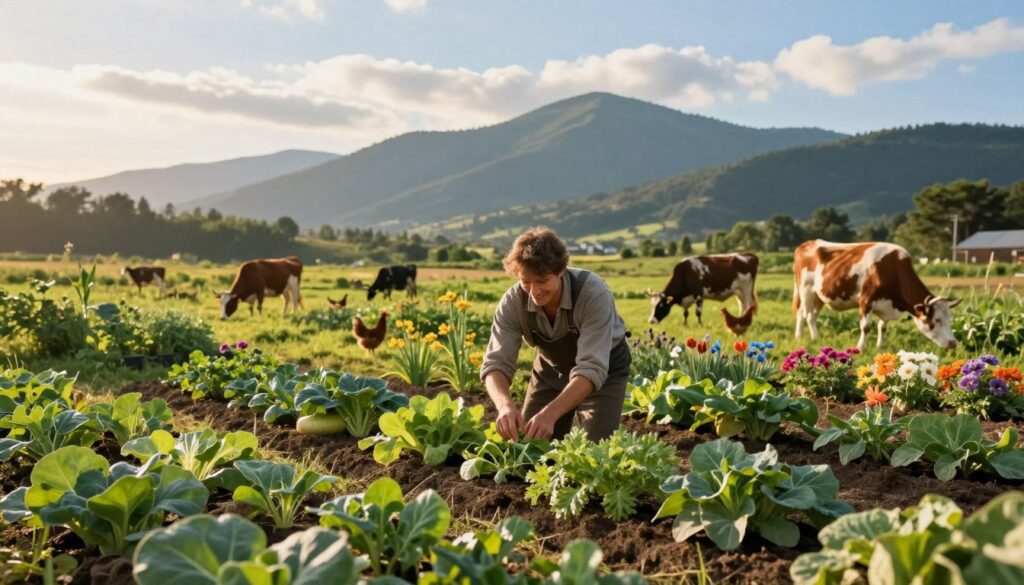
Using compost and special preparations makes the soil better. This helps plants grow strong and fights climate change.
Health Advantages of Biodynamic Produce
Biodynamic food is packed with nutrients and tastes better. Choosing this food means you’re getting healthier options. It’s also better for the planet.
Research shows biodynamic food has more antioxidants and nutrients. This makes it a healthier choice than regular produce.
Economic Benefits for Farmers
Biodynamic farming also helps farmers financially. They can sell their products for more money. This makes their farms more profitable and sustainable.
It also cuts down on costs. By using natural methods, farmers spend less on chemicals. This makes their farms more resilient financially.
Challenges in Biodynamic Farming
Biodynamic farming has its challenges, like misconceptions and complex rules. It’s important to tackle these issues for its growth and acceptance.
Many people think biodynamic farming is just like organic farming. But it focuses on lunar cycles and the spiritual bond between earth and cosmos.
Misconceptions About Biodynamics
Some think biodynamic farming is too spiritual or mysterious. But it’s a practical, science-based way to improve biodiversity and soil health.
“Most people first hear about biodynamics in fragments… That’s where curiosity meets confusion.” This shows we need to understand biodynamics better.
To clear up these myths, we must share the real benefits of biodynamic farming. These include better soil and more durable farming systems.
Certification and Regulation Issues
Getting certified in biodynamic farming is tough. The Demeter certification is strict but can be overwhelming for new farmers.
The certification process includes:
- Application and initial inspection
- Conversion period to adapt to biodynamic practices
- Annual checks to make sure the farm follows the rules
Making the certification process easier could encourage more farmers to try biodynamic farming.
Also, we need laws that support and value biodynamic farming. These laws should help sustainable farming and give farmers incentives to switch to biodynamic methods.
The Science Behind Biodynamics
Biodynamic farming is not just a story; it’s supported by scientific research and real results. This farming method combines traditional practices with modern science. It shows how effective biodynamics can be.
Biodynamic farming sees the farm as a living being. It’s based on research about soil, plants, and tiny organisms. This approach helps create a balanced ecosystem. It improves soil health, biodiversity, and makes crops more resilient.
Research Supporting Biodynamic Practices
Many studies have looked into biodynamic farming’s effects. They’ve found it can make soil better, improve plant health, and boost ecosystem services. For example, it can increase soil’s ability to hold water and reduce erosion.
A study in a well-known agricultural journal showed biodynamic farms have more soil organic carbon and biodiversity. This is thanks to biodynamic preparations and focusing on soil fertility. For more on biodynamics, visit Biodynamics.com.
Case Studies in Successful Biodynamic Farms
There are many examples of biodynamic farming’s success. A farm in the United States improved soil and increased crop yields without many external inputs. In Europe, biodynamic farming helped keep biodiversity and ecosystem services in agricultural areas.
These stories show biodynamic farming’s role in sustainable agriculture and rural development. By using biodynamic methods, farmers can make their farms more productive and resilient. They also help protect the environment.
Integrating Lunar Cycles into Farming
In biodynamic farming, the lunar calendar is key for planning. It helps us work with nature’s rhythms. This way, we can make our farms more productive and sustainable.
The lunar cycle impacts plant growth in biodynamic farming. Moon phases influence plant sap flow. Each phase is best for different growth types.
Planning Planting Schedules with the Moon
Biodynamic farming plans planting by moon phases. The cycle has two parts: waxing and waning moon. The waxing moon is good for plants that grow above ground.
The waning moon is better for root crops. This is because the light is decreasing, promoting underground growth. This approach can boost yields and cut down on external inputs.
Seasonal Activities Guided by Moon Phases
Moon phases also guide other farm tasks. For example, pruning and harvesting are best at certain times. This aligns with natural cycles.
For those starting lunar cycle planning, biodynamic gardening calendars can help. They show the best times for various tasks.
Using lunar cycles in farming makes our practices more sustainable. It connects us with nature. This method is both traditional and forward-thinking for today’s farming challenges.
Biodynamic Certification
Understanding the biodynamic certification process is key for farmers. It helps them stand out and follow strict biodynamic standards. This certification shows a farm’s dedication to sustainable and holistic farming.
Biodynamic farming, as explained on Wikipedia, treats the farm as a complete ecosystem. Farmers can get certified to prove they follow biodynamic principles.
Steps to Achieve Certification
To get biodynamic certification, farmers must follow several steps. First, they need to learn the standards of a recognized certification body. These standards cover soil health, biodiversity, and biodynamic preparations.
- Preparation and planning for the certification process
- Implementation of biodynamic practices on the farm
- Documentation of farming practices and processes
- Inspection by a certification body
- Review and certification by the certification body
Documentation is a critical component of the certification process. It proves the farm follows biodynamic principles.
Differences Between Certifications
Many certification bodies offer biodynamic certification. Each has its own standards and requirements. The main differences are in the specific needs and the certification process’s level of rigor.
| Certification Body | Key Requirements | Level of Rigor |
|---|---|---|
| Demeter | Strict adherence to biodynamic principles, detailed documentation | High |
| Other Certification Bodies | Varying levels of adherence to biodynamic principles | Variable |
Choosing the right certification body is vital for farmers. It impacts the perceived value and authenticity of their biodynamic certification.
Biodynamic Farming and Modern Agriculture
Biodynamic farming is changing modern agriculture for the better. It’s a move towards sustainable and holistic farming. This approach combines old wisdom with new techniques, helping us face environmental challenges.
Biodynamic farming is about innovation and community building. It views the farm as a whole ecosystem. This way, farmers focus on the connection between soil, plants, and animals, making farming more diverse and strong.
Bridging Tradition and Innovation
Biodynamic farming is rooted in tradition but also looks to the future. It uses innovative methods like biodynamic preparations. These are made from natural materials to improve soil and plant health. For more on biodynamic preparations, check out this resource.
Biodynamic farming mixes old and new in several ways:
- It uses lunar cycles for planting and harvesting.
- It makes biodynamic preparations to boost soil and plant health.
- It focuses on biodiversity and ecosystem services.
These practices help farms be sustainable and healthy. Farmers say, “Biodynamic farming sees the farm as a living being. It aims for a balanced and diverse ecosystem.”
“Biodynamic farming is a holistic approach that considers the farm as a self-contained ecosystem. It integrates the use of lunar cycles, biodynamic preparations, and a deep understanding of the natural world to create a balanced and thriving agricultural system.”
Community within Biodynamic Farming
Biodynamic farming builds a strong community. Farmers work together, sharing knowledge and resources. This teamwork makes local food systems stronger and more resilient.
The community side of biodynamic farming is also seen in its associations and networks. These groups offer training, certification, and networking. They help build a worldwide community of biodynamic farmers.
By combining tradition and innovation in biodynamic farming, we can build a better food system. This system is sustainable and fair for the future.
Educational Resources for Biodynamics
For those eager to learn about biodynamic farming, many resources are available. Biodynamic farming views a farm as a complete ecosystem. It combines spiritual and mystical elements, making it unique and fascinating.
“Biodynamics is not just a farming method; it’s a way to connect with nature,” say its practitioners. There are many educational resources for different learning styles.
Literature for Biodynamic Farming
Biodynamic farming has a rich literature. Key texts include “The Biodynamic Farm” by Herbert Koepf and “The Agricultural Course” by Rudolf Steiner. These books provide insights into its principles and practices.
- The Biodynamic Farm by Herbert Koepf
- The Agricultural Course by Rudolf Steiner
- Biodynamics: A Practical Guide by Hugh Lovel
These texts are a solid base for understanding biodynamic farming’s philosophy and practical use.
Training Opportunities in Biodynamics
For those who prefer learning by doing, workshops and online courses are available. The Biodynamic Farming Association offers training programs. They cover the basics and advanced techniques of biodynamic farming.
“The best way to learn biodynamics is by doing it, and our workshops provide the perfect blend of theory and practical experience,” said a representative from the Biodynamic Farming Association.
Online platforms also offer courses on biodynamic farming. This makes learning accessible to more people. Some notable online courses include:
- Biodynamic Farming Certification Course by the Demeter Association
- Introduction to Biodynamics by the Pfeiffer Center
These resources, from books to hands-on training, help people learn and practice biodynamic farming.
Biodynamic Farming Across the United States
Biodynamic farming is growing all over the US. Farms are using new ways to farm. They focus on quality, sustainability, and helping the environment and community.
Across the US, biodynamic farms are making a big difference. They are not just farms. They are also places for learning and community. They teach about biodynamics.
Prominent Biodynamic Farms to Visit
The US has many biodynamic farms to visit. You can take tours, join workshops, and even help out. Here are some farms to check out:
- Fourfold Farm in Vermont, known for its educational programs and commitment to biodynamic practices.
- Green Gulch Farm in California, a Zen Center that practices biodynamics and offers a serene environment for visitors.
- Windy Hill Farm in New York, which has been a pioneer in biodynamic farming and offers insights into its practices.
These farms are just a few examples. Many biodynamic farms in the US welcome visitors. They show what biodynamic farming is all about.
Biodynamic Associations and Networks
Biodynamic associations and networks help farmers a lot. They offer resources, education, and a community. This helps biodynamic farming grow.
Some important organizations are:
- The Biodynamic Farming & Gardening Association, a leading group for biodynamic practitioners in the US.
- Demeter USA, the official certifier of biodynamic farms in the US, ensuring high standards.
- Local and regional biodynamic groups that organize events, workshops, and conferences.
These groups are key for biodynamic farming’s success in the US. They help farmers share knowledge and best practices.
The Future of Biodynamic Farming
Biodynamic farming is set to play a big role in sustainable agriculture. It focuses on the health of the environment and biodiversity. This makes it a key player in the future of our food systems.
Emerging Trends and Innovations
The future of biodynamic farming is bright, with new trends and innovations. There’s a growing interest in using lunar cycles in farming. This includes using new moon readings to help farmers plan and make decisions.
Role in Sustainable Agriculture
Biodynamic farming is all about keeping soil healthy, using water wisely, and avoiding harmful chemicals. It fits perfectly with sustainable agriculture. As we face climate change and environmental damage, biodynamic farming offers a way to produce food that’s better for our planet.
[…] journal can be incredibly helpful. Tracking energy levels throughout the different phases of the moon allows us to recognize…
[…] Reading is a new platform that offers personalized insights based on the lunar cycle1. It’s different from generic horoscopes,…
[…] As we set intentions aligned with the New Moon energy, we open ourselves to the power of manifestation. By…
[…] intentions during the new moon is a powerful practice that allows me to declare my goals and aspirations. It…
[…] These readings provide a convenient and accessible way to connect with the energies of the new moon and gain…